
Lawn
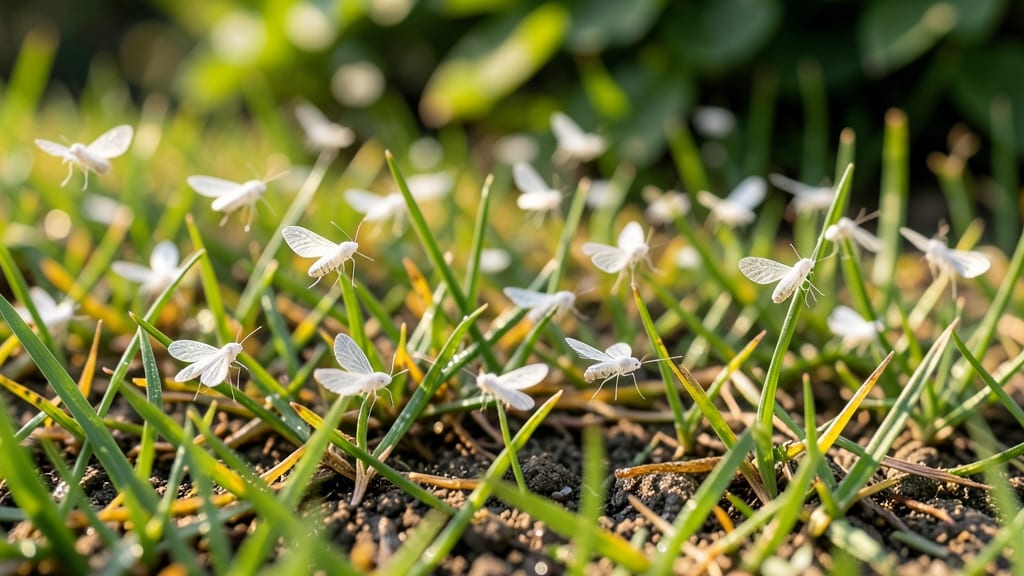
White flying bugs swarming your lawn are more than just a nuisance—they’re a sign your yard’s ecosystem is out of balance. 🌱 I’ve seen these tiny white invaders turn peaceful afternoons into itchy, buzzing battles, and I’ll show you how to stop them fast with a simple, organic solution that works in days.
The problem starts underground: fungus gnats, midges, or whiteflies thrive in damp, organic-rich soil, then emerge as adults to harass you and your grass. Most people reach for pesticides, but that just masks the issue—what you really need is a diatomaceous earth barrier that smothers larvae without harming your lawn.
Within 48 hours of applying the right mix, you’ll see fewer bugs hovering, and in 2-3 weeks, your grass will look healthier as the soil ecosystem rebalances. The secret? Targeting the soil moisture and organic matter that fuels their lifecycle.
This method works for any lawn type, from shady patches to sunny backyards. Let’s get those bugs under control—for good.
The Hidden Triggers Behind Tiny Invaders
Those pesky white flying bugs—likely fungus gnats or whiteflies—don’t just appear out of thin air. Their sudden presence on your lawn is usually a sign of underlying conditions that create the perfect breeding ground.
Understanding these triggers is the first step to stopping them before they become a full-blown infestation. Let’s break down the science behind why these critters show up when they do.
Fungus gnats, in particular, thrive in damp, soggy conditions. These delicate insects lay their eggs in moist soil, where larvae can feed on organic matter without drying out. Here’s why your lawn might be too wet:
- Poor Drainage: Compacted soil or clay-heavy ground prevents water from draining properly, leaving pockets of standing moisture where eggs can hatch.
- Overwatering: While lawns need hydration, excessive watering—especially with sprinklers that soak the soil deeply—creates ideal conditions for gnat larvae to develop.
- Recent Rain or Irrigation Issues: Heavy rainfall or inconsistent watering patterns (like drought followed by sudden soaking) disrupt soil moisture levels, signaling gnats to multiply.
Actionable Fix: Test your soil’s drainage by digging a small hole and filling it with water. If it doesn’t drain within 30 minutes, aerate the lawn or amend the soil with sand or compost to improve airflow.
Whiteflies and fungus gnats are attracted to decaying plant matter, which provides both food and shelter. If your lawn has:
- Thatch Buildup: A thick layer of dead grass and roots traps moisture, creating a cozy environment for larvae.
- Leaves or Mulch Piles: Organic debris near the soil surface decomposes, releasing nutrients that gnats feed on.
- Compost or Fertilizer Residue: Fresh organic matter (like grass clippings left on the lawn) can accelerate gnat activity.
Actionable Fix: Rake up debris regularly, dethatch your lawn if needed, and avoid over-fertilizing. If you use mulch, opt for coarse varieties that allow water to evaporate faster.
Healthy grass naturally repels pests, but when your lawn is stressed, it becomes an open invitation. Common stressors include:
- Nutrient Deficiencies: Lack of nitrogen or other essential nutrients weakens grass, making it easier for gnats to penetrate roots.
- Disease or Pest Damage: Fungal infections or existing insect infestations (like grubs) create vulnerable spots where gnats can thrive.
- Improper Mowing Height: Cutting grass too short exposes soil and roots, increasing moisture retention and gnat activity.
Actionable Fix: Conduct a soil test to identify nutrient deficiencies and adjust fertilization accordingly. Mow at the recommended height for your grass type (usually 2–3 inches) to promote resilience.
Temperature and humidity play a crucial role in gnat life cycles. These bugs flourish in:
- Warm Seasons (Spring/Fall): Ideal temperatures for fungus gnats range between 60–80°F (15–27°C), with high humidity accelerating egg hatching.
- Greenhouse-Like Conditions: Dense foliage or shaded areas trap heat and moisture, mimicking a tropical environment.
Actionable Fix: Improve air circulation by trimming overgrown grass or bushes. In extreme cases, use a fan to dry out humid spots, especially in greenhouses or shaded lawn areas.
By addressing these root causes—whether it’s drainage, debris, grass health, or climate—you’ll disrupt the conditions that attract white flying bugs. The next step? Creating a diatomaceous earth barrier to stop them in their tracks!
Effective Ways To Eliminate Flying White Bugs
If your lawn has become a hotspot for tiny white flying bugs, don’t panic—there are practical, eco-friendly, and chemical-based solutions to reclaim your outdoor space. Below, we’ve mapped out targeted fixes based on the most common causes, along with prevention tips to keep these pests at bay for good.
Before diving into treatments, confirm what you’re dealing with. Common white flying bugs include:
- Fungus gnats (tiny, mosquito-like, hover near soil)
- Whiteflies (small, moth-like, cluster on undersides of leaves)
- Springtails (tiny, white, jumpy, thrive in moist grass)
- Moths or midges (larger, attracted to lights or decaying matter)
💡 Pro Tip: Shake a few bugs into a jar with soapy water to observe them under a flashlight. This helps narrow down the culprit and choose the right fix.
👨🍳 Diatomaceous Earth Barrier (Best for Fungus Gnats & Springtails)
Diatomaceous earth (DE) is a non-toxic powder that dehydrates insects by damaging their exoskeletons. It’s safe for pets and plants once settled.
- Apply a thin layer (about 1/8 inch) around the base of plants, along lawn edges, and near moisture-prone areas.
- Reapply after rain or watering, as DE loses effectiveness when wet.
- Focus on high-risk zones: Potted plants, mulch beds, and damp grass patches.
✨ Prevention Tip: Mix DE with a little water to create a paste and apply it to the soil surface. This helps it stick longer and reduces the need for frequent reapplication.
🥘 Beneficial Nematodes (For Fungus Gnats & Grubs)
These microscopic worms are natural predators of lawn pests. They’re easy to apply and work silently underground.
- Purchase nematodes (like Steinernema carpocapsae) from garden centers.
- Apply in the evening (they’re sensitive to sunlight) by mixing them with water in a sprayer.
- Water the lawn lightly afterward to help them penetrate the soil.
🌡️ Best Time to Act: Early spring or fall when soil is moist but not soggy. Avoid applying during extreme heat or drought.
🔪 Neem Oil Spray (For Whiteflies & Soft-Bodied Pests)
Neem oil disrupts the life cycle of whiteflies and other soft-bodied insects. It’s organic but requires thorough coverage.
- Mix 1–2 tbsp neem oil with 1 tsp mild soap (like castile) and 1 quart of water.
- Spray directly on the undersides of leaves where whiteflies hide.
- Reapply every 5–7 days until the infestation clears.
🎯 Targeted Approach: Focus on affected plants first, then expand to the entire lawn if needed. Avoid spraying in direct sunlight to prevent leaf burn.
💊 Insect Growth Regulators (IGRs) (For Fungus Gnats & Whiteflies)
IGRs disrupt the breeding cycle of pests, preventing larvae from maturing. Products like Bayer Advanced Complete Insect Killer or Gnatrol are effective.
- Follow label instructions for application rates (usually a granular or liquid treatment).
- Water the lawn lightly after application to activate the product.
- Reapply as needed (typically every 4–6 weeks).
⚠️ Safety Note: Wear gloves and a mask when handling chemicals. Keep pets and children away until the product is fully absorbed.
🌱 Pyrethrin-Based Sprays (For Adult Flying Bugs)
Fast-acting sprays like pyrethrin (derived from chrysanthemums) kill adult bugs on contact. Use sparingly, as it doesn’t treat larvae or eggs.
- Spray in the evening when bugs are most active.
- Cover the entire lawn with a fine mist, focusing on dense grass areas.
- Repeat in 5–7 days if needed.
🔥 Quick Fix: For immediate relief, combine pyrethrin spray with a DE barrier for a two-pronged attack on adults and larvae.
| Problem | Prevention Fix |
|---|---|
| Overwatering | Water deeply 2–3 times per week (early morning) instead of daily light sprinkles. |
| Thatch Buildup | Aerate your lawn annually to reduce moisture traps. |
| Decaying Organic Matter | Remove fallen leaves, mulch, and debris regularly. |
| Poor Drainage | Improve soil with compost or sand to reduce soggy spots. |
| Attracting Moths | Use yellow bug lights instead of white lights outdoors. |
💡 Bonus Tip: Introduce predatory insects like ladybugs or lacewings to your lawn. They feast on fungus gnats, whiteflies, and other pests naturally!
With the right mix of immediate action and long-term care, you can bid farewell to those pesky white fliers. Start with organic methods, monitor progress, and escalate to chemical solutions only if necessary. A healthy lawn is your best defense!
Frequently asked questions
Are these white flying bugs harmful to my lawn or pets?
Most white flying bugs like fungus gnats and springtails are more annoying than harmful to your lawn. They feed on decaying organic matter, but their larvae can damage young plants and grass roots if populations explode. For pets, they're generally harmless—they won't bite or sting. However, if your dog ingests large quantities while rolling in treated areas, consult your vet about potential irritation from diatomaceous earth or chemical treatments.
How long does it take for diatomaceous earth to work on lawn pests?
You'll typically see a noticeable reduction in white flying bugs within 24-48 hours of application, as it kills larvae on contact. For complete eradication, it may take 2-3 weeks to break their lifecycle, especially if you're dealing with fungus gnats. Reapply after rain or watering, as DE loses effectiveness when wet. Consistency is key—don't expect miracles from a single application.
Why do I keep seeing white flying bugs even after treatment?
Persistent white flying bugs usually mean one of three things: 1) You're treating adults but not larvae (try DE for soil-dwelling stages), 2) Your lawn conditions still support breeding (check moisture levels and organic debris), or 3) New bugs are migrating in from untreated areas. Focus on prevention—reduce overwatering, remove thatch buildup, and consider companion planting with pest-repelling herbs like mint or basil.
Can I use vinegar or hydrogen peroxide to kill these bugs?
While vinegar and hydrogen peroxide can kill adult white flying bugs on contact, they won't solve your root problem. Vinegar's acidity can harm plants, and hydrogen peroxide breaks down quickly in soil. For best results, use these as spot treatments for visible bugs while addressing soil conditions with diatomaceous earth or nematodes. The key is targeting the larvae before they mature—surface sprays alone won't prevent future generations.
What's the difference between fungus gnats and whiteflies in my lawn?
Fungus gnats are tiny (1/8 inch), mosquito-like bugs that hover near soil and thrive in moist conditions. Their larvae feed on organic matter in the soil. Whiteflies are slightly larger (1/16 inch), moth-like, and cluster on plant undersides. While both are white, fungus gnats stay near the ground, while whiteflies flutter around plants. The treatment differs too—DE works for gnats, while neem oil targets whiteflies more effectively.