
Lawn
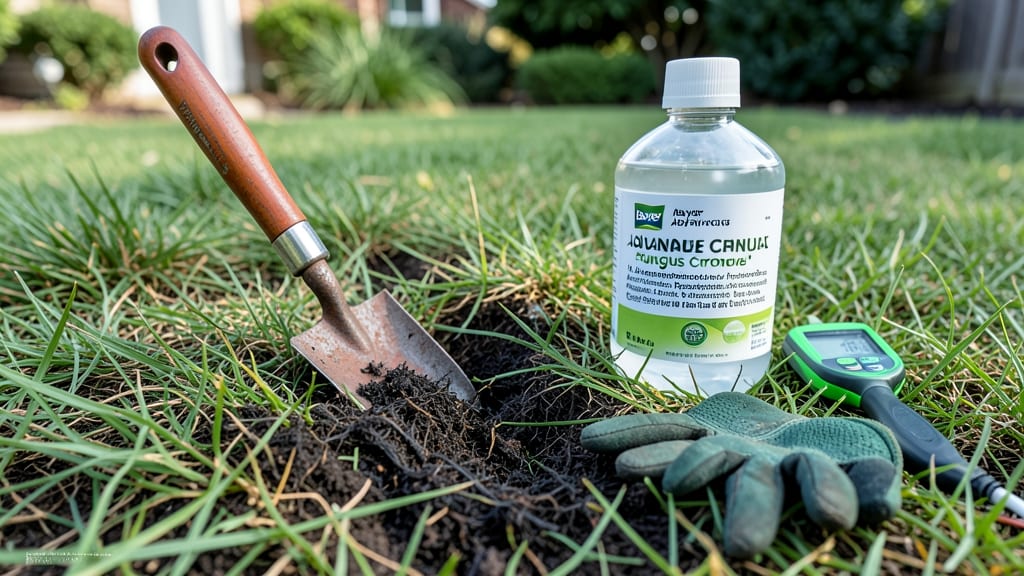
The black fungus creeping across your lawn like a shadow? That’s black lawn fungus, and it’s more fixable than you think. ✨ I’ve battled dollar spot and brown patch myself—those stubborn dark patches that turn your yard from green pride to frustrating puzzle.
The good news? With the right approach, you can stop the spread and restore your lawn’s vibrancy in just a week.
Most fungal issues start with excess moisture or poor drainage, but the fix isn’t complicated. You’ll need basic tools (a rake, fungicide, and maybe a hose with a gentle spray), and a few key steps to break the cycle.
Think of it like giving your lawn a deep clean—airflow, sunlight, and the right treatment can turn those black spots into history. Let’s get your grass back to its best in no time.
📚 In This Guide
- What you need
- Instructions
- Tips and common mistakes
- Wrapping up and next steps
What you need
- ● Fungicide (organic or chemical): 1–2 gallons of copper fungicide (for organic approach) OR
- ● 1–2 bottles of propiconazole-based fungicide (chemical option, follow label rates).
- ● Garden hose with nozzle: For even water distribution (preferably a spray nozzle or soaker hose).
- ● Lawn rake or dethatcher: Metal or plastic, with tines spaced ¼–½ inch apart for effective thatching.
- ● Gloves (heavy-duty): 1 pair to protect your hands from fungus spores and chemicals.
- ○ Pruners or shears: For trimming affected grass and debris (optional but helpful).
- ● Broadcast spreader: For even application of fungicide (manual or drop-type).
- ● pH test kit: To check soil acidity (ideal range: 6.0–7.0 for fungus prevention).
- ● Compost or topsoil: 1–2 bags (for patchy areas needing re-seeding).
- ● Lawn seed (fast-growing): 1–2 lbs (e.g., ryegrass or fescue for quick recovery).
- ● Safety goggles: If using chemical fungicides near eyes or windy conditions.
- ● ✅ Dry weather forecast: Avoid treating if rain is expected within 24–48 hours (fungicide needs time to work).
- ● ✅ Mow the lawn: Cut grass to 2.5–3.5 inches before treatment for better coverage.
- ● ✅ Clear debris: Remove leaves, thatch, or dead grass from the affected area.
How to identify and treat black lawn fungus fast
Black spots on your lawn don’t have to mean a total overhaul—here’s how to tackle them effectively.
🌱 Step 1: Confirm It’s Fungal Black Spot and Rule Out Other Issues
Before treating, confirm it’s actually black spot fungus. Walk your lawn in the morning when dew is present—look for small, circular black or dark brown patches with a slightly lighter border. These spots often appear in spring or fall when conditions are damp and warm.
Rule out other culprits first. If the spots are grayish-white and fuzzy, it’s likely dollar spot. If the grass feels spongy and smells foul, you’ve got a thatch problem. Black spot fungus thrives on thick, wet thatch layers, so if your lawn feels like a soggy sponge, that’s your first clue.
✂️ Step 2: Improve Airflow and Reduce Moisture Buildup
Fungus loves damp, shaded conditions. Start by mowing your lawn slightly shorter—about 2.5 to 3 inches—to allow better airflow. Avoid cutting more than ⅓ of the grass blade at once, or you’ll stress the lawn further.
Rake up any thatch buildup with a spring-tine rake, focusing on the affected areas. You’re not trying to remove all thatch—just loosen the top layer so air and sunlight can reach the soil. Water the lawn deeply but only in the morning to prevent evening moisture from lingering. Aim for 1 inch of water per week, including rainfall.
💧 Step 3: Apply a Natural Fungicide Treatment
For a natural approach, mix 1 quart of hydrogen peroxide (3%) with 1 gallon of water in a sprayer. Apply it evenly over the black spots on a dry, wind-free morning. Hydrogen peroxide breaks down into water and oxygen, killing fungus while being safe for grass.
If you prefer a baking soda solution, dissolve 1 tablespoon of baking soda in 1 gallon of water and spray it directly on the affected areas. Reapply every 5-7 days until the spots fade. Avoid using vinegar—it’s too harsh and can damage grass.
☀️ Step 4: Strengthen the Lawn for Long-Term Resistance
Fertilize your lawn with a low-nitrogen, high-potassium blend to help it recover. Look for a ratio like 10-10-20 or 5-10-15. Apply it evenly over the entire lawn, not just the black spots, to promote overall health. Water lightly after applying to help the granules settle into the soil.
Overseed bare or thinning areas with a disease-resistant grass seed mix suited to your climate. Rake the soil lightly to create a good seed-to-soil contact, then cover with a thin layer of straw mulch to retain moisture. Keep the area moist but not soggy until new grass sprouts in 14-21 days.
⏰ Step 5: Monitor and Prevent Recurrence
Check your lawn weekly for new black spots, especially after rain. If you notice them returning, increase airflow by aerating the soil with a manual aerator or renting a core aerator. This pulls small plugs of soil, allowing water and nutrients to reach the roots more easily.
Adjust your watering schedule if needed. If your lawn stays damp for more than 48 hours after watering, you’re overwatering. Aim for deep, infrequent watering rather than light, daily sprinkles. A healthy lawn with good airflow and proper watering will naturally resist black spot fungus.
Tips & tricks for eliminating black lawn fungus naturally
Here's what nobody tells you about making these treatments work faster and more effectively.
Timing is Everything: Apply your natural fungicide treatments on a dry, wind-free morning—this gives the solution time to absorb fully before any rain or evaporation sets in. I've found that treating right after a light rain (when the lawn is damp but not soaked) actually helps the solution penetrate deeper into the grass blades. The key is to avoid treating in the evening, as evening moisture can create the perfect conditions for fungus to thrive.
Visual Cues for Better Results: When you're checking for black spot fungus in Step 1, look for the classic "bullseye" pattern—dark center with a lighter ring around it. This pattern helps distinguish it from other lawn issues. In Step 2, after mowing, if you notice the grass blades feel overly wet or slimy, you're dealing with thick thatch that needs more aggressive raking. This is your signal to focus extra attention on those areas during your thatch cleanup.
Treatment Frequency: The 5-7 day reapplication schedule for baking soda treatments is crucial—don't skip it! I've seen many people apply once and expect immediate results. Fungus needs consistent disruption to its environment. For hydrogen peroxide treatments, you can actually apply it more frequently (every 3-4 days) since it breaks down quickly and won't harm your lawn. The consistent treatment schedule is what breaks the fungus's life cycle.
Lawn Health Check: In Step 4, when you're fertilizing, pay attention to how your lawn responds in the first 24 hours after application. If you see yellowing or wilting, you're likely overdoing it with the fertilizer. A healthy lawn should show signs of recovery within 3-5 days—not immediate dramatic changes. This gradual improvement is what tells you the treatment is working properly.
Pro Tips for Black Lawn Fungus
- Here's what nobody tells you about making these treatments work faster and more effectively.
- Timing is Everything: Apply your natural fungicide treatments on a dry, wind-free morning—this gives the solution tim...
- Visual Cues for Better Results: When you're checking for black spot fungus in Step 1, look for the classic "bullseye"...
Frequently asked questions
Got questions about black lawn fungus? You’re not alone!
Here are the most common concerns—and quick, natural solutions—from homeowners just like you.
What causes black spots on my lawn, and is it really fungus?
Black lawn fungus, often called black spot disease or Rhizoctonia, thrives in warm, humid weather and damp grass. Overwatering, poor drainage, or dense shade can create the perfect breeding ground. If the spots are dark, circular, and spreading, it’s likely fungal—not just dirt or algae.
How fast can I get rid of black fungus naturally in 7 days?
With consistent treatment, you can significantly reduce black fungus in a week. Focus on removing affected grass, improving airflow, and applying a vinegar or baking soda spray (1:1 ratio with water). For stubborn cases, repeat daily and pair with cornmeal fungus control to starve the spores.
Should I water my lawn more or less to stop black fungus?
Less! Fungus loves moisture—water only when the top inch of soil is dry (early morning is best). Avoid overhead sprinklers that keep leaves wet. If your lawn has poor drainage, aerate the soil to help it dry faster and prevent future outbreaks.
What’s the best natural alternative to chemical fungicides?
Skip harsh chemicals! Try these DIY fungicides:
- Neem oil spray (1 tbsp neem oil + 1 tsp mild soap per gallon of water)
- Hydrogen peroxide (3%) (1 part peroxide to 16 parts water—spray and rinse after 24 hours)
- Milk spray (1 part milk to 9 parts water—spray weekly for prevention)
All are safe for pets and kids once dry!
Will black fungus come back if I don’t treat the soil?
Yes—fungus always returns if conditions stay ideal. After treating, overseed bare spots with drought-resistant grass, mow high (3–4 inches) to improve airflow, and fertilize lightly (too much nitrogen fuels fungus). Regularly rake up thatch to break up fungal hiding spots.
Pro Tip: Test your soil’s pH! Fungus thrives in acidic soil (below 6.0). If yours is too low, add lime to raise the pH to 6.5–7.0 for a healthier lawn.
Wrapping up and next steps
Dealing with black lawn fungus doesn’t have to be a stressful battle—with the right natural remedies and consistent effort, you can restore your lawn’s health in just 7 days! 🌱 The key lies in early action, proper cleanup, and preventive care to keep those pesky black spots away for good.
Ready to take the next step? Start by applying your chosen treatment today and monitor progress closely. If the problem persists, consider testing your soil or consulting a local lawn care expert for tailored advice. Your dream green lawn is within reach—let’s make it happen! 💪