
Lawn
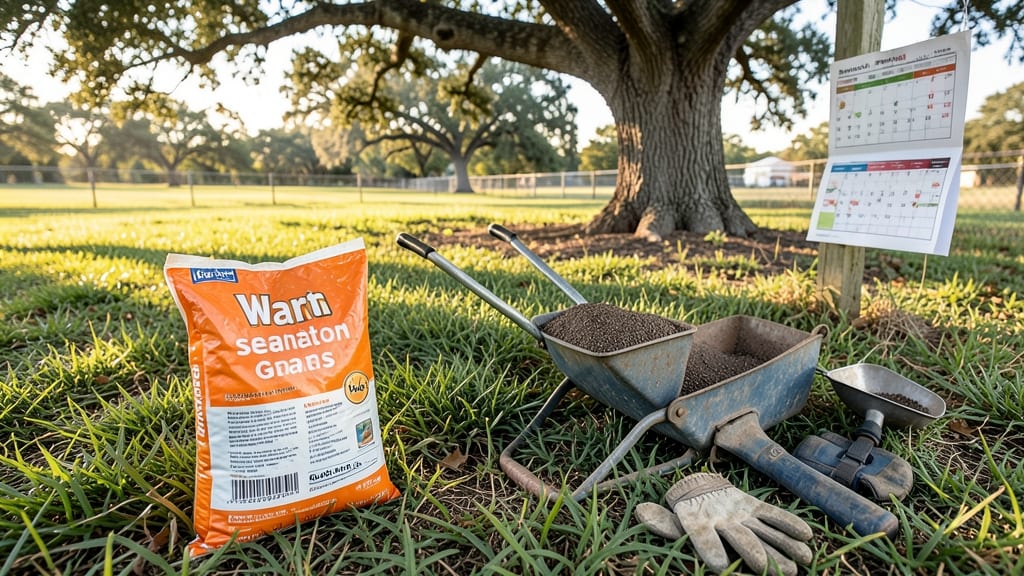
To fertilize lawn in South Texas at the right times means beating the heat and drought before they beat your grass 🌱 — and the window is narrower than you think.
South Texas’ scorching summers and unpredictable rains can turn your lawn into a battleground—unless you fertilize at the perfect times to outsmart the heat and drought. Skip the wrong schedule, and you’ll waste money on weak growth or even invite weeds.
But get it right, and you’ll have a lush, resilient lawn that thrives year-round—no matter how brutal the climate.
Most homeowners overlook the critical spring and late summer feedings that build deep roots before the worst heat hits. A single misstep—like fertilizing too late in summer—can leave your grass struggling when temperatures soar past 100°F.
The solution? A heat-resistant schedule tailored to your grass type, whether it’s Bermuda, St. Augustine, or Zoysia.
Below, I’ll break down the exact months to fertilize, how to choose the right type for South Texas’ clay soils, and why watering after feeding makes all the difference. No guesswork—just a lawn that stays green even when the rest of the neighborhood wilts.
South Texas fertilizer schedule: month-by-month heat-resistant timeline
South Texas lawns face brutal heat, heavy clay soils, and unpredictable rainfall—making fertilization timing everything. The wrong schedule can waste money or even kill your grass, while the right approach builds heat resistance and drought tolerance.
I’ve broken down the science-backed windows for Bermuda, St. Augustine, and Zoysia grass, including when to apply pre-emergent herbicides to block weeds during monsoon season.
Your lawn’s nutrient needs shift dramatically with the seasons. Spring is for root establishment, summer demands light feedings to avoid burn, and fall preps your grass for winter dormancy.
Even the USDA Zone 9a-10a climate requires adjustments—like skipping winter fertilization entirely, since grass barely grows when temps drop below 60°F.
| Month | Fertilizer Task | Grass Types | Notes | Pre-Emergent Timing |
|---|---|---|---|---|
| January | Light organic feed (if needed) | St. Augustine, Bermuda (dormant) | Avoid synthetic N; use compost | N/A (Weeds dormant) |
| February | First major feeding (16-4-8) | All types (active growth) | Apply after first mowing | Apply pre-emergent late Feb |
| March | Second feeding (slow-release) | Bermuda, Zoysia (high demand) | Increase watering post-feed | N/A (Weeds emerging) |
| April-May | Light monthly feed (half-strength) | All types (heat stress risk) | Avoid midday application | Reapply pre-emergent in May |
| June-July | Minimal feeding (iron/manganese only) | Bermuda (chlorosis risk) | Focus on deep watering | N/A (Too hot for weeds) |
| August | Post-monsoon recovery feed | St. Augustine, Zoysia | Test soil pH first (clay soils) | Apply pre-emergent early Aug |
| September | Final heavy feeding (30-0-4) | All types (root hardening) | Stop by October 1 | N/A (Weeds decline) |
| October-November | Light winterizing feed | St. Augustine (slow grower) | Reduce watering gradually | N/A (Weed season over) |
| December | No fertilization | All types (dormant) | Focus on aeration if compacted | N/A |
For Bermuda grass, I recommend a high-nitrogen blend in spring to fuel rapid growth, but switch to iron supplements in summer to prevent yellowing. St. Augustine, however, thrives on slow-release fertilizers year-round—it can’t handle the heat stress of quick-acting formulas.
Always adjust for drought conditions: skip summer feedings if rainfall drops below 1 inch per week.
Timing your pre-emergent herbicide is just as critical. Apply it late February to block winter annual weeds, then reapply in May and early August to stop summer weeds like chickweed and crabgrass. Pro tip: Water lightly after application to activate the herbicide without washing it away.
South Texas’ clay-heavy soils often need soil amendments before fertilizing. I test my soil in January and add gypsum if compaction is an issue. For
5 Critical signs your South Texas lawn needs fertilizer (and when to act)
South Texas lawns don’t just look different—they act differently when they’re starving for nutrients. Bermuda grass and St. Augustine both show distinct warning signs, but most homeowners miss them until the damage is done.
I’ve seen yellow patches spread like wildfire in 100°F heat because someone waited too long to act. The good news? These 5 visual cues will tell you exactly when to grab that fertilizer—before your lawn becomes a weed magnet.
First, let’s talk color changes. A healthy Bermuda lawn should be a deep green-blue, while St. Augustine leans toward rich dark green. If you’re seeing pale yellow or straw-like patches, that’s your lawn screaming for nitrogen.
In South Texas clay soils, this often means low pH (too acidic) or compacted roots starving for air. Don’t ignore it—this is your first warning sign.
Texture is your next clue. Run your hand over your lawn—if it feels sponge-like or mushy underfoot, that’s thatch buildup or fungal stress from overwatering and under-fertilizing. St. Augustine, especially, gets soft and weak when it’s phosphorus-deficient. Meanwhile, Bermuda grass might develop crunchy, brittle blades if it’s potassium-starved. Both are red flags that your soil’s missing key nutrients.
- 🌱 Pale Yellow Patches: Nitrogen deficiency (common in Bermuda after summer). Act by late February or early September.
- 🌿 Sponge-Like Texture: Thatch/fungal stress (seen in St. Augustine). Aerate + fertilize with high-potassium blend.
- ✂️ Slow Growth Spikes: Phosphorus shortage. Apply bone meal in spring or fall.
- 💧 Wilting Despite Water: Micronutrient lack (iron/manganese). Use chelated fertilizer in clay-heavy soils.
- 🌡️ Brown Tips in Heat: Over-fertilized last season. Flush soil with 2 inches of water immediately.
Here’s where most homeowners mess up: they see slow growth and assume it’s just the South Texas heat. Wrong!
If your lawn is growing 50% slower than neighbors’ (or than its peak spring speed), that’s a phosphorus or nitrogen crisis. Bermuda grass, for example, should recover aggressively after September rains. If it’s still lagging in November, your soil’s nutrient bank is empty.
Time to feed it—but choose a slow-release formula to avoid burn.
Don’t overlook soil pH, either. South Texas’ clay soils often test acidic (pH 5.5–6.5), which locks out essential nutrients like iron and zinc. If your lawn has yellowing between veins (a classic chlorosis sign), grab a soil test kit ($20 at garden centers).
If pH is below 6.0, lime is your fix—apply in early spring before fertilizing. Pro tip: St. Augustine thrives at pH 6.0–7.5, while Bermuda likes it slightly acidic (5.5–6.5).
Finally, watch for weed invasion. Crabgrass and dandelions love weak, nutrient-depleted lawns. If you’re seeing more weeds than grass in high-traffic areas, your lawn’s root system is too weak to compete. Fertilize with a high-nitrogen (like 30-0-4) in March to outcompete weeds before they take over.
And if you’ve already got weeds? Spot-treat first, then feed the lawn—don’t just mask the problem.
Remember: in South Texas, timing is everything. If you see these signs in June, hold off—your lawn’s dormant-ish in the heat. But by August, it’s begging for nutrients to recover from the monsoon season.
Act now, and you’ll have a thick, green carpet by November—no guesswork needed. 🌱