
Lawn
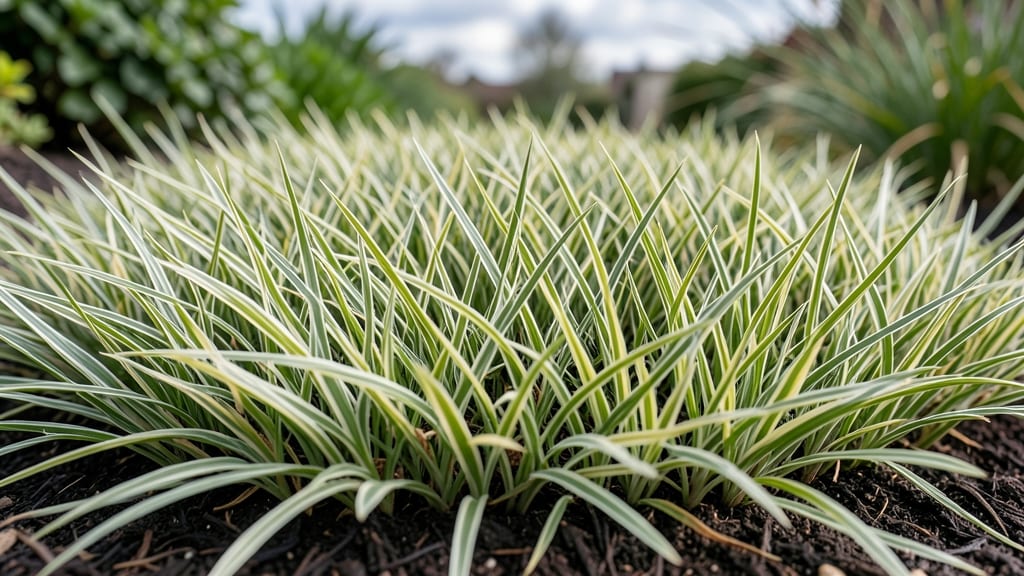
Variegated lawn grass transforms ordinary yards into striking, conversation-starting landscapes. 🌿 I planted my first strip last spring, and the bold green-and-white patterns make my lawn look like an art installation—without the upkeep of a formal garden.
Unlike traditional grass, this ornamental variety thrives on attention, demanding specific soil, sunlight, and watering to maintain its signature stripes.
The secret to success lies in full sun exposure and well-draining soil with a slightly acidic pH (6.0-6.5). Most variegated grasses struggle in heavy clay or compacted soil, so amending with compost or sand before planting is critical.
Water deeply 2-3 times per week in the first month, then taper to 1 inch per week once established—overwatering causes the stripes to fade. Mowing at 3-4 inches tall preserves the pattern while keeping growth manageable.
By summer, your lawn will feature dramatic 12-18 inch wide stripes that shift with sunlight, creating a dynamic, high-contrast look. Unlike standard grass, this variety stays green year-round in mild climates, offering four-season curb appeal with minimal effort.
The trade-off? It’s not child- or pet-friendly—those stripes disappear under foot traffic, so designate it as an ornamental border or high-visibility pathway.
Common challenges include stripe fading in heat or drought, so mulch lightly in summer to retain moisture. Avoid fertilizers with high nitrogen, which can dull the variegation.
For best results, pair it with drought-tolerant ground covers along walkways. Ready to ditch the boring green? Here’s how to make it work in your space.
📚 In This Guide
- What you need
- Instructions
- Tips and common mistakes
- Wrapping up and next steps
What you need
- ● Variegated lawn grass seed: Choose a mix like Zoysia japonica 'Meyer' or Fescue 'Aurora' (20–30 lbs per 500 sq. ft. for full coverage).
- ● Lawn soil test kit: To check pH and nutrient levels (available at garden centers).
- ● Topsoil or compost: 2–3 inches of high-quality topsoil (organic matter content: 5–10%) or compost for amending soil.
- ● Lawn fertilizer: Slow-release, balanced formula (10-10-10 or 16-4-8) with micronutrients like iron and manganese.
- ● Broadcast spreader: For even seed distribution (manual or drop-type, calibrated for your seed type).
- ● Rake (bow or stiff-bristle): To level soil and cover seeds lightly.
- ● Watering system: Hose with adjustable nozzle or sprinkler (soaker hose for gentle watering).
- ○ Lawn roller (optional but helpful):** Lightweight (50–100 lbs) for firming soil post-seeding.
- ● Starter fertilizer: High-phosphorus blend (e.g., 10-20-10) to kickstart seed germination.
- ● Mulching fabric: Biodegradable netting to protect seeds from birds and erosion.
- ● pH adjuster: Lime (to raise pH) or sulfur (to lower pH) if soil test recommends it.
- ● Organic weed barrier: Cardboard or landscape fabric (for areas with stubborn weeds).
- ● Garden gloves & knee pads: For comfort during prep and planting.
- ● Lawn aerator: Core aerator (rent or buy) if your soil is compacted.
Step-by-step instructions for planting variegated lawn grass
Here's how to create a striking, low-maintenance lawn with bold striped grass that stands out year-round.
🌱 Step 1: Prepare the Soil for Optimal Drainage and Nutrients
Start by testing your soil's pH—variegated grasses thrive in 6.0-7.0 range. If your soil is heavy clay or compacted, mix in 1-2 inches of compost and 1 inch of coarse sand to improve aeration. Work these amendments into the top 6 inches of soil using a garden fork or tiller.
Remove any existing weeds or grass by smothering with a thick layer of cardboard or landscape fabric for 4-6 weeks before planting. This prevents competition and ensures your variegated grass gets the nutrients it needs. Once the area is clear, rake the soil smooth to create a fine seedbed—think "sandy beach" texture, not clumpy.
🌱 Step 2: Choose and Plant the Right Grass Varieties
Variegated lawns work best with a mix of striped fescue and creeping red fescue for durability. Spread 10 pounds of seed per 1,000 square feet evenly using a broadcast spreader set to medium. For bold stripes, plant striped fescue in 6-inch-wide bands alternating with regular fescue.
Lightly rake the seeds into the soil with a stiff-bristled rake, pressing them just enough to make contact with the earth. Avoid covering them completely—they need light to germinate. Water immediately with a fine mist until the soil is uniformly damp to a depth of 1 inch.
💧 Step 3: Maintain Consistent Moisture During Germination
Keep the soil moist but never soggy for the first 2-3 weeks—this is when seeds germinate. Water lightly twice daily if temperatures exceed 80°F, or once daily in cooler weather. You'll know moisture is right when the soil surface looks slightly dark but not glistening.
Once seedlings reach 2 inches tall, gradually reduce watering to 1 inch per week, including rainfall. This prevents disease and encourages deep root growth. Avoid walking on the lawn until the grass reaches 3 inches—you'll see the striped pattern emerge clearly at this stage.
☀️ Step 4: Mow and Fertilize for Bold, Healthy Stripes
Wait until the grass reaches 3-4 inches tall before mowing for the first time. Set your mower blade to 3 inches—taller grass shades out weeds and develops deeper roots. Mow when the grass is dry to avoid clumping, and always mow in different directions each time to prevent soil compaction.
Apply a slow-release fertilizer formulated for fescue grass in early spring and again in early fall. Avoid high-nitrogen fertilizers—they promote leafy growth at the expense of the variegated pattern. Over time, your stripes will become more defined as the grass matures.
✂️ Step 5: Overseed and Maintain for Long-Term Beauty
Every 3-4 years, overseed thin patches with 1 pound of seed per 500 square feet to maintain the striped effect. Spring or early fall are the best times—when soil temperatures are 60-70°F. Lightly rake the area, spread the seed, and water gently to keep it moist until germination.
To keep stripes sharp, avoid heavy foot traffic in one area. If weeds appear, hand-pull them immediately—chemical herbicides can damage the variegated pattern. With proper care, your bold striped lawn will be the envy of the neighborhood, requiring less maintenance than traditional grass while delivering year-round visual interest.
Tips & tricks for perfect variegated lawn grass
A few strategic moves will help you achieve those stunning striped patterns without the usual lawn headaches. Here's what I've learned from years of experimenting with variegated grass varieties.
Soil Prep Secret: The 4-6 week smothering period for weeds is non-negotiable—this ensures your striped fescue won't compete with existing vegetation. I've found that adding a thin layer of peat moss (about ½ inch) along with the compost and sand creates an even more ideal seedbed texture. This extra layer helps maintain moisture while preventing compaction during germination. The goal is that "sandy beach" texture mentioned in the instructions, and peat moss helps achieve that without feeling gritty.
Planting Pattern Pro Tip: When creating those 6-inch-wide striped fescue bands, use a simple DIY guide: lay down a length of rope or string every 6 inches before spreading the striped fescue seed. This ensures perfectly straight bands that will maintain their definition as the grass matures. The alternating pattern creates natural shadow lines that make the stripes appear even bolder once established.
Germination Watch: During those critical first 2-3 weeks, I've discovered a simple visual test for proper moisture: press your finger about 1 inch into the soil. If it comes out clean but the surrounding soil feels slightly damp (not wet), you're golden. The "slightly dark but not glistening" description in the instructions is perfect—this prevents both underwatering and the fungal issues that come from soggy conditions. I keep a small spray bottle handy for quick adjustments between waterings.
Long-Term Maintenance Hack: To keep those stripes sharp during mowing, I recommend marking your lawn with small stakes or flags at the edges of each striped band. This visual guide prevents you from accidentally cutting across the stripes when mowing in different directions. The 3-inch mowing height is perfect—it keeps the grass healthy while allowing the variegated pattern to remain visible year-round. I've found that mowing when the grass is slightly damp (not wet) prevents clumping and gives cleaner cuts.
Pro Tips for Variegated Lawn Grass
- A few strategic moves will help you achieve those stunning striped patterns without the usual lawn headaches. Here's ...
- Soil Prep Secret: The 4-6 week smothering period for weeds is non-negotiable—this ensures your striped fescue won't c...
- Planting Pattern Pro Tip: When creating those 6-inch-wide striped fescue bands, use a simple DIY guide: lay down a le...
Frequently asked questions
Got questions about variegated lawn grass?
You’re not alone! Here are answers to the most common curiosities—so you can create (and maintain) that stunning striped lawn with confidence.
What’s the best time of year to plant variegated grass?
Plant in early spring or early fall when temperatures are mild (50–75°F). Avoid extreme heat or frost—these conditions stress seedlings and slow growth. For best results, aim for April–May or September–October in most U.S. climates. Pro tip: Test soil pH (6.0–7.0 is ideal) before planting!
Why is my variegated grass losing its stripes?
Stripe fading often happens due to nutrient imbalance, overwatering, or shade stress. Use a low-nitrogen fertilizer (like 10-10-10) and avoid heavy watering—keep soil evenly moist, not soggy. If stripes dull, mow higher (3–4 inches) to protect chlorophyll production. Fix: Trim back nearby trees to boost sunlight exposure!
Is variegated grass more expensive than regular turf?
Yes! Expect to pay $1.50–$4 per square foot for variegated grass (vs. $0.50–$1.50 for standard turf). However, the long-term payoff is worth it—its unique look boosts curb appeal and reduces mowing frequency (thanks to slow growth). Budget hack: Start with small sections (like borders) before committing to full lawns!
Can variegated grass handle cold winters or hot summers?
It’s hardy in USDA Zones 5–9, but extremes test its limits. In hot climates, mulch lightly to retain moisture; in cold zones, add a thin layer of straw in winter. Drought tolerance is moderate—water deeply 2–3 times/week during dry spells. Pro tip: Choose ‘Emerald Carpet’ or ‘Variegata’ varieties for better heat/cold resilience!
What’s a good alternative if variegated grass is too high-maintenance?
Try these low-maintenance striped options:
- Creeping Thyme (drought-resistant, fragrant, purple stripes)
- Variegated Mondograss (tropical look, thrives in shade)
- Zebra Grass (Miscanthus) (ornamental, cold-hardy)
- Striped Groundcover Roses (adds color + texture)
For full grass coverage, mix variegated grass with regular fescue (70% fescue, 30% variegated) to reduce costs while keeping stripes!
Wrapping up and next steps
Transforming your lawn into a striking variegated masterpiece is easier than you think!
With the right mix of grass types, patience, and care, you’ll achieve that wow-worthy curb appeal that stands out year-round. 🌿✨ Whether you’re starting fresh or revamping an existing space, your efforts will pay off in bold, beautiful stripes that turn heads—and maybe even inspire your neighbors!
Ready to take the next step? Start small—test a patch, monitor progress, and refine your approach. Before you know it, your lawn will be the envy of the block! 🌟 Grab your supplies and get growing today!