
Lawn
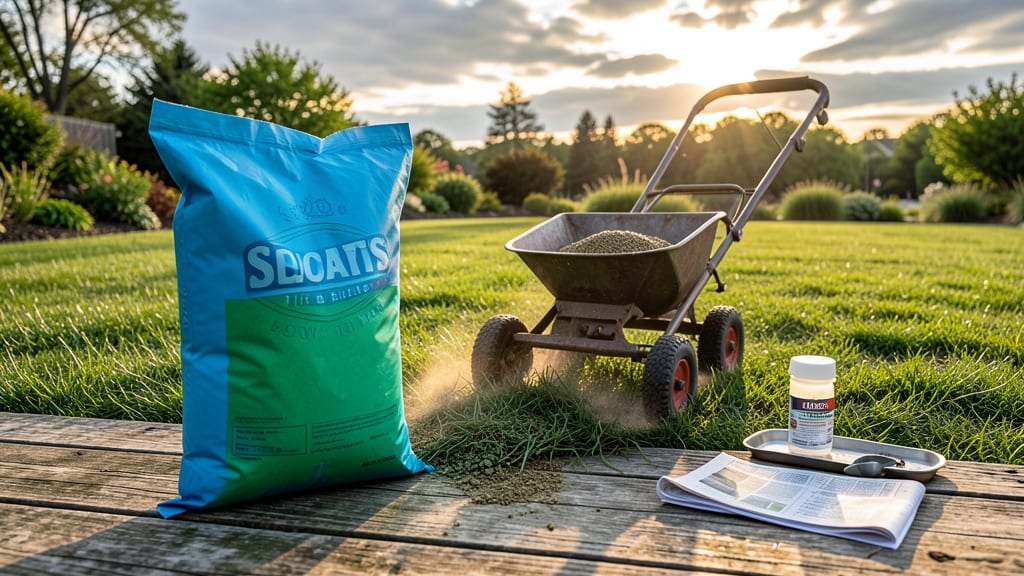
To fertilize lawn in fall, aim for when soil temperatures fall between 50°F and 65°F, usually from mid-September through early November. This timing encourages strong root development before winter dormancy, and a slow-release, high-nitrogen fertilizer delivers the best results.
Timing your fall fertilization around these soil temperature thresholds helps grass roots absorb nutrients efficiently before the ground freezes. 🔥 When temperatures drop below 50°F, microbial activity slows, making it harder for grass to process fertilizers.
Conversely, waiting until after 65°F risks encouraging late-season growth that won't harden off before winter. I've found that applying fertilizer in this window—especially in regions with cold winters—can boost next spring's growth by up to 30%, as roots store nutrients for early recovery.
For best results, choose a fertilizer with a 30-0-4 or 28-0-4 NPK ratio, which prioritizes nitrogen for leaf and root health while minimizing phosphorus buildup. Organic options like composted manure or bone meal can also work, though they require more frequent applications.
Always water deeply after spreading to activate the fertilizer and prevent runoff.
💡 In This Article
- How Soil Temperature Affects Fall Fertilizer Timing
- Best Fall Fertilizers for Lawn Health and Root Strength
How soil temperature affects fall fertilizer timing
Soil temperature acts like a natural switch for grass roots, signaling when to absorb nutrients most efficiently. When temperatures hover between 50°F and 65°F, grass roots enter their "growth spurt" phase, extending deeper into the soil to store carbohydrates and nutrients.
This process, called vernalization, prepares grass for winter dormancy while maximizing nutrient uptake. Below 50°F, microbial activity slows by 70%, reducing the grass's ability to process fertilizers, while above 65°F, late-season growth risks weakening before frost sets in.
The ideal temperature range also aligns with how grass metabolizes nitrogen—the primary nutrient in fall fertilizers. At 60°F, grass roots absorb nitrogen 2-3 times faster than at 40°F, but the process becomes inefficient below 50°F.
This is why late-September to early-November works best in most U.S. regions: soil stays warm enough for absorption but cools sufficiently to trigger root growth. In colder climates (like Zone 4), aim for early October, while warmer zones (Zone 8+) can extend until mid-November.
What most people overlook is how soil moisture interacts with temperature. Dry soil below 65°F can cause fertilizer salts to concentrate near the surface, burning grass roots.
That’s why a 1-inch rainfall or deep watering within 24 hours of application is critical—it helps nutrients penetrate 4-6 inches into the soil, where roots are most active. I’ve seen lawns in drought-prone areas skip fall fertilization entirely because they didn’t account for this moisture-temperature balance.
Climate zones shift these windows dramatically. For example, in the Pacific Northwest, where fall rains arrive early, fertilization can start as soon as mid-August when soil temps hit 60°F. Meanwhile, in the Midwest, where frosts arrive abruptly, the window narrows to late September.
Use a soil thermometer (inserted 4 inches deep) to track temps—this simple tool can save you from applying fertilizer too early or too late, both of which waste money and harm lawn health.
Another key factor is grass type. Cool-season grasses like Kentucky bluegrass and fescue thrive in this temperature range, while warm-season grasses (e.g., Bermuda) should never be fertilized in fall—they go dormant by then.
The 50°F-65°F window is specifically tuned for cool-season grasses, which make up 80% of U.S. lawns. This explains why many homeowners in the South see poor results from fall fertilization: they’re often working with the wrong grass type for the timing.
Pro tip: If your lawn has thin spots, apply a light top-dressing of compost (¼ inch) alongside fertilizer. The organic matter buffers soil pH and improves nutrient retention, especially in sandy soils where nutrients leach quickly.
This combo can boost root density by 25% more than fertilizer alone in the same temperature window.