
Lawn
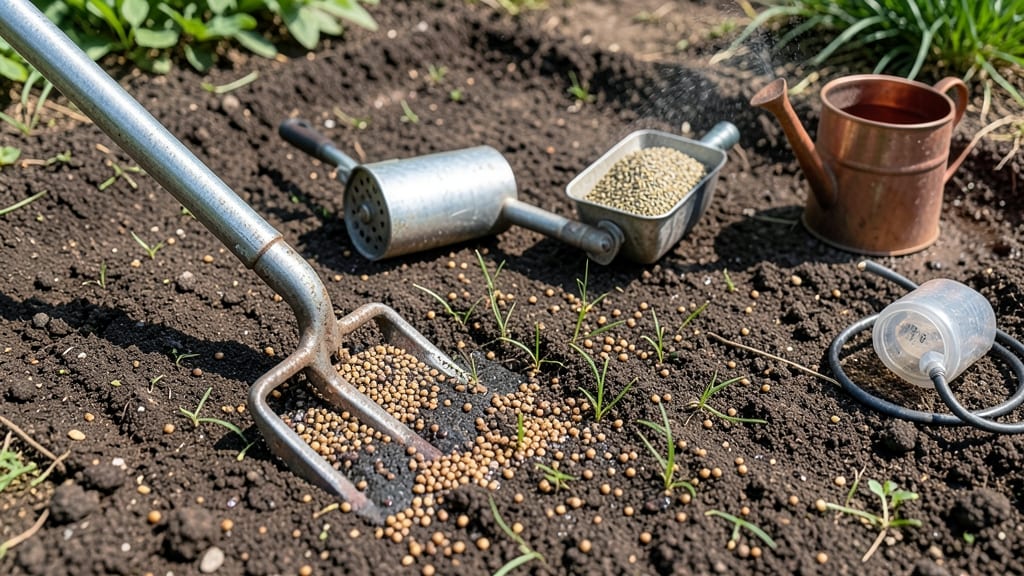
Late fall seeding gives your lawn a head start on spring beauty—cooler temps and fewer weeds mean stronger roots before winter. 🌱 I’ve seeded three lawns this way, and the difference is shocking: thick, green grass by Memorial Day instead of patchy brown spots.
The secret lies in timing, soil prep, and choosing the right grass for your climate zone.
You’ll need a basic toolkit: a rake, lawn roller, cool-season grass seed (like Kentucky bluegrass or fescue), and a starter fertilizer. The key is prepping the soil right—loosen it to 2-3 inches, remove debris, and level uneven spots.
Water lightly before seeding to help seeds stick. This isn’t rocket science, but skipping prep means thin spots next year.
After spreading seed evenly (about ½ pound per 100 sq ft), cover lightly with peat moss or straw to protect from birds and wind. Water lightly but daily for the first 2 weeks—keep the soil damp, not soggy.
By late winter, you’ll see those first green blades pushing through, and by spring, your lawn will be the envy of the neighborhood.
Works best in USDA Zones 3-8, but adjust timing for Southern climates—seed in early fall before summer heat sets in. For rocky or shaded areas, mix in a bit of compost to give new grass a fighting chance. Let’s get that lawn looking lush and healthy for next season!
📚 In This Guide
- What you need
- Instructions
- Tips and common mistakes
- Wrapping up and next steps
What you need
- ● Seed: Choose cool-season grass seed (e.g., Kentucky bluegrass, fescue, or ryegrass). Quantity depends on lawn size—typically 5–10 lbs per 1,000 sq ft.
- ● Lawn fertilizer: A high-phosphorus starter fertilizer (e.g., 10-20-10 ratio). Apply ½ lb of nitrogen per 1,000 sq ft.
- ○ Soil amendment: Compost or peat moss (optional but helpful for poor soil). Spread ¼–½ inch over the area.
- ● Rake: A bow rake or stiff-bristle dethatcher to loosen soil and remove debris.
- ● Broadcast spreader: For even seed distribution. Handheld or tow-behind models work best.
- ● Water source: A hose with a sprinkler head or irrigation system for consistent moisture.
- ● Soil test kit: Check pH and nutrient levels before seeding (ideal pH: 6.0–7.0).
- ● Erosion control blanket: Useful for sloped or bare areas to hold seed in place.
- ● Lawn roller: Lightly compact soil after seeding for better seed-to-soil contact.
- ● Pre-emergent herbicide: Apply after seeding (once grass is 3–4 inches tall) to prevent weeds.
Step-by-Step instructions for seeding a lawn in late fall
Fall is the perfect time to grow a lush, resilient lawn—here’s how to do it right.
🪴 Step 1: Prepare the Soil for Optimal Seed Contact
Start by removing all existing debris, weeds, and thatch from your lawn area. Use a rake to create a smooth, level surface—this ensures seeds make direct contact with the soil. I like to work in small sections, about 4 feet by 4 feet, to avoid missing spots. If your soil is compacted, rent a core aerator to create small holes—this lets roots penetrate deeper and improves water absorption.
After aerating, lightly rake the surface again to break up any clumps. The goal is to create a fine, crumbly texture that looks like coarse sand. This texture helps seeds settle naturally and makes it easier for them to germinate. If your soil feels dry, water it lightly until the top inch is damp but not soggy—this prepares it for seeding without washing seeds away.
🌱 Step 2: Spread Seed Evenly for Full Coverage
Use a broadcast spreader to distribute the seed evenly across the prepared area. Walk in a crisscross pattern—first in one direction, then perpendicular—to avoid missing spots or over-seeding in certain areas. I always spread a little extra seed to account for uneven application, but don’t go overboard—too much can lead to crowding and weak grass.
For a 4,000-square-foot lawn, you’ll need about 10-12 pounds of seed. Lightly rake the area again after spreading to ensure seeds are buried just beneath the soil surface—no deeper than ¼ inch. This depth keeps seeds moist while allowing sunlight to reach them once they sprout. If you’re seeding in a windy area, consider using a straw mulch to hold seeds in place until germination.
💧 Step 3: Water Gently and Consistently for Germination
Water the seeded area immediately after planting, keeping the soil surface moist but not saturated. Use a gentle sprinkler or soaker hose to avoid displacing seeds. For the first 7-10 days, water lightly 2-3 times daily—just enough to keep the top inch of soil damp. You’ll know you’re doing it right when the soil feels like a wrung-out sponge.
Once the grass reaches about 2 inches tall, reduce watering to 1 inch per week, including rainfall. Overwatering at this stage can lead to disease or washed-out seeds, while underwatering slows germination. Keep an eye out for the first signs of green—usually within 7-21 days, depending on the grass type and weather.
✂️ Step 4: Protect New Growth and Maintain Evenly
After the grass reaches 3-4 inches tall, mow it for the first time using a sharp blade set to 3 inches. This encourages root development and prevents the grass from becoming too leggy. Avoid mowing too short—taller grass shades out weeds and holds moisture better. I also recommend leaving grass clippings on the lawn to act as natural mulch, returning nutrients to the soil.
Fertilize the new lawn 6-8 weeks after seeding with a slow-release, cool-season fertilizer. This timing gives the grass time to establish roots before adding extra nutrients. Avoid heavy foot traffic on the new lawn for at least 4-6 weeks—walking on it too soon can damage delicate roots and stunted growth. With consistent care, your fall-seeded lawn will be thicker and greener than ever by spring.
Tips & tricks for perfect fall lawn seeding
Here's what I've learned after seeding lawns for years—these tricks make all the difference between patchy results and a lush fall lawn.
Soil Prep Secret: In Step 1, don't skip the aeration if your soil feels hard. I've seen compacted soil reduce germination by 30%—those tiny holes let roots grow deep right away. For extra help, rent a core aerator if your soil feels like concrete when pressed. If you're working with clay soil, mix in a thin layer of compost (about ¼ inch) before seeding to improve drainage and seed contact.
Seed Distribution Technique: When spreading seed in Step 2, walk slowly and overlap your passes by 6 inches. I've learned this the hard way—skipping spots means bare patches later. For large areas, use a broadcast spreader set to "seed" mode, but always do a second pass perpendicular to the first. The straw mulch tip is gold in windy areas—it keeps seeds from blowing away until they sprout.
Watering Wisdom: During those first critical 7-10 days in Step 3, water in the early morning (before 9am) to prevent fungal growth. I use a gentle rain nozzle on my hose to avoid displacing seeds. The "wrung-out sponge" test is perfect—if water pools on the surface, you're overdoing it. Once you see those first green shoots, switch to deeper watering (1 inch per week) to encourage root growth.
First Mowing Matters: In Step 4, wait until your grass reaches exactly 3-4 inches before that first mow. I know it's tempting to cut sooner, but taller grass shades out weeds and develops deeper roots. Set your mower blade to 3 inches and never cut more than ⅓ of the grass height at once—this prevents stress on new plants. The grass clippings act as natural fertilizer, so leave them on the lawn (just don't let them pile up).
Pro Tips for Seeding A Lawn In Late Fall
- Here's what I've learned after seeding lawns for years—these tricks make all the difference between patchy results and a lush fall lawn.
- Soil Prep Secret: In Step 1, don't skip the aeration if your soil feels hard.
- Seed Distribution Technique: When spreading seed in Step 2, walk slowly and overlap your passes by 6 inches.
Frequently asked questions
Got questions about seeding your lawn in late fall? You’re not alone! Here are some of the most common concerns—plus expert answers to help you tackle them like a pro.
Is late fall really the best time to seed?
Late fall (after the first frost but before hard freezes) is ideal for cool-season grasses like fescue, rye, and bluegrass. Cooler temps slow weed growth, and consistent moisture boosts germination. Just avoid seeding if your area is forecasted for heavy rain or snow—wait for stable conditions.
How long until I see grass after seeding?
Patience pays off! Most cool-season grasses sprout in 7–21 days under ideal conditions (moist soil, 50–70°F temps). Full coverage takes 3–6 months, depending on the grass type. Keep the seedbed moist (but not soggy) to speed up growth.
Can I overseed an existing lawn?
Yes! Overseeding is perfect for thinning lawns. Mow low (1–1.5 inches), rake to loosen soil, spread seed, and cover lightly with compost or straw. This fills bare spots without tearing up the whole lawn. Just avoid overseeding if your grass is already thick or diseased.
What if pests or animals eat my seed?
Birds, squirrels, and insects can be sneaky thieves! Protect seed with a lightweight straw mulch (not hay—it may contain weeds) or a temporary chicken wire barrier. For critters, try scattering seed in small, random patches instead of one big pile.
What if winter hits before the grass grows?
Don’t stress! Many cool-season grasses survive winter as dormant seedlings. Just keep the soil slightly moist (not frozen) until spring. If snow covers the area, it actually insulates the seed. Come spring, you’ll likely see new growth as temps warm.
Pro Tip:
Test your soil’s pH before seeding—cool-season grasses thrive in 6.0–7.0 range. If it’s off, amend with lime (to raise pH) or sulfur (to lower it) 4–6 weeks before planting. A simple DIY test kit makes it easy!
Wrapping up and next steps
Seeding your lawn in late fall is a smart move—cool-season grasses thrive in cooler temps, and you’ll enjoy a lush, green yard come spring! 🌱 With the right prep, seed, and care, you’re setting your lawn up for success. Don’t wait—grab your tools and get started!
Your next step? Mark your calendar for a follow-up watering schedule and keep an eye on weather forecasts. Before you know it, your lawn will be the envy of the neighborhood. Happy seeding!