
Lawn
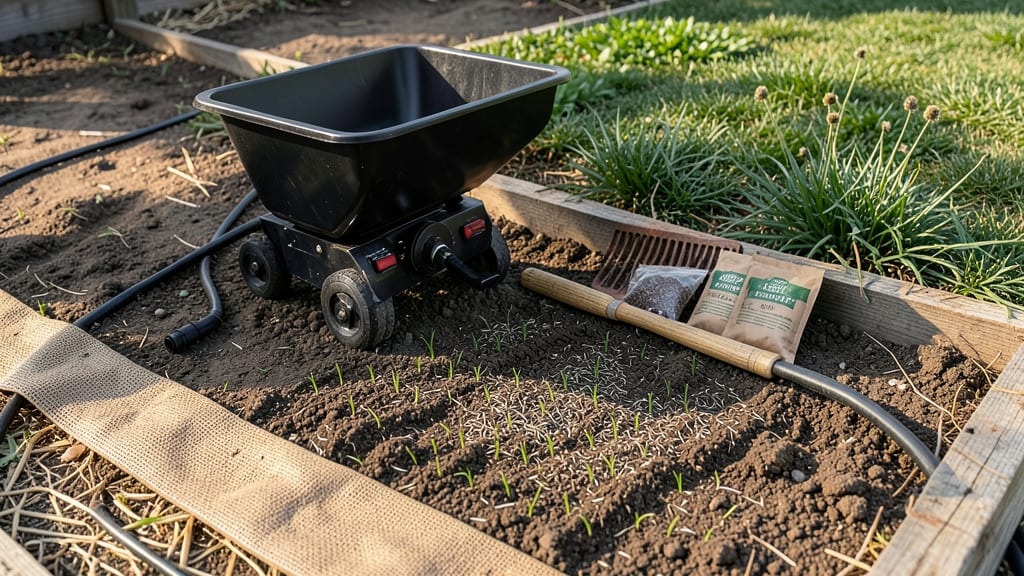
Seeding lawns in fall transforms bare patches into lush grass before winter sets in. ✨ The cooler temperatures and consistent moisture create perfect conditions for seeds to germinate and establish strong roots—something spring seeding struggles to match. I learned this the hard way after my spring overseeding attempt left patches of dirt staring back at me all summer. Fall gives seeds 6-8 weeks of growth before winter slows things down, meaning they’re ready to take off in spring when warmer weather arrives. You’ll end up with a thicker, more resilient lawn that outcompetes weeds naturally. The key is timing: aim for 4-6 weeks before your first frost, when soil stays warm enough for germination but nights are cool enough to prevent stress. Works for both cool-season grasses like fescue and ryegrass, and warm-season grasses in mild climates. Here’s how to make it happen without the common pitfalls.
📚 In This Guide
- What you need
- Instructions
- Tips and common mistakes
- Wrapping up and next steps
What you need
- ● Grass seed: Choose a cool-season blend (e.g., Kentucky bluegrass, fescue, or ryegrass) suited to your climate. Aim for 4–8 lbs per 1,000 sq ft, depending on seed type and lawn condition.
- ● Lawn fertilizer: A high-phosphorus starter fertilizer (e.g., 10-20-10 or 12-24-12 ratio) to promote root growth. Use ½ lb of nitrogen per 1,000 sq ft.
- ● Topsoil or compost: A thin layer (¼ inch) to improve seed-to-soil contact. Opt for organic matter-rich soil or compost.
- ● Lawn rake: A bow rake with ¼–½ inch tines to level the soil and remove debris.
- ● Broadcast spreader: For even seed distribution. A handheld or drop spreader works best for small areas.
- ● Water source: A hose with a sprinkler or garden hose nozzle capable of gentle, even watering.
- ● Soil test kit: Ensures your lawn’s pH and nutrients are optimal (ideal pH: 6.0–7.0 for cool-season grass).
- ● Lawn aerator: Core aeration (if soil is compacted) to improve seed penetration. Rent or buy a manual or motorized aerator.
- ● Seed spreader attachment: For walk-behind spreaders (if you have one).
- ○ Straw or netting: Lightweight ½–1 inch straw to hold seed in place (optional but helpful for windy areas).
- ● Pre-emergent herbicide: Apply before seeding if weeds are a problem (choose a grass-safe option).
- ● Gloves & knee pads: For comfort during prep work.
Step-by-Step guide to seeding lawns in fall
Fall is the prime window for establishing thick, resilient grass—here’s how to do it right.
🌱 Step 1: Prepare the Soil for Optimal Seed Contact
Start by removing all existing vegetation—use a sod cutter or sharp spade to strip away old grass, weeds, and thatch. I like to rent a dethatching rake for this step; it loosens the top layer without disturbing deeper soil structure. Aim for a clean, bare surface with no debris larger than a pencil eraser.
Test the soil pH using a simple kit—ideal levels for most cool-season grasses are 6.0 to 7.0. If your soil tests lower, apply lime according to package instructions 4-6 weeks before seeding. For compacted areas, aerate using a core aerator to create ½-inch deep holes spaced 3-4 inches apart. This ensures seeds make direct contact with moist soil and germinate faster.
💧 Step 2: Choose and Spread Grass Seed Strategically
Select a cool-season grass mix suited to your climate—Kentucky bluegrass, fescue, or ryegrass blends work best in fall. For a 4,000 sq ft lawn, use 10-12 lbs of seed (check the package rate per 1,000 sq ft). I spread seed in two perpendicular directions with a broadcast spreader set to the recommended setting—this prevents clumping and ensures even coverage.
Lightly rake the area with a stiff-bristled lawn rake to press seeds ¼ inch deep into the soil. Deeper planting delays germination, while too-shallow seeds dry out. If your lawn has bare spots or thin areas, overseed those first—you’ll see faster regrowth in those high-traffic zones.
☀️ Step 3: Maintain Consistent Moisture for Germination
Water immediately after seeding to settle the soil and activate the seed. For the first 2 weeks, keep the top 2 inches of soil consistently moist—this means watering lightly 2-3 times daily rather than drowning the area. Use a gentle sprinkler or soaker hose to avoid displacing seeds. You’ll know moisture is right when the soil feels damp like a wrung-out sponge.
Once seedlings reach 1-2 inches tall, reduce watering to 1 inch per week, including rainfall. Let the top ½ inch dry slightly between waterings—this encourages deeper root growth. Avoid heavy foot traffic until the grass reaches 3-4 inches tall to prevent smothering new shoots.
✂️ Step 4: Fertilize and Protect New Growth
Apply a starter fertilizer with low nitrogen (10-20-10 ratio) 2-3 days after seeding to provide essential nutrients without burning tender roots. Follow package rates—overapplying fertilizer can harm young seedlings. For ongoing support, apply a fall lawn fertilizer with higher nitrogen (24-0-6 ratio) 6-8 weeks after seeding to strengthen roots before winter.
Cover the seeded area with straw mulch (not wood chips) at a ¼-inch layer to retain moisture and protect seeds from birds. Remove the mulch after 4-6 weeks once germination is complete. If frost threatens before seeds sprout, cover the area with a lightweight frost blanket—this prevents seed death without suffocating growth.
🌿 Step 5: Transition to Mature Lawn Care
Once new grass reaches 3-4 inches tall and fills in 70-80% of the area, mow with a sharp blade set to 2.5-3 inches to encourage lateral growth. Never remove more than ⅓ of the blade height in a single mowing—this prevents stress and promotes density. Adjust mower settings as the grass grows taller to maintain that ideal height.
Continue watering deeply 1-2 times weekly until the lawn establishes a strong root system (10-12 weeks total). After the first mow, switch to a regular lawn fertilizer in early spring to support ongoing growth. Fall-seeded lawns often outperform spring plantings because cooler temperatures reduce weed competition and stress on young roots.
Tips & tricks for perfect fall lawn seeding
These game-changing insights will help you avoid the most common pitfalls and achieve that lush, thick lawn you've always wanted.
Soil Prep Pro Tip: In Step 1, when testing soil pH, don't just rely on the test kit's color chart—compare your sample to the included reference card under natural light. I've seen pH readings vary by 0.5 points just from different lighting conditions. For compacted areas, consider renting a core aerator—it creates those critical ½-inch deep holes that make all the difference in seed-to-soil contact. If you don't have one, a garden fork worked for me in a pinch, but you'll need to make holes manually.
Seed Application Strategy: The ¼-inch planting depth in Step 2 is non-negotiable, but here's how to check it: Press seeds into soil with your rake, then gently lift a small section. The seeds should be just barely covered—not buried. For large areas, I found using a push broom to lightly drag soil over the seeds after raking works better than trying to rake them in directly. And if you're overseeding bare spots, consider using a hand-held spreader for those high-traffic zones—it gives you more control over coverage.
Watering Wisdom: The 2-week watering window in Step 3 is your most critical period. I recommend setting a timer for your sprinkler system to run for 10-15 minutes every morning and evening—this mimics natural rainfall patterns. Use a rain gauge to measure actual water output; most systems deliver more than you think. When checking soil moisture, dig down 2 inches with a trowel—if it's dry at that depth, you need to water more frequently. The "wrung-out sponge" test is perfect, but I also look for soil to darken slightly when wet.
Fertilizer Timing: The 2-3 day window for starter fertilizer in Step 4 might seem tight, but here's why it works: Young roots are actively growing but haven't developed enough to handle heavy nitrogen loads. I've found that applying the starter fertilizer in the late afternoon gives roots a few hours of darkness to process nutrients before nightfall. For the 6-8 week fall fertilizer, mark your calendar now—this timing helps grass store energy for winter survival while still promoting growth before dormancy.
Pro Tips for Seeding Lawns In Fall
- These game-changing insights will help you avoid the most common pitfalls and achieve that lush, thick lawn you've al...
- Soil Prep Pro Tip: In Step 1, when testing soil pH, don't just rely on the test kit's color chart—compare your sample...
- Seed Application Strategy: The ¼-inch planting depth in Step 2 is non-negotiable, but here's how to check it: Press s...
Frequently asked questions
Got questions about seeding your lawn in the fall? You’re not alone! Here are some of the most common concerns—and straightforward answers—to help you get started with confidence.
Why is fall the best time to seed a lawn?
Fall offers ideal conditions for grass seeds: cooler air, warm soil, and fewer weeds. These factors help seeds germinate faster and establish strong roots before winter. Plus, you avoid the heat stress and drought of summer seeding!
How long does it take for grass to grow after fall seeding?
Most cool-season grasses sprout within 7–21 days after planting, depending on soil moisture and temperature. Full establishment (thick, lush growth) typically takes 3–4 weeks. Keep the soil consistently moist during this time for best results.
Can I overseed an existing lawn in the fall?
Fall is perfect for overseeding. Just mow your lawn short (1–1.5 inches), rake to loosen soil, spread seed evenly, and cover lightly with straw. This fills thin spots and thickens weak areas without a full renovation. Perfect for busy homeowners!
What if rain doesn’t cooperate after seeding?
If natural rain is scarce, water gently 2–3 times daily (10–15 minutes per session) for the first 2 weeks. Use a sprinkler with fine mist to avoid washing away seeds. Early morning watering prevents fungal issues.
Will animals or birds eat my grass seed?
Yes, but it’s easy to deter them! Cover seeds with a thin layer of straw or use a lightweight netting. Avoid heavy mulch (like wood chips), which can suffocate seeds. Scattering seed in small batches also reduces losses.
Wrapping up and next steps
Fall is the perfect time to seed your lawn—cool temperatures and fewer weeds give grass seeds the best chance to thrive! By following these steps—preparing soil, choosing the right grass type, and keeping seeds moist—you’ll soon enjoy a lush, green carpet underfoot. 🌱
Ready to transform your yard? Grab your supplies, pick a weekend, and get started! Your future lawn will thank you. For extra tips, check out our lawn care calendar to stay on track all season.