
Fertilization
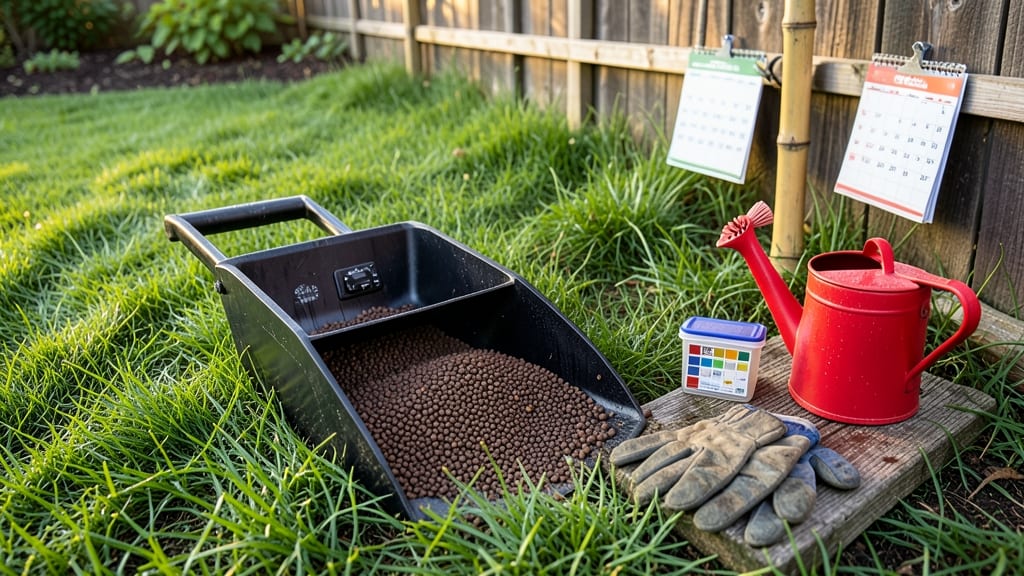
To fertilize a new lawn at the right time means waiting until 4–6 weeks after seeding—when roots are strong enough to absorb nutrients without burning.
Picture this: you’ve just seeded your 🌱 lawn grass, watered it daily, and now you’re eager to see those first blades pop up. But rushing the fertilizer can actually harm tender seedlings, leaving you with patchy, stunted growth instead of the lush carpet you envisioned.
Timing isn’t just about the calendar—it’s about soil temperature, grass type, and even your local climate. Cool-season grasses (like Kentucky bluegrass) need their first feeding in early spring or fall, while warm-season types (like Bermuda) wait until late spring or early summer.
Here’s what you’ll learn: the exact 6-week rule for starter fertilizer, how to spot when your lawn is really ready, and how to adjust for drought, heat, or slow germination. Let’s get that grass growing right.
First fertilizer application timeline for new lawns by grass type
Timing your first fertilizer application is critical for new lawns—apply too early, and you risk burning tender seedlings; too late, and weak roots struggle to compete with weeds. The best approach depends on your grass type (cool-season vs. warm-season) and soil temperatures.
Cool-season grasses like Kentucky bluegrass and fescue thrive when soil temps hover around 60–65°F, while warm-season varieties like Bermuda or Zoysia need 75–85°F for optimal germination. Aligning fertilization with these conditions ensures your lawn gets the nutrients it needs without stress.
For cool-season grasses, the ideal window is early spring (March–April) or early fall (September–October), when temperatures are mild and moisture is consistent. Warm-season grasses, on the other hand, should receive their first feeding in late spring (May–June) once soil warms and seedlings are 2–3 inches tall.
Skipping this step can leave your lawn thin and vulnerable to pests or drought.
A starter fertilizer with a high-phosphorus (P) content (e.g., 5-10-10 or 10-20-10 ratio) is essential for root development. Apply it at seeding or within 2–4 weeks afterward, followed by a slow-release nitrogen (N) boost 6–8 weeks later.
This two-step process ensures steady growth without overwhelming young plants. Always water deeply after applying to activate nutrients and prevent burn.
| Grass Type | Ideal Planting Time | Soil Temp for Seeding | First Fertilizer Timing | Fertilizer Type |
|---|---|---|---|---|
| Cool-Season (Kentucky Bluegrass, Fescue, Ryegrass) | Early spring (March–April) or early fall (Sept–Oct) | 60–65°F | At seeding or 2–4 weeks after | High-phosphorus starter (5-10-10) |
| Warm-Season (Bermuda, Zoysia, St. Augustine) | Late spring (May–June) | 75–85°F | When seedlings are 2–3" tall (4–6 weeks after seeding) | Slow-release nitrogen (16-4-8) |
| All Grasses | Avoid seeding in extreme heat (>90°F) or drought | N/A | Follow up with nitrogen 6–8 weeks later | Balanced slow-release (e.g., 20-5-10) |
If you planted in fall, prioritize a light feeding in early spring (March) to kickstart growth before summer heat sets in. For spring plantings, hold off on heavy fertilization until 6–8 weeks after seeding—this gives roots time to establish without competing for resources.
Always check for weed pressure; a thick lawn is your best defense, and proper timing helps achieve that.
Overlooking soil temperature can derail your lawn’s progress. Use a soil thermometer to confirm conditions before seeding or fertilizing. For example, cool-season grasses planted in warm soil (>70°F) may germinate poorly, while warm-season grasses in cool soil (<65°F) can rot.
Adjust your schedule if temperatures stray from the ideal range—patience is key to a healthy start.
Once your lawn reaches the 3–4 inch height mark, it’s time for a maintenance fertilizer with higher nitrogen to encourage leaf growth. For cool-season grasses, this typically happens in late spring (May) and early fall (September).
Warm-season grasses benefit from a summer feeding in July, but avoid fertilizing when drought stress is present—this can stress the grass further.
Pro tip: Water deeply (1–1.5 inches) the day before and after fertilizing to help nutrients penetrate the soil. Shallow watering can leave fertilizer salts on the surface, which may burn tender grass blades. Always mow at 3–4 inches tall to maintain a thick, resilient lawn that outcompetes weeds naturally.
Remember, organic options like compost or bone meal can also provide phosphorus for root growth, though they may require more frequent applications. For synthetic fertilizers, opt for slow-release formulas to avoid nutrient spikes that can harm young plants.
Test your soil first to identify deficiencies—this ensures you’re addressing specific needs rather than guessing.
By following this timeline, your new lawn will establish a strong root system, resist disease, and thrive for years. The first few weeks are the most critical—don’t rush the process, and your grass will reward you with a vibrant, weed-free carpet. Happy gardening! 🌱
Signs your new lawn is ready for fertilizer (and when to wait)
Your new lawn is a living ecosystem that needs careful timing for fertilization. Applying fertilizer too soon can burn tender new grass, while waiting too long lets weeds take over. The key is watching for specific growth milestones that show your lawn is ready for that first nutrient boost.
Start by checking your grass blade length—ideal time for fertilization comes when blades reach 2-3 inches tall. This indicates strong root development and sufficient energy reserves to handle extra nutrients. For most grass types, this typically happens 4-6 weeks after seeding, but cooler weather may extend this timeline.
Another critical sign is root depth. Gently pull up a small section of grass—if roots extend 1-2 inches deep, your lawn has established enough to benefit from fertilizer. Shallow roots mean your grass isn't ready for the stress of nutrient absorption.
🌱 Weed pressure is your third clue. If you're seeing more weeds than grass, your lawn needs help competing. Weeds thrive when grass lacks nutrients, so this is your signal to feed your lawn—but only if it's 4+ weeks old and showing signs of establishment.
⚠️ When to WAIT Before Fertilizing
Drought conditions: Never fertilize when soil is dry—it burns roots. Wait until you've watered deeply for 3 days and see moisture 2-3 inches down. Soil temp below 50°F: Grass can't absorb nutrients properly in cold soil. Poor germination: If less than 50% of seeds have sprouted after 6 weeks, wait before fertilizing.
Extreme heat is another red flag. When daytime temperatures exceed 85°F consistently, grass goes into survival mode and can't process fertilizer properly. Wait until temperatures drop below 80°F before applying any nutrients to avoid stressing your lawn.
For cool-season grasses like fescue or bluegrass, aim to fertilize in early fall (September) when growth slows but roots still absorb nutrients. Warm-season grasses like Bermuda or Zoysia should get their first feeding in late spring (May) when temperatures stabilize and growth accelerates.
Finally, always do a soil test before fertilizing. If your soil is already rich in nutrients (pH 6.0-7.0), you may only need a light application or even no fertilizer at all. Over-fertilizing new lawns is one of the fastest ways to create more problems than you solve.