
Fertilization
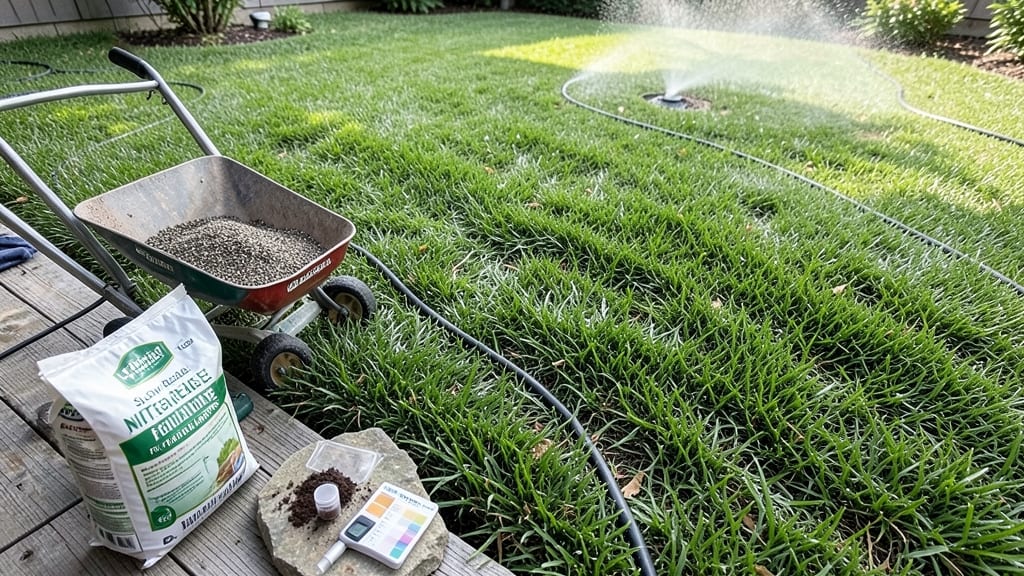
Fertilizing your lawn in Florida at the right time—especially during the cool-season months—can make the difference between a fast-growing, vibrant lawn and one that struggles to keep up.
If you’re struggling to keep your Florida lawn lush and green year-round, timing your fertilization could be the missing piece—especially during the critical cool-season months when grass roots explode in growth.
Florida’s warm winters and long growing season mean traditional fertilization schedules don’t always apply. Unlike northern states, your lawn grass 🌱 thrives year-round, but it still needs strategic feeding to avoid over-fertilization or wasted nutrients.
In this guide, I’ll break down the best months to fertilize, how to choose the right fertilizer for Florida’s climate, and common mistakes to avoid—so you can achieve that rich, green lawn without the guesswork.
Best months to fertilize Florida lawns for maximum root growth
Florida’s unique climate—with its warm winters and long growing season—means your lawn’s fertilization schedule should focus on the cool-season months when grass roots grow most actively.
This window, from September through March, aligns with Florida’s North and Central climate zones, where temperatures drop just enough to trigger root expansion without stressing the grass.
For cool-season grasses like St. Augustinegrass or Bahia grass, this timing ensures nutrients are absorbed efficiently, while warm-season grasses like Bermudagrass benefit from lighter feeding during summer’s heat. Skipping this window can leave your lawn thin, patchy, and vulnerable to drought or pests.
Here’s how to optimize fertilization by month and region to maximize root growth and drought resistance:
| Month | North Florida | Central Florida | Key Focus |
|---|---|---|---|
| September | Apply slow-release fertilizer (16-4-8 NPK) | Light feed (0.5 lb/100 sqft) | Stimulate early root growth |
| October | Full feed (1 lb/100 sqft) | Full feed (1 lb/100 sqft) | Boost drought resistance |
| November | Winterizer (high potassium) | Winterizer (high potassium) | Strengthen roots for winter |
| December | Skip (unless drought stress) | Skip (unless drought stress) | Avoid over-fertilizing |
| January | Light feed (0.5 lb/100 sqft) | Light feed (0.5 lb/100 sqft) | Encourage spring green-up |
| February | Full feed (1 lb/100 sqft) | Full feed (1 lb/100 sqft) | Prepare for summer heat |
| March | Slow-release (16-4-8 NPK) | Slow-release (16-4-8 NPK) | Transition to summer feeding |
In North Florida, where cooler temperatures arrive earlier, you’ll see faster root growth with October and February feedings. Central Florida’s slightly warmer winters mean you can extend feeding into early March without risking lawn burn. Always apply fertilizer in the early morning to avoid midday heat stress.
For warm-season grasses, reduce nitrogen in summer to prevent fungal growth. Instead, focus on light feedings with slow-release fertilizers every 6-8 weeks. Water deeply after fertilizing to help nutrients penetrate the sandy Florida soil.
Test your soil’s pH (6.0-7.0 ideal) before fertilizing—Florida’s acidic soils often need lime adjustments. Aerate compacted areas in spring or fall to improve nutrient absorption and root penetration.
Remember: Over-fertilizing can burn your lawn or pollute local waterways. Follow the 3-1-1 rule: 3 parts nitrogen, 1 part phosphorus, and 1 part potassium for balanced growth.
By aligning your fertilization schedule with Florida’s cool-season window, you’ll see deeper roots, greener grass, and a lawn that thrives year-round—even through summer’s challenges. 🌱
How to choose the right fertilizer type for Florida’s climate
Florida’s sandy soil and humid climate demand a smart fertilizer strategy to keep your lawn thriving. Unlike cooler regions, our year-round growing season means nutrient needs shift dramatically between wet summers and dry winters.
The wrong choice can lead to burned grass, wasted money, or even harm local waterways. Let’s break down the best options tailored to Florida’s unique conditions.
First, consider your grass type. Cool-season grasses like St. Augustine or tall fescue thrive in Florida’s mild winters, while warm-season varieties like Bermuda dominate summer. Each requires different nitrogen-phosphorus-potassium (NPK) ratios.
For example, St. Augustine benefits from a 16-4-8 NPK blend in spring, while Bermuda prefers 15-0-15 in summer. Always check your grass type before buying!
Slow-release vs. quick-release fertilizers is another critical decision. Slow-release options, like coated urea or organic compost, feed your lawn gradually, reducing burn risks and nutrient runoff—especially important after Florida’s heavy summer rains. Quick-release fertilizers, on the other hand, provide an immediate green-up but require more frequent applications and careful watering. For Florida’s intense heat, slow-release is almost always the safer bet.
Now, let’s talk organic vs. synthetic fertilizers. Organic options like fish emulsion, bone meal, or composted manure improve soil health long-term and support beneficial microbes. They’re ideal for sandy Florida soil, which drains quickly and lacks organic matter.
Synthetic fertilizers, however, offer precise nutrient control and faster results. Many Florida gardeners use a hybrid approach: synthetic for quick fixes and organic to build soil resilience over time.
Slow-Release Fertilizers
| Pros | Cons |
|---|---|
| ✅ Reduces burn risks in Florida heat | ❌ More expensive upfront |
| ✅ Fewer applications needed | ❌ Slower initial results |
| ✅ Less nutrient runoff after rain | ❌ Requires proper storage (avoid moisture) |
Quick-Release Fertilizers
| Pros | Cons |
|---|---|
| ✅ Fast green-up for events | ❌ Higher risk of lawn burn |
| ✅ More affordable per application | ❌ Needs frequent reapplication |
| ✅ Works well for quick repairs | ❌ Can leach into groundwater |
Don’t overlook the NPK ratio on fertilizer bags. Florida’s sandy soil often lacks phosphorus and potassium, so look for blends with balanced or higher middle numbers (e.g., 6-6-6 or 8-3-9).
In summer, prioritize potassium-rich fertilizers (e.g., 10-0-20) to help grass resist heat stress. Always pair fertilization with a soil test—Florida’s acidic tendencies (pH 5.5–6.5) can skew nutrient availability.
Pro tip: Apply fertilizer in the early morning to avoid midday heat stress and water thoroughly afterward. For organic options, consider top-dressing with compost in fall to prepare your lawn for winter. And remember, Florida’s hurricane season (June–November) means holding off on heavy fertilization—focus on strengthening roots instead.
With Florida’s unique climate challenges, the right fertilizer can mean the difference between a struggling lawn and a lush, resilient green space. Start with a soil test, match your grass type to the season, and choose slow-release or organic options for long-term success.
Your lawn—and the environment—will thank you! 🌱