
Lawn
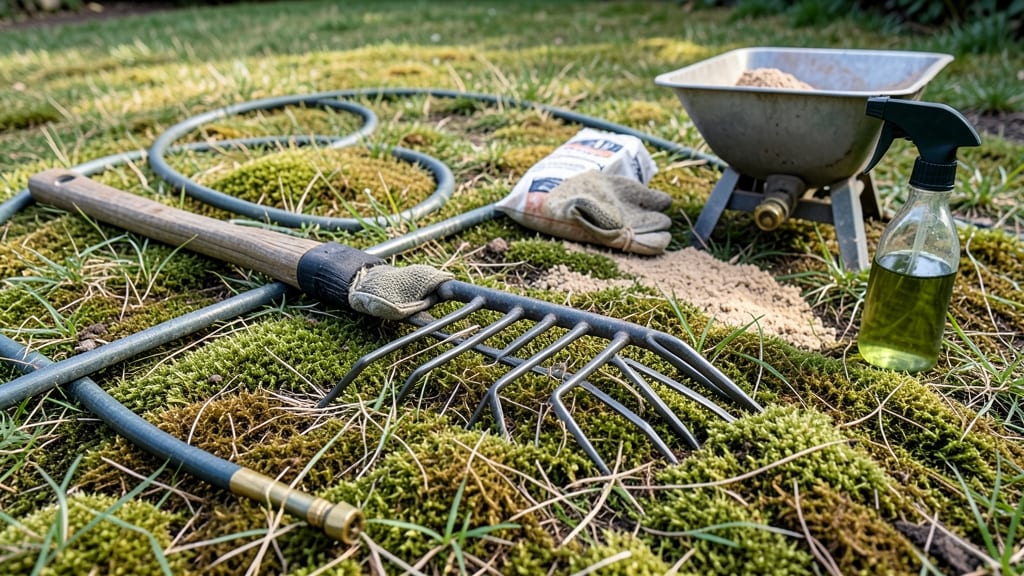
Rid your lawn of moss with one simple spray that works in 24 hours. 🌱 I’ve battled moss for years—until I discovered iron-based formulas that don’t just mask the problem but actually kill it at the roots. No more scraping, no more waiting weeks for results. The secret isn’t just the spray—it’s fixing what lets moss thrive in the first place. Poor drainage, too much shade, or acidic soil? We’ll tackle those too. One treatment can make your lawn look healthier in a day, but long-term results come from proper care after the moss disappears. You’ll see the difference immediately: vibrant green grass where there was once spongy, brown moss. The iron-based solution is safe for pets and kids once dry, and it won’t harm your lawn like harsh chemicals might. This method works for shady lawns, high-traffic areas, and even old moss patches that nothing else touches. Let’s get your lawn back to looking its best—permanently.
Root Causes of Lawn Moss
Moss isn’t just an unsightly lawn nuisance—it’s a sign that your grass is struggling to thrive. Understanding why moss takes over is the first step to reclaiming a lush, green lawn.
Below, we break down the scientific and environmental triggers that create the perfect conditions for moss growth, so you can address them directly.
---
Moss thrives in waterlogged conditions because it’s a non-vascular plant—meaning it absorbs moisture directly through its leaves instead of relying on roots. When your lawn sits in standing water or compacted soil, moss sees an open invitation.
- Why it happens: - Clay-heavy soil repels water, preventing proper drainage and leaving a damp, moss-friendly surface. - Compacted soil (from foot traffic, machinery, or poor aeration) crushes air pockets, turning your lawn into a sponge. - Low-lying areas or sloped yards where water pools naturally after rain.
- Actionable fix: - Test your soil’s drainage by digging a 6-inch hole, filling it with water, and timing how long it takes to drain.
If it’s slower than 4 hours, you’ve got a drainage issue. - Aerate your lawn in fall or spring to break up compacted soil and improve water absorption.
---
Grass needs 4–6 hours of direct sunlight daily to photosynthesize and grow. Moss, on the other hand, is a low-light specialist that thrives in shady, dim environments where grass struggles.
- Why it happens: - Tree canopies block sunlight, casting dense shade that grass can’t compete with. - North-facing slopes or buildings create permanent shadows. - Overgrown grass (especially tall fescue or fine fescue) can self-shade, weakening the turf.
- Actionable fix: - Thin out trees or prune branches to allow more sunlight to reach the lawn. - Choose shade-tolerant grass varieties like creeping red fescue or Kentucky bluegrass if shading is permanent. - Mow higher (3–4 inches) to help grass blades capture more light.
---
Moss loves acidic soil (pH below 6.0), while most lawn grasses prefer a neutral to slightly alkaline pH (6.0–7.5). If your soil is too acidic, grass weakens, and moss moves in like an uninvited houseguest.
- Why it happens: - Natural soil composition (like peat or sandy soils) is often acidic. - Decomposing organic matter (leaves, pine needles) lowers pH over time. - Fertilizer imbalances (too much nitrogen without lime) can acidify soil.
- Actionable fix: - Test your soil’s pH with a home kit or send a sample to a local extension office. - Apply agricultural lime (calcium carbonate) in fall to raise pH gradually.
Follow package rates—overdoing it can harm grass. - Avoid peat-based soils in new lawn installations; opt for loamy, well-draining mixes.
---
Moss doesn’t just grow instead of grass—it grows because grass is struggling. If your lawn is thin, diseased, or recovering from stress, moss will colonize bare spots faster than grass can regrow.
- Why it happens: - Poor seed quality or sparse overseeding leaves gaps. - Disease or pest damage (like grubs or fungal infections) weakens turf. - Drought or heat stress causes grass to go dormant, giving moss a head start.
- Actionable fix: - Overseed bare patches in early fall with a high-quality grass seed blend. - Fertilize properly—use a slow-release, balanced fertilizer (like 16-4-8) to strengthen roots. - Treat diseases early with fungicides (e.g., propiconazole for brown patch) and improve air circulation.
--- While moss needs moisture, constant wetness (from overwatering or poor irrigation) creates the perfect breeding ground. Unlike grass, moss doesn’t need deep watering—it just needs a consistently damp surface.
- Why it happens: - Frequent light watering (daily sprinklers) keeps the top layer of soil soggy. - Irrigation systems that run at night or don’t allow for evaporation. - No rain shutdown—some systems keep running even when it’s raining.
- Actionable fix: - Water deeply but infrequently (1–1.5 inches per week, including rain). - Water in the morning (4–8 AM) to allow grass to dry before evening. - Adjust sprinklers to avoid overspray on sidewalks or driveways where water pools back onto the lawn.
--- Grass needs iron, nitrogen, and other micronutrients to stay green and competitive. When these are lacking, moss—which requires far fewer nutrients—moves in to dominate.
- Why it happens: - Iron deficiency (chlorosis) turns grass yellowish-green, making it vulnerable. - Soil depletion from repeated mowing or no fertilization. - Improper pH levels (either too high or too low) lock out essential nutrients.
- Actionable fix: - Apply an iron supplement (like ferrous sulfate) in early spring to boost green-up. - Use a balanced fertilizer with micronutrients (look for labels with sulfur, manganese, or zinc). - Avoid synthetic fertilizers alone—compost or organic matter can replenish soil health over time.
--- Moss doesn’t just appear out of nowhere—it spreads via windborne spores that land on damp, shaded soil. If you have moss in one area, it’s likely already invading others.
- Why it happens: - Nearby forests, gardens, or sidewalks with established moss. - Wind or water movement carries spores to your lawn. - Pet or foot traffic can unintentionally spread moss fragments.
- Actionable fix: - Remove moss from borders (sidewalks, patios) to reduce spore sources. - Rake or blow away moss debris before it takes root. - Consider a pre-emergent moss control (like iron-based treatments) in early spring to prevent spore germination.
--- Moss doesn’t just appear randomly—it’s a symptom of underlying lawn health issues. By fixing drainage, sunlight, soil pH, and nutrition, you’ll create an environment where grass can outcompete moss naturally.
The good news? Once you address these root causes, iron-based treatments (like the ones we’ll cover next) can give your lawn the final edge it needs to stay moss-free! 🚀
Quick Fixes for a Moss-Free Lawn
Moss may seem like an inevitable part of lawn care, but with the right approach, you can eliminate it fast and keep it from returning. Below, we’ve mapped out practical solutions based on the root causes of moss—whether it’s poor drainage, shade, compacted soil, or acidic conditions.
Each fix is designed to be effective, easy, and long-lasting, so you can enjoy a lush, green lawn without the hassle.
---
If your lawn stays soggy or is in deep shade, moss thrives because it loves cool, wet environments. Here’s how to dry it out and discourage regrowth:
#### ✨ Step 1: Improve Drainage (The #1 Game-Changer) Moss can’t survive in dry conditions—so redirect water away from problem areas. - 🔪 Dig shallow trenches (2–3 inches deep) around mossy patches to channel excess water. - 🌱 Install French drains if water pools severely after rain. - 💡 Pro Tip: If your yard has heavy clay soil, mix in sand or compost to loosen it up.
#### 🍳 Step 2: Boost Sunlight Exposure - 🌳 Trim overhanging branches to let more sunlight reach the ground. - 🪴 Remove thick ground cover (like ivy or ferns) that blocks light. - 💡 Pro Tip: If shade is unavoidable (e.g., under mature trees), switch to shade-tolerant grass like fine fescue.
#### 👨🍳 Step 3: Dry Out the Lawn Fast - ⏰ Rake moss away on a dry, sunny day—it’ll crumble easily. - 🌡️ Use a leaf blower to remove debris and improve airflow. - 💡 Pro Tip: Avoid watering in the evening—keep the lawn dry to prevent moss spores from spreading.
---
If your soil is hard, clay-heavy, or nutrient-poor, moss moves in because grass struggles to take root. Fluff it up and feed it right!
#### 🔪 Step 1: Aerate Like a Pro - 🪴 Rent a core aerator (or hire a pro) to pull out small soil plugs, allowing water and air to penetrate. - 💡 Pro Tip: Do this in early fall or spring when grass is actively growing.
#### 🌱 Step 2: Add Organic Matter - 🍂 Spread ¼-inch of compost over the lawn and lightly rake in. - 🌿 Top-dress with a mix of sand and peat moss (50/50) to improve structure. - 💡 Pro Tip: Avoid thick layers—too much can suffocate grass roots.
#### 👨🍳 Step 3: Overseed for a Thick Lawn - 🌾 Choose a moss-resistant grass seed (like Kentucky bluegrass or perennial ryegrass). - 💧 Water lightly 2x daily until new grass sprouts (about 2–3 weeks). - 💡 Pro Tip: Use a starter fertilizer to give seedlings a strong start.
---
Moss loves acidic soil (pH below 6.0), while most grasses prefer neutral to slightly alkaline (6.0–7.5). Raise the pH fast!
#### 📊 Step 1: Test Your Soil’s pH - 🧪 Grab a soil test kit (available at garden centers) or send a sample to a lab. - 💡 Pro Tip: Test in spring or fall for the most accurate results.
#### 🍳 Step 2: Apply Lime to Neutralize - 🪴 Sprinkle pelletized lime evenly over the lawn (follow package rates for your pH level). - 💧 Water lightly to help it sink into the soil. - ⏰ Reapply every 1–2 years to maintain balance. - 💡 Pro Tip: Use dolomitic lime if your soil is also magnesium-deficient.
#### 👨🍳 Step 3: Fertilize for Grass Growth - 🌱 Apply a slow-release nitrogen fertilizer (like 30-0-4) to strengthen grass. - 💡 Pro Tip: Avoid high-phosphorus fertilizers—they can encourage moss in some cases.
---
Once you’ve eliminated moss, these simple habits will stop it from coming back:
| Do This | Avoid This | |-------------|---------------| | ✅ Mow high (3–4 inches) to shade out moss. | ❌ Mow too short—weakens grass. | | ✅ Water deeply but infrequently (1–1.5 inches per week). | ❌ Keep soil soggy—moss thrives in wetness. | | ✅ Aerate & overseed every 2–3 years. | ❌ Ignore bare spots—moss fills gaps fast. | | ✅ Apply iron-based treatments (like Fast Moss Killer) in spring/fall. | ❌ Use herbicides alone—they don’t fix the problem. | | ✅ Rake up moss debris immediately when you see it. | ❌ Leave dead moss—it spreads spores. |
--- 💡 Final Pro Tip: Combine treatments! For example: - Aerate → Lime → Overseed → Apply iron in one season for maximum moss eradication.
With these targeted fixes, your lawn will go from mossy and weak to thick, green, and resilient in no time. No more hiding the bare patches—just a vibrant yard you’ll love!**
Frequently asked questions
How long does it take for iron-based treatments to kill moss?
The iron-based solutions mentioned in this guide typically work in 24 hours—you'll see visible results within a day. The moss will turn brown and crispy, making it easy to rake away. For complete eradication, combine the treatment with proper lawn care like aeration and overseeding.
Is it safe to use iron treatments around pets and kids?
Yes, once the iron treatment is completely dry (usually within 24 hours), it's safe for pets and children. Iron-based moss killers are non-toxic and won't harm grass or other plants once absorbed. Always follow the product instructions for application timing and safety precautions.
Can I use vinegar to kill moss instead of iron treatments?
While vinegar can kill moss, it's not the best long-term solution. Vinegar is acidic and will harm grass and other plants in your lawn. Iron-based treatments specifically target moss without damaging grass. For a natural alternative, consider using sand or corn gluten meal as preventative measures.
Why does moss keep coming back even after treatment?
Moss often returns because the underlying conditions (like poor drainage, shade, or acidic soil) aren't addressed. Iron treatments kill existing moss, but you need to fix the root causes—like improving soil pH, aerating compacted soil, or increasing sunlight—to prevent regrowth. Combine treatments with proper lawn maintenance for best results.
What's the best time of year to treat moss?
The ideal times are early spring (March-April) or early fall (September-October). These periods give grass time to recover while keeping moss from spreading. Avoid treating during extreme heat or drought, as stressed grass may not recover well from the treatment.