
Lawn
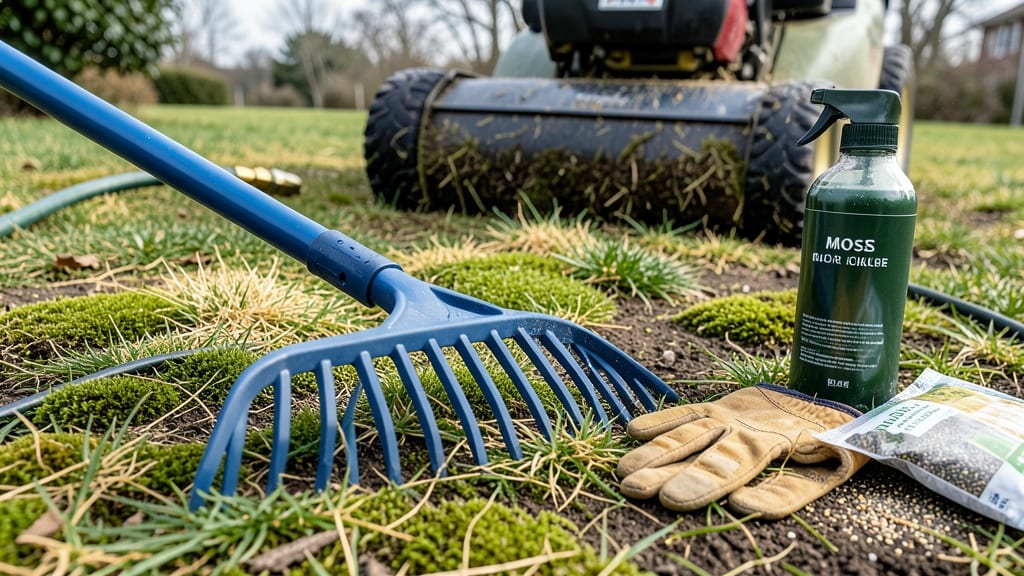
Controlling moss on lawns starts with understanding why it’s taking over your 🌱 grass—and how to stop it before it smothers your yard for good.
A thick, spongy moss layer isn’t just unsightly—it’s a silent killer of your lawn’s health, choking out grass and signaling underlying soil issues. The good news? Strategic moss control can restore your lawn’s vitality before winter sets in.
Most homeowners assume moss is just a cosmetic problem, but it thrives in shady, compacted, or acidic soil, creating the perfect environment to outcompete your grass. Without addressing these root causes, even the best treatments will fail.
In this guide, I’ll walk you through organic and chemical solutions, from lime applications to overseeding, plus long-term fixes like aeration and proper mowing to keep moss from creeping back.
Why moss thrives in lawns and how to identify the root causes
If your lawn looks like a lush carpet of green moss instead of vibrant grass, you're not alone. Moss thrives in conditions where grass struggles—often signaling deeper soil and environmental issues.
Understanding why moss takes over is the first step to reclaiming your lawn's health before winter locks in these problems.
Moss loves shady, damp environments with acidic soil (pH below 6.0). Unlike grass, it doesn’t need sunlight or deep roots, making it a resilient invader in neglected lawns. The key to control starts with diagnosing your lawn’s specific vulnerabilities through simple, at-home tests.
| Root Cause | Diagnostic Test | Solution Path |
|---|---|---|
| Low Sunlight (<4 hrs/day) | Shadow tracing with a stick (mark shadows at solar noon) | Prune trees, install reflective surfaces |
| Acidic Soil (pH < 6.0) | pH test strips (available at garden centers) | Apply pelletized lime (1 lb per 100 sqft) |
| Compacted Soil | Screw test (drive a 6-inch screw—<1 inch = compacted) | Core aeration (rent a machine or hire pro) |
| Overwatering | Dig 6-inch hole—soil stays soggy >48 hrs? | Adjust to 1 inch weekly, morning watering |
| Thin Grass | Pull up a sod plug—roots <1/2 inch deep? | Overseed with shade-tolerant grass (e.g., Fine Fescue) |
Start with a soil pH test—moss thrives in acidic conditions (pH < 6.0). Grab a test kit from your local garden center, collect samples from multiple spots, and compare results. If your pH reads below 6.0, pelletized lime is your first line of defense. Sprinkle 1 pound per 100 square feet in early spring or fall, then water thoroughly.
Next, check for soil compaction by driving a 6-inch screw into the ground. If it doesn’t go in more than 1 inch, your lawn is compacted—a major moss magnet.
Rent a core aerator or hire a professional to create 3/4-inch holes every 3 inches. Follow up with topsoil or compost to improve drainage and root growth.
Don’t overlook shade patterns—moss often colonizes under trees or fences where grass starves for sunlight. Trace shadows at solar noon using a stick. If areas receive less than 4 hours of sunlight, consider pruning overhanging branches or installing reflective surfaces (like white gravel) to bounce light onto shaded spots.
Overwatering is another silent moss ally. Dig a 6-inch hole after watering—if the soil stays soggy for more than 48 hours, you’re overdoing it. Adjust to 1 inch of water per week, delivered in the morning to reduce fungal risks.
Let the top inch of soil dry between waterings to discourage moss spores.
Finally, examine your grass health. Pull up a small sod plug—if roots are less than 1/2 inch deep, your lawn is weak and vulnerable. Overseed with shade-tolerant grass varieties like Fine Fescue or Creeping Red Fescue. These grasses thrive in low-light conditions where moss would otherwise dominate.
By addressing these root causes—pH imbalance, compaction, shade, and overwatering—you’ll create an environment where grass outcompetes moss naturally. The key is consistency: test, treat, and monitor your lawn’s progress every season to keep moss at bay.
🌱
Natural moss control methods that protect grass without harsh chemicals
If your lawn looks like a mossy carpet instead of a lush green space, don’t reach for harsh chemicals first. Organic moss control methods can restore your grass while improving soil health.
The key is targeting the root causes—acidic soil, poor drainage, and weak grass—with natural solutions that work over time.
Moss thrives where grass struggles, often in shady, damp, or compacted areas. But by adjusting your lawn’s environment, you can create conditions where grass outcompetes moss naturally. Start with soil amendments, then reinforce with iron treatments and proper aeration to give your grass the fighting chance it needs.
Use a soil pH test kit to check acidity. Moss loves pH below 6.0. Apply pelletized lime (10-20 lbs per 1,000 sq ft) in early spring to raise pH to 6.0-7.0. Re-test in 2-3 months for adjustments.
For a greener lawn, use iron sulfate or chelated iron (2-4 lbs per 1,000 sq ft). This doesn’t kill moss but strengthens grass and improves appearance. Apply in early fall or spring when grass is actively growing.
Use a core aerator in late spring or early fall to relieve compaction. Remove moss manually after aerating (it’ll pull up easily). This lets air, water, and nutrients reach grass roots, weakening moss’s grip.
Choose fine fescue or creeping red fescue (both tolerate shade and moisture). Overseed in early fall at 5 lbs per 1,000 sq ft. Keep soil moist for 4-6 weeks to establish new grass.
After treating, maintain proper mowing height (3-4 inches) to shade out moss. Avoid overwatering—moss thrives in soggy conditions, while grass prefers even moisture. With patience, your lawn will reclaim its dominance over moss naturally.
For persistent moss, repeat lime applications and overseeding every 2-3 years. The goal isn’t just to kill moss but to create an environment where grass thrives—without synthetic chemicals. 🌱