
Fertilization
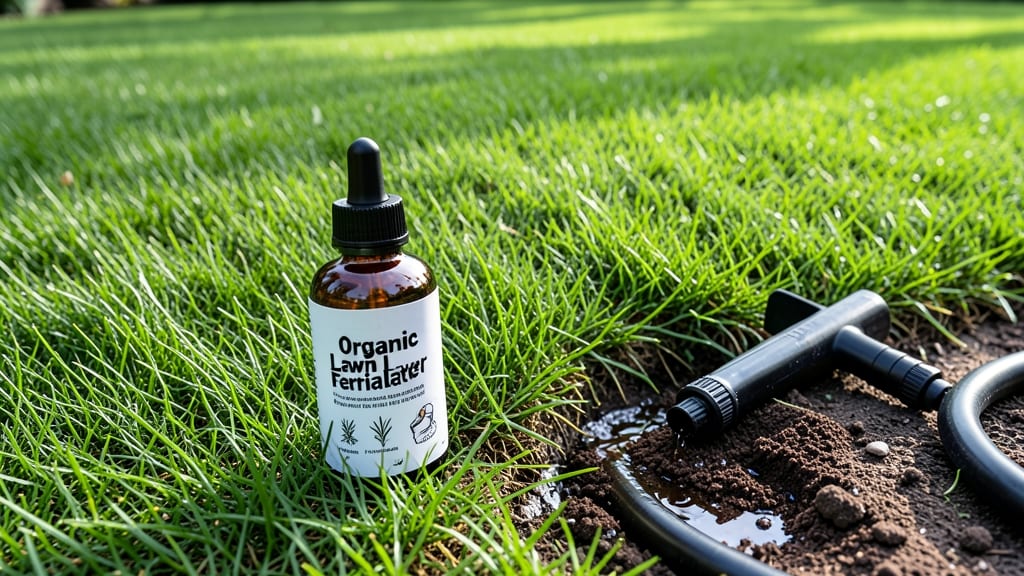
Organic liquid lawn fertilizer delivers fast-acting nutrients through roots and foliage, promoting rapid greening and soil health without synthetic chemicals. Apply every 4-6 weeks for consistent results, but monitor soil moisture to prevent runoff or over-fertilization.
Unlike granular fertilizers that rely on soil microbes to break down, organic liquid formulas dissolve instantly, letting your grass absorb nutrients immediately. 🌱 This means faster color recovery after drought or heavy use, but it also requires more frequent applications to maintain results.
I’ve seen lawns transform within days when using this method during early spring—just be mindful of rainfall timing to avoid wasting nutrients.
What sets liquid fertilizers apart is their ability to target specific deficiencies. For example, if your lawn looks yellowish, it’s likely nitrogen-deficient, and a liquid feed can address that within hours.
The trade-off? Granular options last longer, but liquids give you that instant gratification factor that many homeowners crave for high-traffic areas.
💡 In This Article
- How Organic Liquid Fertilizers Feed Grass Roots
- When to Use Liquid vs Granular Organic Fertilizers
How organic liquid fertilizers feed grass roots
Organic liquid fertilizers work by dissolving instantly in water, allowing nutrients to be absorbed directly through the grass roots and foliage. Unlike granular fertilizers that require microbial breakdown, these liquids contain water-soluble compounds like fish emulsion, seaweed extracts, or compost teas.
These compounds break down into ammonia (NH₄⁺) and nitrate (NO₃⁻) forms, which roots can uptake within minutes. This rapid absorption explains why you’ll see visible greening within days—especially after drought stress or heavy foot traffic.
The key nutrients—nitrogen (N), phosphorus (P), and potassium (K)—are delivered in balanced ratios, but the speed of action differs. Nitrogen from liquid fertilizers, for example, converts to nitrate forms within hours, while granular versions may take weeks to release.
Phosphorus in liquids becomes available almost immediately, supporting root growth and energy transfer, whereas granular P often binds to soil particles and becomes less accessible. Potassium, meanwhile, dissolves quickly in liquids, improving drought resistance and disease tolerance.
What makes these fertilizers truly organic is their inclusion of beneficial microbes and enzymes that enhance soil structure. For instance, a liquid fertilizer with mycorrhizal fungi forms symbiotic relationships with roots, increasing nutrient uptake by up to 80%.
Over time, this improves soil aeration and water retention, reducing the need for frequent applications. The breakdown of organic matter in the soil also releases additional nutrients, creating a self-sustaining cycle that granular fertilizers can’t match.
One critical factor is the concentration of nutrients. Liquid fertilizers typically contain 5-10% nitrogen, compared to granular options that range from 10-30% nitrogen. This means you’ll need to apply liquids more often—every 4-6 weeks—to maintain consistent growth.
However, the trade-off is precision: you can adjust the dose based on your lawn’s immediate needs, avoiding the risk of over-fertilization that often occurs with granular products.
Consider the texture and application process: liquid fertilizers are applied using a sprayer, which ensures even distribution and minimal waste. This method is particularly effective for large lawns or areas with uneven grass growth.
For example, a 1,000 sq ft lawn might require 1-2 gallons of diluted liquid fertilizer, applied in the early morning or late afternoon to reduce evaporation and maximize absorption.
To maximize effectiveness, pair liquid fertilizers with a soil test to identify deficiencies. For instance, if your soil lacks magnesium, a liquid fertilizer with Epsom salt can correct the issue within weeks, whereas granular options would take months to show results.
The sensory difference is also noticeable: lawns treated with liquid fertilizers often emit a fresh, earthy aroma from the active microbial processes at work.
In summary, organic liquid fertilizers offer a dynamic, immediate solution for lawn care, but they demand regular attention. The key is balancing frequency with soil health—think of it like giving your lawn a quick energy boost rather than a slow-release meal. 🌱