
Lawn
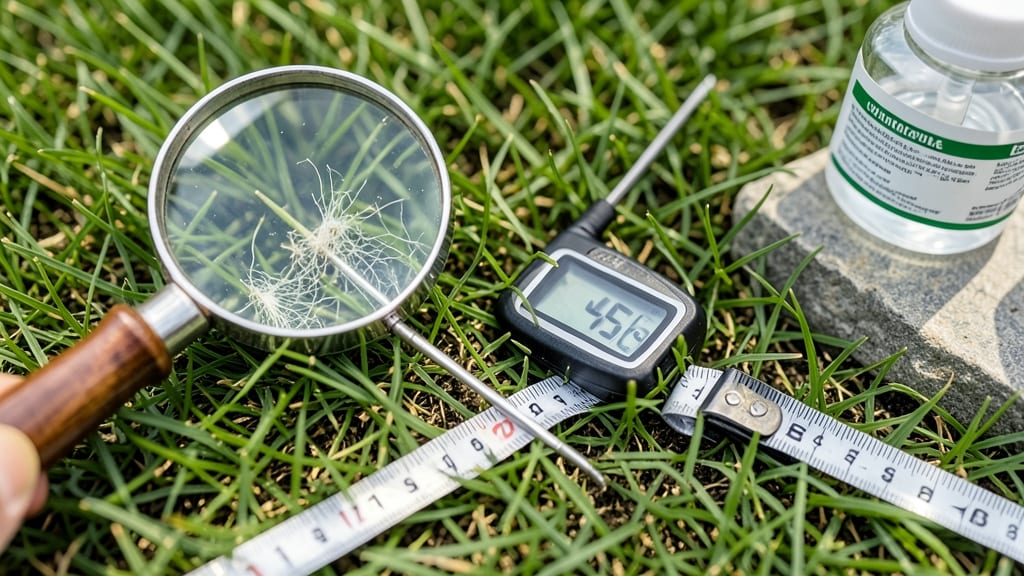
Those mysterious dark green patches of grass on your lawn might look lush, but they’re actually a cry for help. 🌱 I’ve seen this happen after heavy rain, over-fertilizing, or even fungal infections—and fixing it starts with figuring out the real cause.
The good news? Most solutions are simpler than you’d think, from adjusting watering to a quick iron boost.
First, check the patch’s texture—is it spongy (poor drainage) or slimy (fungus)? Overwatering or compacted soil often creates dark, thick spots where grass struggles to breathe. Meanwhile, dollar spot fungus thrives in damp, shady areas, leaving behind those telltale velvety patches.
A soil test can reveal if iron deficiency is turning your grass a sickly shade of green.
Once you know the culprit, the fix is straightforward: aerate compacted areas, adjust watering schedules, or apply a targeted fungicide. For iron-deficient grass, a fast-acting iron supplement works wonders in just a few days. The goal? Restore that vibrant, even green your lawn deserves without overcomplicating things.
Prevention is easier than cleanup—mow high, water deeply but less often, and test soil annually. I’ve saved more lawns with these simple tweaks than with expensive treatments. Let’s get your grass back to its best in no time!
Understanding Grass Health Issues
Dark green patches on your lawn aren’t just an eyesore—they’re a sign your grass is sending you a distress signal. 🌱 Before you reach for the fertilizer, let’s break down the real causes behind these mysterious splotches.
Some are easy fixes, while others require deeper intervention. Here’s what’s likely going wrong under those vibrant patches:
Too much of a good thing can backfire when it comes to lawn care. Dark green patches often appear when your grass is over-fertilized, particularly with nitrogen-heavy products. Here’s why:
- Nitrogen overload triggers rapid, lush growth—but at a cost. The grass blades grow faster than their roots can support, leading to thin, weak stems that struggle to stay upright.
This creates the illusion of dense, dark green patches while masking underlying stress. - Salt buildup from synthetic fertilizers can also scorch soil microbes, disrupting nutrient balance.
Over time, this causes patchy discoloration and even soil crusting, where water runs off instead of soaking in. - Slow-release vs. quick-release: Quick-release nitrogen (like urea) can cause burn-like symptoms within days, while slow-release may take weeks to reveal its overuse.
Test your soil first—most lawns don’t need fertilizer more than 2–4 times per year.
💡 Pro Tip: If you suspect fertilizer burn, dilute a ½ cup of Epsom salt (magnesium sulfate) in a gallon of water and lightly spray the affected area. This helps counteract nitrogen toxicity while replenishing magnesium.
Iron is the secret weapon for vibrant green grass, but too little or too much can turn your lawn into a patchwork quilt. Dark green patches might actually signal:
- Iron deficiency (chlorosis): While iron deficiency usually causes yellowing between leaf veins, excessive iron can lead to dark, almost black-green patches, especially in alkaline soils (pH > 7.0).
Iron binds tightly to soil particles in high-pH conditions, making it unavailable to grass roots. - Over-application of iron supplements: If you’ve used iron sulfate, chelated iron, or even iron-rich compost recently, your lawn might be overdosing.
Excess iron can disrupt nutrient uptake, leading to uneven growth and dark discoloration. - Grass type matters: Cool-season grasses (like Kentucky bluegrass) are more sensitive to iron imbalances than warm-season grasses (like Bermuda).
If your lawn is mostly one type and the patches are random, iron could be the culprit.
🔍 Diagnose It: Dig up a small sample of soil from the dark patch and compare it to healthy soil. If the patchy area has blackish tinted roots or slippery, gummy soil, iron toxicity is likely.
Not all dark green patches are caused by nutrients—some are invaders taking over your lawn. Fungi and moss thrive in shady, damp, or compacted conditions, creating thick, velvety green carpets that mimic healthy grass.
- Fungal lawn diseases (like dollar spot, brown patch, or red thread) can create dark, water-soaked patches that spread rapidly.
These fungi compete with grass roots for nutrients, weakening the turf. - Moss (especially in acidic, compacted, or poorly drained soils) forms soft, spongy green mats that feel damp even when the rest of the lawn is dry.
Moss doesn’t have roots like grass—it’s a non-vascular plant that smothers turf. - Symptoms to watch for: - Fungi: White or tan threads on grass blades (hyphae), irregular edges, or circles in the lawn. - Moss: No roots, slippery when wet, and disappears when dry (unlike grass).
✨ Natural Fix: For moss, sprinkle dolomitic lime (to raise pH) and aerate to improve drainage. For fungi, reduce watering and apply a fungicide with myclobutanil or propiconazole—but only after improving airflow with raking or overseeding.
If your lawn feels like a trampoline or puddles after rain, compaction or waterlogging could be the culprit. Dark green patches in these areas often mean:
- Root suffocation: Compacted soil crushes roots, forcing them to grow shallow and weak. Grass in these spots may appear darker and thicker because it’s stressed but still alive, clinging to moisture. - Anaerobic conditions: Poor drainage creates low-oxygen zones, where anaerobic bacteria thrive.
These bacteria break down organic matter too quickly, leaving behind dark, slimy soil that grass struggles to penetrate. - Foot traffic or heavy equipment: Areas near walkways, driveways, or pet zones often compact first. If the dark patches follow a path or pattern, compaction is likely.
🌡️ Test It: Stick a screwdriver into the soil. If it goes in less than 3 inches, your soil is compacted. Aerate with a core aerator (not just a spike roller!) to break up the soil and improve root growth.
You might not think of algae as a lawn problem, but in shady, moist, or nutrient-rich conditions, it can create slick, dark green patches that look like grass. Unlike turf, algae:
- Grows in thin films (often on bare soil or thin grass).
- Feels slimy when wet and disappears in dry spells.
- Thrives in low-mow areas (like under trees or near foundations).
🔥 Kill It Fast: Apply a copper-based algaecide (like copper sulfate) or vinegar spray (1 part vinegar to 3 parts water) to affected areas. Reduce watering and improve sunlight by trimming nearby branches.
Revive Your Lawn’s Vibrancy
Dark, splotchy green patches on your lawn can feel like a mystery—but the good news is, they’re usually fixable! Whether your grass is suffering from nutrient deficiencies, fungal issues, or environmental stress, these targeted solutions will help restore its lush, even appearance.
Below, we’ve mapped out the most common causes and their corresponding fixes, plus prevention tips to keep your lawn thriving long-term.
If your grass is dark green but weak or patchy, it’s likely starving for key nutrients—especially iron or nitrogen. Here’s how to revive it:
🍳 Step 1: Test Your Soil
Before treating, grab a soil test kit (available at garden centers) to confirm deficiencies. Iron deficiency often shows as yellowing between veins, while nitrogen deficiency appears as pale, sparse growth.
👨🍳 Step 2: Apply Iron Supplement
For iron-deficient grass, use a chelated iron fertilizer (like iron sulfate or iron EDTA). Follow package instructions, but a general rule is:
- Light deficiency: 1–2 lbs per 1,000 sq ft
- Severe deficiency: 3–4 lbs per 1,000 sq ft
Water the area before applying to help absorption.
🥘 Step 3: Fertilize for Long-Term Health
After addressing iron, apply a balanced fertilizer (e.g., 10-10-10 or 20-20-20) to replenish nitrogen and phosphorus. For cool-season grasses, fertilize in early spring and fall; warm-season grasses need feeding in late spring and summer.
✨ Pro Tip:
If your soil is alkaline (pH > 7.0), iron uptake is harder. Lower pH with sulfur or peat moss before reapplying iron.
Dark, slimy, or spongy patches could signal a fungal infection like dollar spot, brown patch, or fungal thatch. Act fast to stop it from spreading!
🔪 Step 1: Remove Affected Areas
Cut out the infected grass (including roots) and dispose of it in a sealed bag. Do not compost—fungus can survive and reinfect.
⏰ Step 2: Apply Fungicide
Use a systemic fungicide (like propiconazole or myclobutanil) labeled for your grass type. Follow the 3-day watering rule:
- Water before applying (to activate spores).
- Wait 3 days before watering again (to let the fungicide work).
💡 Pro Tip:
Improve airflow by aerating your lawn in spring/fall. Thick thatch (>0.5 inches) traps moisture, fueling fungus.
Shady spots, compacted soil, or overwatering can create dark, uneven patches. Adjust your lawn care to match your grass’s needs:
📊 Step 1: Check Watering Habits
Most lawns need 1–1.5 inches of water per week (including rain). If your grass is dark but soggy, it’s overwatered—reduce frequency and water deeply but less often.
💪 Step 2: Aerate Compacted Soil
Walk on your lawn often? Compacted soil blocks roots and water. Rent an aerator or spike aerator and work it into the soil in spring or fall. Top with compost afterward.
🎯 Step 3: Choose the Right Grass for Your Climate
If your lawn is perpetually struggling, it may not be suited to your zone. For example:
- Shady areas: Try fine fescue or St. Augustine.
- Drought-prone areas: Opt for tall fescue or Buffalo grass.
✨ Pro Tip:
Mow high (3–4 inches) to encourage deep roots and shade out weeds. Never remove more than ⅓ of the grass blade in one mowing.
With the right approach, your lawn can bounce back to a uniform, vibrant green. Start with the cause that matches your symptoms, and don’t forget—consistent care is key to prevention! For stubborn patches, repeat treatments every 4–6 weeks until you see improvement.
Frequently asked questions
Why do dark green patches look healthier than the rest of my lawn?
Those patches might appear lush, but they’re often a sign of stress! Dark green can indicate over-fertilization (especially nitrogen), iron overload, or compacted soil where grass struggles to breathe. The color comes from rapid, weak growth rather than true health. Check for slimy soil or shallow roots—if the patch feels spongy, it’s likely compacted or suffering from poor drainage.
How can I tell if my dark patches are moss vs. fungus?
Moss feels soft and spongy (like a wet carpet) and disappears when dry, while fungus often has white threads (hyphae) on blades or irregular edges. Dig up a small sample: moss has no roots, while fungus may show dark, water-soaked spots. Dollar spot fungus creates silver-dollar-sized circles with tan centers. For moss, improve drainage; for fungus, reduce watering and apply fungicide.
Will aerating help if my dark patches are from overwatering?
Aerating breaks up compacted soil caused by heavy watering, helping roots access oxygen and preventing waterlogging. First, adjust your watering to 1–1.5 inches per week (including rain), then aerate in spring or fall. Top with compost to improve soil structure. If the patch stays soggy, consider installing a French drain or grading the area for better runoff.
Is it safe to use iron supplements if my soil test shows high iron?
No—excess iron can disrupt nutrient uptake, worsening the problem. If your soil test confirms high iron, focus on balancing pH (iron binds in alkaline soil) or adjusting other nutrients like magnesium (Epsom salt). For dark patches from iron toxicity, reduce applications and water thoroughly to flush out excess. Always follow soil test recommendations, not just visual cues.
How long until I see results after treating dark patches?
Results vary by cause: iron supplements show improvement in 3–7 days, while fungicides take 7–14 days to fully work. Aeration and soil amendments (like compost) may take 4–6 weeks to show full benefits. Monitor progress and reapply treatments if needed—consistency is key! For moss, expect 2–3 weeks to see noticeable reduction after improving drainage.