
Lawn
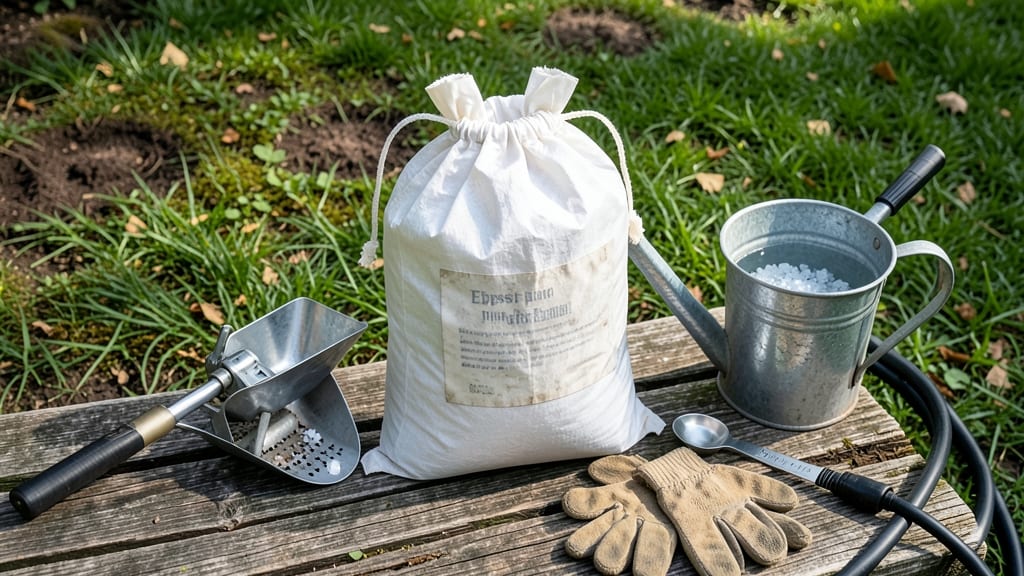
When brown patches creep across your lawn like an unwelcome guest, Epsom salt for lawn fungus might just be the game-changer you’ve been missing. 🌱 I’ve seen it work miracles—transforming dull, patchy grass into a vibrant carpet within just two days.
The secret lies in magnesium’s role in plant health and its subtle antifungal properties that most gardeners overlook.
Fungal lawn issues often start with subtle signs: thin spots, moldy rings, or grass that feels spongy underfoot. These aren’t just cosmetic problems—they’re your lawn screaming for help.
Epsom salt doesn’t just mask symptoms; it strengthens grass roots, helping them fight back against fungal invaders like dollar spot or brown patch. The best part? It’s organic, fast, and won’t break the bank.
Here’s the magic: mix 1 tablespoon of Epsom salt per gallon of water, then spray directly on affected areas during early morning or evening. Within 48 hours, you’ll see improvement as the magnesium kicks in.
For stubborn cases, repeat every 2-3 weeks, but always test your soil first—too much can do more harm than good.
Pair this with proper watering (deep but infrequent) and occasional aeration, and you’ll create an environment where fungus struggles to take hold. It’s not just a quick fix—it’s a long-term strategy for a lawn that stays lush and resilient, no matter the season.
The Hidden Triggers Behind Lawn Fungus
Fungus in your lawn isn’t just a random nuisance—it’s often the result of specific conditions that create the perfect breeding ground for spores. Understanding these triggers is the first step to preventing and treating fungus naturally with Epsom salt or other organic methods.
Let’s break down the science behind why your lawn becomes a fungus magnet.
Fungi thrive in excess moisture, which is why overwatering is one of the most common causes of lawn fungus. Here’s why:
- Oxygen Deprivation: When soil stays soggy for long periods, it displaces oxygen, creating anaerobic conditions.
Fungi like Rhizoctonia and Fusarium (which cause brown patch and snow mold) love low-oxygen environments because they can’t compete with aerobic organisms like bacteria and beneficial fungi. - Spores Germinate Faster: Fungal spores need free water (not just dampness) to activate.
Heavy irrigation, frequent rain, or poor drainage can keep your lawn’s surface perpetually wet, signaling spores to germinate and spread. - Thatch Buildup: Overwatering accelerates thatch accumulation—a thick layer of dead grass and debris that traps moisture against the soil.
This insulates the fungus, protecting it from drying out and sunlight (which can kill spores).
Actionable Fix:
- Water deeply but infrequently (1–1.5 inches per week, including rain).
- Improve drainage with sand top-dressing or aeration.
- Water in the early morning to allow grass to dry by evening.
Fungi spread faster in stagnant air because spores rely on wind and movement to disperse. When your lawn lacks airflow, spores linger and infect larger areas. Common culprits:
- Dense Grass Growth: Thick, uncut grass blocks airflow between blades.
Fungi like Dollar Spot (Sclerotinia homoeocarpa) exploit this by spreading horizontally across the turf surface. - Shady or Crowded Areas: Trees, fences, or tall buildings create microclimates where humidity stays high and sunlight is limited—ideal for fungi that prefer low-light conditions. - Compacted Soil: Heavy foot traffic or machinery compresses soil, reducing pore space.
This traps moisture and restricts root oxygen, weakening grass and making it susceptible to fungal attacks.
Actionable Fix:
- Mow regularly (never remove more than ⅓ of the blade height at once).
- Thin out dense grass with overseeding or spot-treating with a rake.
- Prune trees/shrubs to increase sunlight exposure to 6+ hours daily.
Healthy grass resists fungus because strong roots and blades outcompete pathogens. But imbalances in nitrogen, phosphorus, and magnesium (the trio Epsom salt targets) create vulnerabilities:
- Too Much Nitrogen (But Not Enough Magnesium): Fast-growing grass from high nitrogen fertilizers is soft and thin, making it easy for fungi like Red Thread (Laetisaria fuciformis) to penetrate.
Meanwhile, magnesium deficiency (common in clay soils) weakens cell walls, leaving grass susceptible to stress. - Phosphorus Overload: Excess phosphorus (from synthetic fertilizers) boosts fungal growth by feeding mycorrhizal networks—some beneficial, but others pathogenic.
It also acidifies soil, creating conditions where fungi like Gray Leaf Spot thrive. - Potassium Deficiency: Potassium strengthens cell membranes and drought resistance. Without it, grass struggles to recover from stress, giving fungi a foothold.
Actionable Fix:
- Test your soil (pH should be 6.0–7.0 for most grasses).
- Use Epsom salt (magnesium sulfate) to correct deficiencies—apply 1 lb per 100 sq ft every 4–6 weeks.
- Switch to slow-release organic fertilizers (like compost or fish emulsion) to avoid nitrogen spikes.
Extreme heat (especially combined with drought) forces grass into dormancy, weakening its defenses. Fungi like Summer Patch (Magnaporthe poae) exploit this by:
- Targeting Weakened Roots: Dormant grass can’t photosynthesize efficiently, leading to carbohydrate starvation in roots. Fungi detect these stressed areas and colonize them first. - Creating Ideal Temperature Zones: Many lawn fungi thrive in 80–90°F soil temps.
Heat stress + poor water retention = a fungal buffet. - Disrupting Beneficial Microbes: High heat kills competitive bacteria and fungi, removing natural predators that keep pathogens in check.
Actionable Fix:
- Water deeply during droughts (even if grass turns brown—it may recover).
- Apply mulch (straw or wood chips) to insulate soil and retain moisture.
- Avoid mowing too short in heat—longer blades shade roots and reduce stress.
Leaves, clippings, and dead grass create a fungal hotbed because they:
- Block sunlight, keeping the lawn surface damp.
- Provide food for fungi (organic matter = carbon source for growth).
- Hide spores from fungicides or natural treatments like Epsom salt.
Actionable Fix:
- Rake up debris regularly, especially after storms or mowing.
- Dethatch if the layer exceeds ½ inch (use a rake or verticutter).
- Aerate to break up compacted thatch and improve air flow.
Pro Tip: 💡 Epsom salt’s magnesium doesn’t just treat fungus—it prevents it by strengthening grass cell walls. Apply it proactively in spring and fall to starve fungal growth before it starts!
Quick Fixes for Fungal Lawn Issues
If your lawn is battling unsightly fungus—whether it’s dollar spots, powdery mildew, or rust patches—Epsom salt (magnesium sulfate) can be a game-changer. Below, we break down cause-specific solutions using Epsom salt, along with prevention tips to keep your grass lush and fungus-free.
For dollar spots or brown patch fungus, a targeted Epsom salt spray can halt spread and restore health.
- 🍳 Mix the Solution: Dissolve 1 tablespoon of Epsom salt in 1 gallon of warm water. Add a few drops of dish soap (like Dawn) to help it stick to grass blades.
- 👨🍳 Apply Evenly: Use a sprayer bottle or hose-end sprayer to coat affected areas thoroughly. Focus on the entire patch, not just the edges.
- 🌱 Water Lightly After: Mist the area with plain water to help the solution absorb into the soil and grass.
- ⏰ Repeat Every 3 Days: Continue treatment for 2–3 weeks or until new growth appears.
Why it works: Epsom salt boosts magnesium, which strengthens grass resistance to fungus. The sulfur content also creates an unfavorable environment for fungal spores.
Powdery mildew thrives in shady, humid conditions and appears as white, dusty patches. Here’s how to smother it fast:
- 🔪 Prune for Airflow: Trim overgrown grass or nearby plants to improve circulation. Fungus loves stagnant air!
- 💡 Boost Soil Magnesium: Sprinkle ½ cup of Epsom salt per 100 sq. ft. around the lawn’s edges (where mildew often starts). Water deeply.
- 🌡️ Fungal-Fighting Spray: Mix 2 tablespoons of Epsom salt + 1 teaspoon baking soda + 1 gallon of water. Spray both sides of leaves (if your grass has broad blades) and reapply weekly until gone.
- ✨ Prevent Recurrence: Mow at 3–4 inches tall and avoid evening watering (water early morning instead).
Pro tip: If mildew persists, mix 1 part hydrogen peroxide (3%) to 10 parts water and alternate with the Epsom salt spray for a double-punch effect.
Rust fungus (caused by Puccinia species) turns grass orange-brown and weakens roots. Here’s how to restore vibrancy:
| Step | Action |
|---|---|
| 🔥 Rake Out Debris | Remove infected leaves/clippings to stop spore spread. Bag and discard them! |
| 💧 Deep Watering | Water deeply 2x/week (1 inch total) to encourage strong root growth. |
| 🍽️ Epsom Salt Fertilizer | Sprinkle 1 pound of Epsom salt per 500 sq. ft. and water. Repeat monthly during growing season. |
| 🌿 Overseed Bare Spots | Fill thin areas with disease-resistant grass seed (like tall fescue or perennial ryegrass). |
Prevention tip: Test your soil’s pH (aim for 6.0–7.0)—rust thrives in alkaline conditions. Adjust with sulfur if needed.
Stop fungus before it starts with these low-effort habits:
- ✅ Mow High: Keep grass at 3–4 inches to block sunlight from reaching fungal spores.
- ✅ Water Wisely: Water early morning (before 10 AM) and avoid overhead sprinklers that keep leaves wet.
- ✅ Aerate Annually: Use a core aerator in spring/fall to improve airflow and nutrient absorption.
- ✅ Fertilize Smartly: Use a balanced, slow-release fertilizer (like 16-4-8) and avoid overdoing nitrogen, which fuels fungus.
- ✅ Natural Fungicides: Rotate Epsom salt with neem oil or copper fungicide for stubborn cases.
With these targeted fixes, your lawn can bounce back in 48 hours to 2 weeks, depending on the severity. For prevention, consistency is key—think of Epsom salt as a vitamin boost for your grass’s immune system!
Frequently asked questions
Can I use Epsom salt on all types of grass?
Epsom salt works well for most common lawn grasses like Kentucky bluegrass, tall fescue, and perennial ryegrass. However, avoid using it on St. Augustine grass or Bermuda grass, as they're more sensitive to magnesium sulfate. Always test a small area first to check for sensitivity.
How often should I apply Epsom salt for lawn fungus?
For active fungal treatment, apply every 3 days for 2-3 weeks using the spray method. For prevention, use once every 4-6 weeks during growing seasons (spring and fall). Overuse can disrupt soil pH—stick to the recommended dosage.
Will Epsom salt work on established fungal infections?
Epsom salt helps strengthen grass resistance and inhibit new fungal growth, but for severe infections, combine it with other treatments. Remove infected debris first, then apply Epsom salt spray while using a natural fungicide like neem oil for best results.
Is Epsom salt safe for pets and children?
Yes, when used as directed! Epsom salt is non-toxic and safe for pets and kids once dry. However, keep pets off treated areas until the solution fully absorbs (about 2-3 hours
Can I mix Epsom salt with other lawn treatments?
You can safely combine Epsom salt with compost tea, fish emulsion, or hydrogen peroxide (1:10 ratio). Avoid mixing with chemical fungicides or synthetic fertilizers, as chemical reactions may reduce effectiveness. Always apply organic treatments first.