
Fertilization
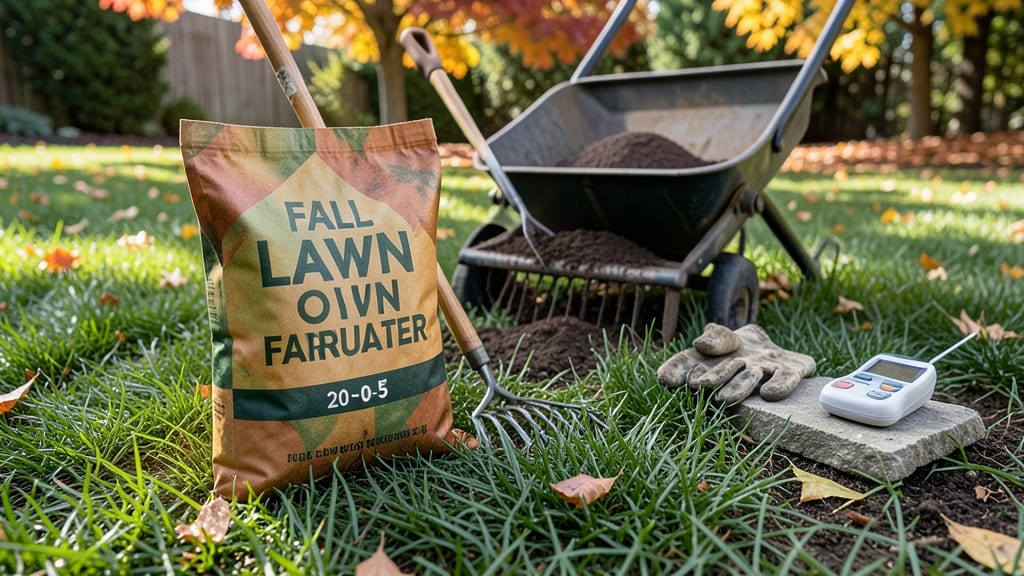
Fertilizing your lawn in the fall at the right time—typically 6 to 8 weeks before the first frost—is the key to stronger roots and a greener spring, but many homeowners miss the window.
Picture this: You spend $50 on fertilizer only to watch it wash away before your grass even gets a chance to use it. That’s why timing matters more than the brand or type of fertilizer you choose.
A little planning now can save you money, headaches, and a patchy lawn come spring.
Cool-season grasses like fescue and bluegrass (the most common types in USDA Zones 3–10) thrive when fertilized in early to mid-fall, while warm-season grasses like Bermuda need a different approach. The secret? Soil temperature and local frost dates—not just the calendar.
In this guide, I’ll break down the exact 6-week window for your zone, how to pick the right fertilizer (slow-release vs. organic), and the one mistake that turns fall feeding into a waste of time. Let’s get your lawn prepped for winter the right way.

Optimal fall fertilization timeline by climate zone (with exact dates)
Timing your fall lawn fertilization is like catching a wave—too early and you waste nutrients, too late and your grass misses the growth boost it needs before winter. The 6-week window before your first frost is critical, but exact dates vary dramatically across USDA zones 3-11.
Cool-season grasses like Kentucky bluegrass and fescue thrive with early fall feeding, while warm-season grasses like Bermuda and Zoysia need later timing to avoid winter stress.
Your local climate dictates everything: Northern regions (zones 3-6) should fertilize by mid-October, while Southern zones (8-11) can extend feeding until early December. The key metric? Soil temperature—when it drops below 50°F, grass roots slow down, making fertilization ineffective.
Let's break down the exact timing and fertilizer choices for your zone to ensure your lawn stores nutrients for spring's comeback.
Here’s how to match your climate zone to the perfect fertilization window, including soil temperature thresholds and fertilizer type recommendations to avoid common mistakes like over-fertilizing before frost or using the wrong N-P-K ratio for fall.
Notice how warm-season grasses in Southern zones get a later window? That’s because they stay active longer, but their growth slows as temperatures drop below 65°F.
For example, Bermuda grass in Zone 9 should be fertilized by October 15th to avoid winter stress, while Kentucky bluegrass in Zone 6 needs its last feeding by September 30th.
If you’re in a transition zone (7-8), pay close attention to first frost dates. Many gardeners here split their fall feeding into two applications: one in early September for root growth and another in late October for winter hardiness.
Use a soil thermometer to confirm temperatures—fertilizing when soil is below 50°F is a waste of money and can harm grass.
For organic gardeners, compost or bone meal makes an excellent fall fertilizer, but apply it 4-6 weeks before your first frost to allow time for nutrient absorption. Synthetic fertilizers like 10-0-10 work faster but should be spread evenly and watered in immediately to prevent burn.
Pro tip: If your lawn has thin patches, overseed after fertilizing for a denser spring lawn.
Regional adjustments matter too. In Pacific Northwest zones (6-7), where fall rains are common, fertilize before heavy downpours to prevent nutrient runoff. Conversely, in dry Southwest zones (9-11), water deeply after fertilizing to help absorption in sandy soils.
Always check your local cooperative extension service for hyper-local advice—microclimates can shift fertilization windows by 2-3 weeks.
One final rule: Never fertilize within 30 days of frost. Grass can’t process nutrients when dormant, and leftover fertilizer can burn roots or pollute groundwater. Mark your calendar now—your lawn’s spring green-up depends on this fall’s prep work!
How to prepare your lawn for fall fertilization (soil test + prep steps)
Fall fertilization transforms your lawn from a seasonal task into a root-strengthening powerhouse for next spring. But before you spread that fertilizer, your lawn needs the right prep—starting with a soil test to avoid wasting nutrients.
I’ve learned the hard way that skipping this step leads to over-fertilizing or under-fertilizing, both of which stress your grass. The key? Testing soil pH (ideal: 6.0–7.0) and adjusting before applying any amendments.
Once your soil is ready, the next critical step is aeration, which opens up compacted soil so nutrients can reach the roots. Timing matters here too—aim to aerate 2–4 weeks before fertilizing to give your lawn time to recover.
For cool-season grasses like Kentucky bluegrass or fescue, this prep work ensures they’ll bounce back faster in spring. Don’t skip it, or you’ll end up with patchy growth and wasted fertilizer.
- ✓ Test soil pH (use a home test kit or send a sample to your local extension office). Adjust with lime (for low pH) or sulfur (for high pH) 4–6 weeks before fertilizing.
- ✓ Schedule core aeration when soil is warm but not dry—typically late summer to early fall. Rent a core aerator or hire a pro for large lawns.
- ✓ Lower mowing height to 2–3 inches for cool-season grasses 2 weeks before fertilizing. This encourages root growth and reduces stress.
- ✓ Apply pre-emergent herbicide (if needed) 2 weeks before fertilizing to prevent weed seeds from germinating. For organic lawns, hand-pull weeds instead.
- ✓ Water deeply (1 inch) 2–3 days before and after fertilizing to help nutrients absorb into the soil. Avoid overwatering, which can leach fertilizer away.
Choosing the right fertilizer type is just as important as prep. For fall, opt for a low-nitrogen, high-phosphorus-potassium blend (like 10-0-10) to strengthen roots. Organic options such as composted manure or bone meal work well too, but apply them 4–6 weeks before fertilizing to avoid burning your grass.
I’ve seen synthetic fertilizers deliver faster results, but organic builds long-term soil health.
Finally, gather your tools and supplies before starting: a broadcast spreader, gloves, soil test kit, aerator (or rental), and a weather forecast to avoid fertilizing before rain. Pro tip: Mark your calendar for 6 weeks after aeration—that’s when your lawn will be primed for fertilization.
With the right prep, your grass will thank you with thicker growth and fewer weeds next spring.
Don’t let fall slip by without prepping your lawn—strong roots now mean a greener lawn later. Start with a soil test this weekend, and you’ll be well on your way to a resilient lawn by next spring. 🌱