
Fertilization
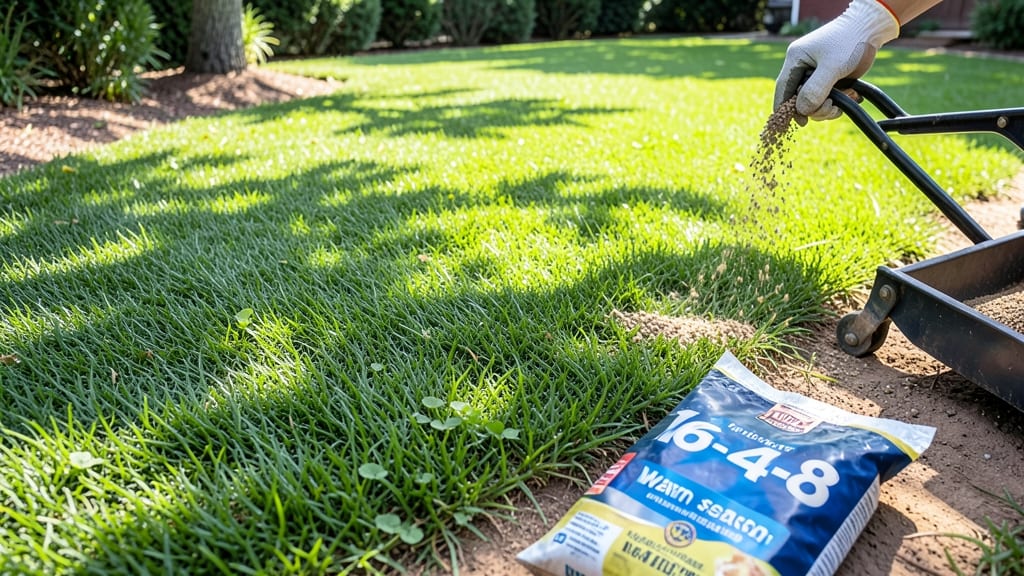
Fertilizing your lawn in Texas at the wrong time can turn your green oasis into a crispy brown wasteland—so timing your feedings by the season is the key to a lush 🌱 year-round.
Picture this: You’ve just spent $50 on fertilizer, spread it all out, and then—bam—a week of 100°F heat turns your grass into a sad, straw-colored carpet. Texas lawns thrive when you match their needs to the climate, not the calendar.
Cool-season grasses like tall fescue need feeding in early spring and fall, while warm-season varieties like Bermuda or St. Augustine demand attention in late spring and early summer. Skip the wrong season, and you’ll either burn your grass or waste money on fertilizer that won’t stick.
Below, I’ll break down the exact months to fertilize for your Texas lawn, how to read your grass’s signals, and the one mistake that ruins more lawns than droughts do. Let’s get your 🌱 growing strong—and staying that way.
Texas lawn fertilizing schedule by grass type: cool-season vs. warm-season timing
Fertilizing your Texas lawn at the wrong time can turn your hard-earned green into browned disappointment—especially when mixing cool-season and warm-season grasses. The key? Understanding their unique growth cycles and Texas' extreme seasonal shifts.
Cool-season grasses like tall fescue thrive in mild weather, while warm-season types like Bermuda or St. Augustine love the heat. Let's break down the perfect timing for each.
First, recognize that Texas' climate zones (8a-10b) create microclimates where first frost dates vary wildly—from December 1 in North Texas to no frost in South Texas. This means your fertilizing window should adapt based on local frost triggers and summer heat spikes.
Cool-season grasses need feeding before winter dormancy, while warm-season types should get their nutrients after summer stress.
Here's the game-changer: Warm-season grasses (like Bermuda) grow best from late spring to early fall, while cool-season grasses (like ryegrass) peak in fall and spring. Mixing these in your lawn? You'll need a dual fertilization strategy to avoid overfeeding one type while starving the other.
The solution? Seasonal layering—feed warm-season grasses in late spring and early fall, while cool-season grasses get their boost in early spring and late summer.
🌱 PRO TIP: Always water deeply 24 hours before and after fertilizing to activate nutrients and prevent burn. Texas' clay-heavy soils also mean you should aerate annually to help roots access those nutrients.
5 Critical signs your Texas lawn needs fertilizer (and when to act)
Your Texas lawn communicates nutrient needs through subtle (and not-so-subtle) signs. Ignoring these can lead to patchy, weak grass that struggles with Texas' extreme heat and clay-heavy soils.
The key is recognizing the difference between nutrient deficiencies and environmental stress—like drought or foot traffic—so you fertilize at the right time for maximum impact.
For example, yellowing grass in spring often signals nitrogen deficiency, while thinning patches in summer may mean phosphorus or potassium shortages. Texas' hard water and alkaline soils can also lock out nutrients, making fertilization timing even more critical. Let’s decode these signs and match them to the best fertilization windows.
Spring sign: Pale green or yellow grass across the lawn. Act now with a high-nitrogen fertilizer (like 20-5-10) in March or early April before peak growth.
Summer sign: Bald spots or sparse grass. Test soil first—if pH is above 7.0, apply a low-pH fertilizer or gypsum in late August before fall rains.
Fall sign: Grass grows less than ½ inch per week. Switch to a slow-release fertilizer (like 16-4-8) in September or October to strengthen roots before winter.
Year-round sign: Uneven color from hard water buildup. Flush soil with iron supplements or chelated iron in spring or fall, then fertilize with low-salt formulas.
Spring/Fall sign: Grass stays flat after mowing. Apply a potassium-rich fertilizer (like 10-10-20) in April or September to boost resilience.
Texas' clay soil and hard water can mask these signs, so always test your soil before fertilizing. For example, if your lawn shows yellowing in spring but your soil test reveals a pH of 8.0, a simple lime application might solve the problem without extra fertilizer.
Timing matters too—never fertilize during droughts or extreme heat, as this burns roots.
Pro tip: Pair fertilization with deep watering (1 inch per week) to help nutrients penetrate compacted Texas clay. For warm-season grasses like Bermuda, fertilize in late spring; for cool-season grasses like ryegrass, focus on fall applications. Adjust based on your grass type and local weather forecasts.
Remember, over-fertilizing is just as harmful as under-fertilizing. Stick to the 6-8 week rule in spring/fall, and always follow label instructions for your specific grass type. Your lawn will thank you with lush, resilient growth all year. 🌱