
Lawn
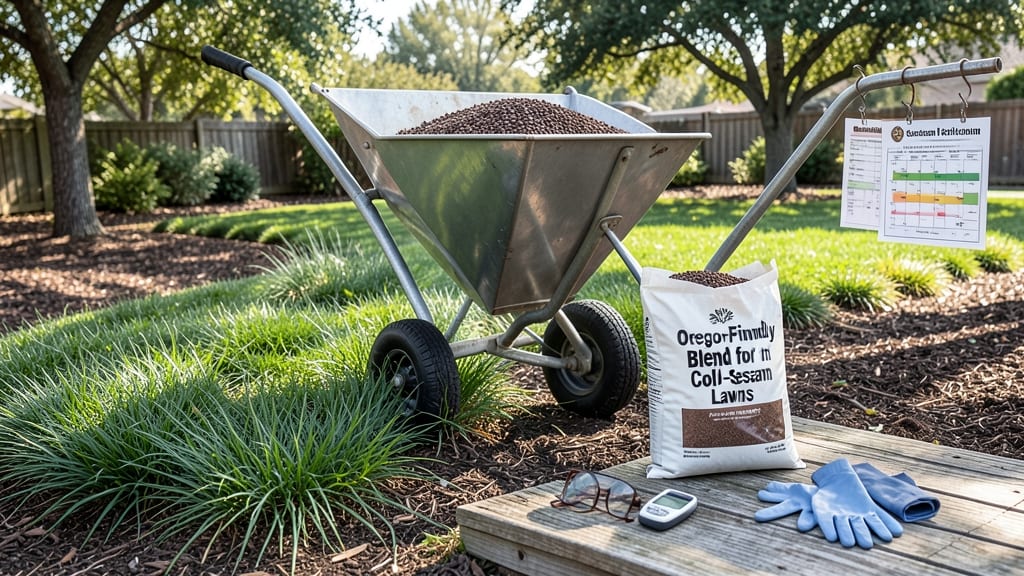
Fertilizing your lawn in Oregon at the right time 🌱—early fall, late winter, and spring—is the key to a lush, resilient yard that handles the region’s damp winters and dry summers.
Oregon’s cool-season climate demands precise timing for lawn fertilization—get it wrong, and your grass could struggle to thrive despite the region’s lush growing conditions. Too early, and nutrients wash away in winter rains; too late, and your lawn misses its growth surge.
Most Oregon lawns (Kentucky bluegrass, fescue, ryegrass) need three key feedings: September-October for root strengthening, February-March to kickstart spring growth, and a light touch in April if needed. Coastal areas may shift slightly earlier, while high-desert zones benefit from a slightly delayed schedule.
Below, I’ll break down the exact months, soil prep tips, and whether organic or synthetic fertilizers work best for your 7b-9a zone. No more guessing—just science-backed timing for a lawn that stays green year-round.
Best fertilization schedule for Oregon’s cool-season lawns
Oregon’s cool-season climate creates the perfect conditions for Kentucky bluegrass, fescue, and ryegrass—but timing your lawn fertilization is everything. Unlike warmer climates, Oregon’s moderate rainfall and cooler temperatures mean grass grows actively in fall and spring, not summer.
Miss these windows, and your lawn may yellow, thin, or invite weeds instead of thriving. The key? Soil temperature thresholds and regional microclimates that shift fertilization needs from the Willamette Valley to High Desert areas.
Science shows that root growth peaks when soil temps hit 50°F–65°F, making early fall (September–October) and late winter (February–March) the golden windows for fertilization. A spring application (April) can help specific grasses like Kentucky bluegrass, but it’s optional for fescue and ryegrass.
Over-fertilizing in summer stresses grass, while fall feeding strengthens roots for winter resilience—a must in Oregon’s USDA Zones 7b–9a.
For early fall fertilization, aim for September 15–October 15 in most of Oregon. This aligns with soil temps dropping but before first frost (typically November 15 in Zone 7b).
In the Willamette Valley, where humidity lingers, apply fertilizer 2–3 weeks earlier than inland areas to prevent fungal diseases like brown patch. Use a slow-release fertilizer with an NPK ratio of 16-4-8 to avoid nutrient burn.
My late winter feeding in February–March targets fescue and ryegrass, which wake up earliest. Test soil first—Oregon’s acidic soils (pH 5.5–6.5) often need lime before fertilizing. Coastal Oregon lawns may need iron supplements due to chlorosis from wet conditions.
Apply fertilizer when soil temps hit 40°F–50°F, and water deeply afterward to activate roots.
If you have Kentucky bluegrass, a spring application in April can boost its vigorous growth, but skip this for fescue and ryegrass—they’ll thin out if over-fertilized. Use a light feed (half the fall rate) and pair it with pre-emergent herbicide to block crabgrass. In
How to adjust fertilizer types for Oregon’s climate zones
Oregon’s diverse climate—from the Willamette Valley’s mild, wet winters to the High Desert’s hot, dry summers—means your lawn’s fertilizer needs vary dramatically. Iron-deficient soils in western Oregon, for example, often require micronutrient boosts, while eastern zones benefit from drought-resistant slow-release blends.
Choosing the wrong fertilizer can lead to nutrient runoff, weak grass, or even fungal growth from over-application.
In the Willamette Valley, where cooler temperatures and higher humidity prevail, organic fertilizers like compost or fish emulsion work well year-round. These break down slowly, feeding roots steadily.
Meanwhile, the High Desert demands synthetic slow-release options to prevent rapid nutrient loss in dry, windy conditions. Understanding these differences ensures your lawn thrives without wasting resources.
Willamette Valley vs. High Desert Fertilizer Options
Willamette Valley
- ✅ Organic fertilizers (compost, fish emulsion): Slow release, improves soil structure
- ✅ Micronutrient blends (iron, manganese): Addresses common deficiencies in wet soils
- ✅ Balanced NPK (10-10-10): Supports steady growth in cool seasons
High Desert
- ✅ Slow-release synthetics (polymer-coated urea): Prevents nutrient loss in dry conditions
- ✅ Drought-resistant blends (high potassium): Strengthens root systems
- ✅ Low-nitrogen (5-10-10): Reduces water stress on grass
Avoid in Willamette Valley
- ❌ Quick-release synthetics: Can cause nutrient runoff in rainy seasons
- ❌ High-nitrogen (30-0-0): Promotes weak, disease-prone growth
Avoid in High Desert
- ❌ Organic matter-heavy (manure, compost): Breaks down too fast in heat
- ❌ High-phosphorus (0-20-0): Unnecessary for desert soils
For iron-deficient soils common in western Oregon, consider chelated iron fertilizers or biosolids-based amendments. These bind iron tightly to soil particles, making it available to grass roots. Test your soil first—many nurseries offer pH and micronutrient testing for under $20.
If your lawn shows yellowing between veins, it’s likely iron-deficient and needs targeted treatment.
In the High Desert, prioritize potassium-rich fertilizers (look for NPK ratios like 5-10-15) to help grass withstand heat stress. Pair this with deep watering (1-1.5 inches per week) to prevent nutrient lockout in compacted soils. Slow-release granules are ideal here—they release nutrients gradually, matching the desert’s erratic rainfall patterns.
Spring is the best time to transition fertilizers between zones. In the Willamette Valley, switch to a low-nitrogen organic blend in April to avoid summer stress. In the High Desert, delay fertilization until May when soil temperatures rise above 55°F.
Always water fertilizers in within 24 hours of application to activate nutrients and prevent leaf burn.
Pro tip: Mix mycorrhizal fungi into your fertilizer for both zones. These beneficial microbes improve root absorption, especially in compacted or clay-heavy soils like those found in the Willamette Valley. Apply at half-strength during fall feedings for the best results. 🌱