
Lawn
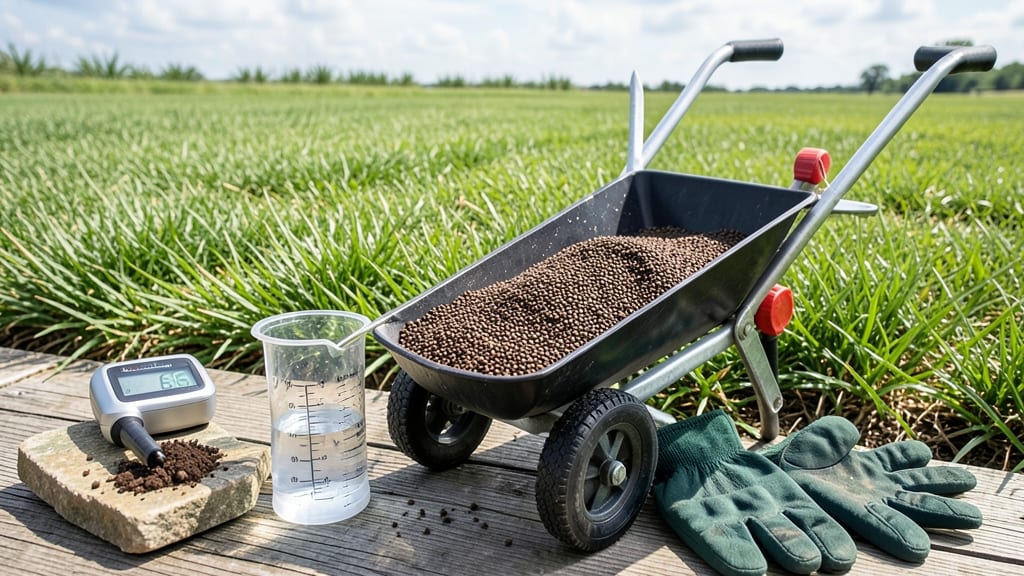
Fertilizing lawns in Austin works best in early spring (February–March) and late fall (October–November), aligning with the city’s warm-season grass growth cycles and avoiding extreme summer heat or winter dormancy periods.
Timing matters because Austin's hot summers and mild winters create a unique growing window for warm-season grasses like Bermuda and St. Augustine. 🌱 During these peak months, your grass actively grows, absorbing nutrients efficiently.
I always recommend avoiding summer fertilization—high temperatures stress grass and can burn roots, while winter dormancy means nutrients go to waste. The key is feeding when your lawn is hungry but not stressed!
For best results, start with a soil test in late winter to check nutrient levels. This helps you choose the right fertilizer blend—most Austin lawns benefit from a mix of nitrogen, phosphorus, and potassium.
I prefer slow-release fertilizers in spring to prevent runoff during occasional spring rains, while fall applications should include a higher potassium content to strengthen roots before winter.
💡 In This Article
- Austin’s Climate and Warm-Season Grass Fertilization Timing
- Step-by-Step Austin Fertilization Schedule by Season
Austin’s climate and warm-season grass fertilization timing
Austin’s unique climate—hot summers (often exceeding 95°F) and mild winters (rarely below 40°F)—creates ideal conditions for warm-season grasses like Bermuda, St. Augustine, and Zoysia. These grasses thrive when soil temperatures stay above 60°F, which typically occurs from late spring through early fall.
Fertilizing outside this range stresses the grass or wastes nutrients, since cool-season grasses (like ryegrass) dominate in colder climates but struggle in Austin’s heat. 🌡️
The key mechanism is photosynthesis: warm-season grasses grow most actively when daytime temperatures are 75-90°F, with roots absorbing nutrients efficiently. For example, Bermuda grass enters dormancy when soil temps drop below 55°F (common in December-February), while St. Augustine slows growth below 65°F.
This is why spring (when soil warms to 65-75°F) and fall (before first frosts) are prime fertilization windows—grass is hungry but not heat-stressed. Summer fertilization risks burning roots due to 100°F+ soil temps.
Different grasses respond uniquely to Austin’s climate. Bermuda grass, for instance, grows aggressively in summer but needs high nitrogen in spring to recover from winter dormancy. St. Augustine, however, prefers shaded areas and benefits from slow-release phosphorus in fall to strengthen its fibrous root system.
Zoysia, the most drought-tolerant, thrives with low-maintenance potassium-heavy fertilizers in late summer to prepare for winter. 🌱
Soil moisture plays a critical role too. Austin’s clay-heavy soil holds water but can become compacted, reducing nutrient absorption. That’s why I recommend fertilizing after 1/2 inch of rain or deep watering—this activates soil microbes that break down nutrients into forms grass can use.
Overhead sprinklers can waste fertilizer, so drip irrigation or soaker hoses are ideal for Austin’s erratic rainfall patterns.
One common mistake is fertilizing during summer’s peak heat. When temperatures exceed 90°F for prolonged periods, grass roots can’t process nutrients, leading to leaf burn. Instead, focus on light, frequent watering (early morning) to keep roots cool while avoiding heavy fertilization.
Fall applications should include iron supplements to maintain green color as grass prepares for winter dormancy.
For Austin homeowners, understanding these patterns means less guesswork and healthier lawns. For example, a February application of 16-4-8 fertilizer (nitrogen-phosphorus-potassium ratio) promotes spring growth, while a November application of 8-2-12 strengthens roots. Always pair fertilization with mowing at 1-2 inches to reduce stress and encourage deeper root systems. 🌿