
Landscaping
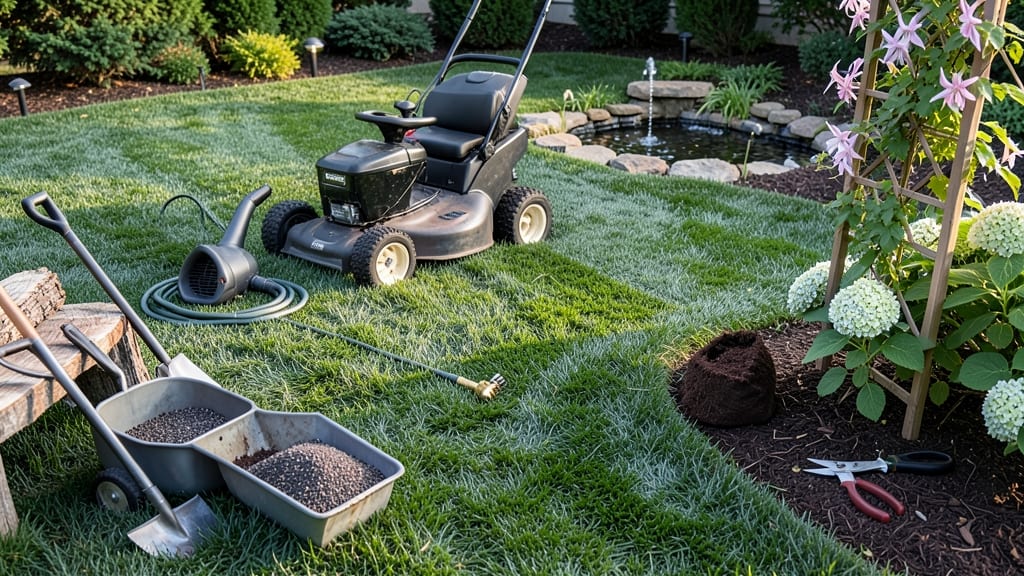
Your lawn and landscape don’t have to be a seasonal project—this is how we create year-round perfection with absolute lawn care and landscaping that works whether you’re mowing or mulching. 🌿 The secret isn’t luck; it’s combining smart soil prep, the right plants, and a maintenance schedule that actually fits your life.
I’ve spent years testing what works (and what doesn’t) in backyards just like yours.
We’re talking about a lawn that stays lush through summer droughts and winter freezes, with landscaping that looks intentional—not like an afterthought. The key? Layering low-maintenance perennials with your grass, choosing drought-resistant shrubs, and setting up a seasonal care calendar that takes 30 minutes a week.
No more guessing when to fertilize or how to fix bare spots.
By the end of this, you’ll have a space that’s visually stunning and practically effortless. Think: vibrant green grass that recovers from foot traffic, borders bursting with color that need pruning twice a year, and hardscapes that actually complement your home.
The best part? You’ll spend more time enjoying your outdoor space than maintaining it.
Whether you’re starting from scratch or just tired of your yard looking like everyone else’s, this approach works for any backyard size or climate. Let’s make your landscape the envy of the neighborhood—without the endless work.
Root Causes Of Lawn Struggles
Your lawn might look like a lush green carpet one day and a patchy, brown mess the next—and there’s usually a scientific reason behind it. Understanding why problems happen is the first step to fixing them for good.
Below, we break down the most common culprits, from hidden soil issues to environmental stressors, so you can tackle them with precision.
Healthy grass thrives in well-balanced soil, but compacted, nutrient-deficient, or improperly pH-balanced soil can strangle even the hardiest turf. Here’s how it happens:
- Compaction: Heavy foot traffic, machinery, or even rain can squeeze soil particles together, reducing oxygen and water flow to roots. Result? Grass struggles to absorb what it needs, leading to thinning or yellowing.
- Nutrient Deficiencies: Soil tests often reveal imbalances—too much nitrogen (burning grass), too little phosphorus (weak roots), or a lack of micronutrients like iron or zinc. Example: Yellow patches between green blades? That’s often iron chlorosis, a sign your soil can’t access iron.
- pH Imbalances: Grass prefers a pH of 6.0–7.0. Soil that’s too acidic (low pH) locks out nutrients like phosphorus, while alkaline soil (high pH) reduces iron and manganese availability. Test it: A simple soil kit or lab test reveals the truth.
Actionable Fix: Aerate compacted soil in spring/fall, amend with compost or organic matter, and adjust pH with lime (to raise) or sulfur (to lower). Pro Tip:💡 Top-dress with a thin layer of compost annually to gradually improve soil structure.
Water is the lifeblood of your lawn, but overwatering or underwatering can both spell disaster. Here’s the science behind the damage:
- Overwatering: Grass roots need oxygen—too much water displaces it, leading to anaerobic conditions (lack of oxygen). This causes fungal diseases like brown patch or dollar spot, which thrive in soggy soil.
- Underwatering: Grass wilts when it can’t access moisture, but the real damage happens when roots shrink and die back. Once revived, the lawn may recover unevenly, leaving permanent thin spots.
- Irregular Watering: Skipping days or watering at the wrong times (midday heat evaporates moisture before roots absorb it) creates stress cycles, weakening grass over time.
Actionable Fix: Water deeply 2–3 times per week (1–1.5 inches total) in early morning (4–8 AM) to minimize evaporation. Use a rain gauge or tuna can to measure—your sprinkler might be over- or under-delivering! Pro Tip:🌡️ Install a soil moisture sensor to water only when needed.
Grass isn’t just fighting the elements—it’s also battling pests, fungi, and bacteria that thrive in the right conditions. Here’s how they take hold:
- Grubs And Insects: White grubs, chinch bugs, and sod webworms feed on roots, causing brown patches that pull up easily. Sign: Birds pecking at your lawn? That’s a grub buffet.
- Fungal Diseases: Warm, humid weather + thick thatch = perfect fungus conditions. Diseases like rust (orange spores) or snow mold (gray fuzzy patches) spread when grass is stressed.
- Bacterial Issues: Bacterial leaf blight thrives in wet, warm conditions, causing water-soaked spots that turn brown. Unlike fungi, bacteria can’t be treated with fungicides—prevention is key.
Actionable Fix:
- 🔥 Prevent pests: Aerate to disrupt grubs’ cozy soil layers, and apply beneficial nematodes (microscopic worms that eat grubs).
- 🍳 Fight fungi: Improve airflow with proper mowing height (3–4 inches) and water in the early morning to dry quickly.
- 👨🍳 Spot-treat diseases: Use copper fungicides for bacterial issues and organic fungicides (like neem oil) for fungal outbreaks.
Even the hardiest grass varieties can’t withstand extreme environmental conditions without help. Here’s what’s really happening:
- Heat And Drought Stress: When temperatures soar, grass goes dormant to conserve moisture. Sign: Blue-gray color? That’s your lawn’s survival mode. Prolonged stress leads to permanent die-off in susceptible varieties.
- Shade Stress: Most turfgrasses need 4–6 hours of sunlight daily. Too little shade causes chlorosis (yellowing) because grass can’t produce enough chlorophyll. Worst offenders: Tall trees with dense canopies.
- Cold And Frost Damage: Freezing temps rupture grass cell walls, causing crunchy, brown blades that won’t recover until roots regenerate. Prevention: Avoid heavy foot traffic on frozen lawns.
Actionable Fix:
- 🔥 Beat the heat: Choose drought-tolerant grasses like tall fescue or Bermuda, and water deeply but infrequently to encourage deep roots.
- 🌳 Manage shade: Plant shade-tolerant grasses (e.g., fine fescue) or add ground covers like clover to fill gaps.
- ⏰ Protect from frost: Avoid fertilizing in late fall—new growth is more frost-sensitive.
Your mower might be the unlikely villain behind a struggling lawn. Here’s how improper maintenance backfires:
- Cutting Too Short: Scalping grass weakens roots and increases stress, making it vulnerable to weeds and disease. Rule: Never remove more than ⅓ of the blade height at once.
- Dull Mower Blades: Sharp blades make clean cuts, while dull blades tear grass, creating entry points for disease. Test: If blades leave white tips, they’re dull.
- Uneven Mowing Patterns: Crisscrossing the same paths compacts soil and creates thin, stressed stripes where grass recovers slower.
Actionable Fix:
-
Practical fixes for common lawn troubles
---
Even the most meticulously maintained lawns can face challenges—whether it’s patchy grass, stubborn weeds, or soil that refuses to cooperate. But don’t worry! With the right approach, you can restore your yard to its lush, vibrant best.
Below, we’ve mapped out cause-specific solutions to tackle the most common lawn and landscaping issues, along with prevention tips to keep problems at bay for good.
---
Cause: Uneven watering, poor soil quality, disease, or heavy foot traffic. Fix: - 🔪 Aerate first – Rent a core aerator to loosen compacted soil, allowing roots to breathe. Do this in early fall or spring. - 🌱 Overseed bare spots – Choose a high-quality grass seed that matches your existing lawn. Spread it evenly and lightly rake it in. - 💧 Water deeply – After seeding, keep the soil moist (not soggy) for 2-3 weeks. Water early in the morning to reduce evaporation. - 🌿 Fertilize lightly – Use a starter fertilizer with nitrogen to encourage new growth, but avoid overdoing it.
💡 Prevention Tip: - Test your soil every 2-3 years to check pH and nutrient levels. Adjust with lime (for acidic soil) or sulfur (for alkaline soil) as needed. - Mow high (3-4 inches) to shade soil and retain moisture, reducing stress on grass.
---
Cause: Poor lawn density, excessive sunlight, or over-fertilizing (which feeds weeds more than grass). Fix: - 🌿 Hand-pull or spot-treat – For small weeds, pull them by the roots when the soil is moist. Use a weed torch for tough patches (early morning or late evening). - 🍄 Apply vinegar or boiling water – Mix 1 gallon of white vinegar with 1 cup of dish soap and spray directly on weeds (avoid desirable plants). - 🌱 Strengthen your grass – Thick, healthy grass crowds out weeds. Overseed thin areas and fertilize appropriately. - 🛡️ Use pre-emergent herbicides – Apply in early spring before weeds sprout, but avoid if you plan to overseed soon.
💡 Prevention Tip: - Mow regularly – Keep grass at 3-4 inches to block sunlight, which weeds need to grow. - Mulch garden beds – A 2-3 inch layer of mulch suppresses weeds and retains moisture.
---
Cause: Drought, extreme heat, or winter kill. Fix: - 💧 Water deeply but infrequently – If your lawn is brown but roots are alive, water 1-1.5 inches per week (including rain). Test with a trowel—soil should be moist 3-4 inches down. - 🌿 Avoid heavy foot traffic – Let grass recover without trampling it. - 🍂 Wait before resuming mowing – If grass is brown but not dead, hold off on mowing until it greens up (usually 1-2 weeks after rain). - 🌱 Overseed if necessary – If large areas are dead, rake out debris and reseed.
💡 Prevention Tip: - Install a rain gauge to track weekly water needs accurately. - Choose drought-resistant grass types (like tall fescue or buffalo grass) if you live in a dry climate.
---
Cause: Excess moisture, poor airflow, or over-fertilizing with nitrogen. Fix: - ⏰ Improve drainage – Fix low spots where water pools, and ensure sprinklers aren’t overwatering. - 🌿 Raise mower height – Taller grass shades out fungi and improves airflow. - 🧼 Apply fungicide – Use a copper-based or neem oil treatment for organic control. Follow label instructions. - 🍂 Clean up debris – Remove thatch (layer between soil and grass) if it’s over ½ inch thick.
💡 Prevention Tip: - Water in the morning so grass dries by evening. - Avoid walking on wet grass to prevent spreading spores.
---
Cause: Heavy foot traffic, construction, or clay soil. Fix: - 🔨 Core aeration – Rent a core aerator to pull small plugs of soil, reducing compaction. - 🌱 Top-dress with compost – Spread a ¼-inch layer of compost over aerated areas and lightly rake it in. - 💧 Water thoroughly – Helps loosen soil and encourages root growth. - 👟 Reduce traffic – Designate walkways or use stepping stones to protect high-traffic areas.
💡 Prevention Tip: - Add organic matter (like peat moss or compost) to clay soil before planting. - Use mulch in garden beds to prevent compaction from foot traffic.
---
Cause: Overwatering, underwatering, or lack of key nutrients (nitrogen, iron, potassium). Fix: - 📊 Test your soil – A simple kit from a garden center can reveal what’s missing. - 💊 Apply fertilizer strategically – - Yellow with green veins? → Nitrogen deficiency (use a balanced 10-10-10 or slow-release fertilizer). - Pale yellow? → Iron deficiency (use iron chelate or sulfur). - Brown tips? → Potassium deficiency (use a potash-based fertilizer). - 💧 Adjust watering – Yellowing can also signal overwatering (check for mushrooms or spongy soil).
💡 Prevention Tip: - Fertilize in early fall for root strength and spring green-up. - Avoid synthetic fertilizers if possible—opt for organic options like compost tea or bone meal.
---
To keep your lawn and landscaping in top shape, follow this quarterly routine: | Season | Task | Why It Matters | |-------------|-----------------------------------|---------------------------------------------| | Spring | Aerate + Overseed | Repairs winter damage and thickens grass. | | Summer | Mow High + Water Deeply | Reduces stress in heat. | | Fall | Fertilize + Control Weeds | Strengthens roots for winter survival. | | Winter | Clean Up Debris + Test Soil | Prevents pests and prepares for spring. |
---
With these targeted fixes and proactive habits, your lawn will stay lush, resilient, and free of common woes. Remember: consistency is key—small, regular efforts beat last-minute scrambles every time! 🌿✨
Frequently asked questions about lawn care and landscaping
1What’s the best grass type for my climate and foot traffic?
For high-traffic areas, choose tall fescue (drought-resistant, durable) or Kentucky bluegrass (dense, cold-hardy). Shady spots thrive with fine fescue, while dry climates need Buffalo grass or Zoysia. Test your soil first—pH 6.0–7.0 works for most grasses.
2How often should I fertilize, and when is the worst time?
Fertilize 4 times a year: early spring, summer, fall, and winter (if mild). Never fertilize in late fall—new growth freezes and dies. Use a slow-release formula to avoid burning grass. For organic options, try compost tea or bone meal.
3Can I mix perennials with grass in my landscaping?
Perennials like creeping thyme or clover suppress weeds and reduce mowing. Plant them in small clusters along borders or high-traffic areas. Just avoid aggressive spreaders like mint near your lawn.
4Why does my lawn look fine but have mushrooms in spring?
Mushrooms appear when soil stays too moist—often from overwatering or poor drainage. They’re harmless but signal anaerobic conditions (lack of oxygen). Fix drainage issues, reduce watering, and aerate to improve airflow.
5What’s the fastest way to fix bare spots without reseeding?
Use a patch mix (grass seed + topsoil + starter fertilizer). Sprinkle lightly, water daily for 2–3 weeks, and avoid foot traffic. For instant results, lay sod squares (water for 2 weeks to establish roots).