
Lawn
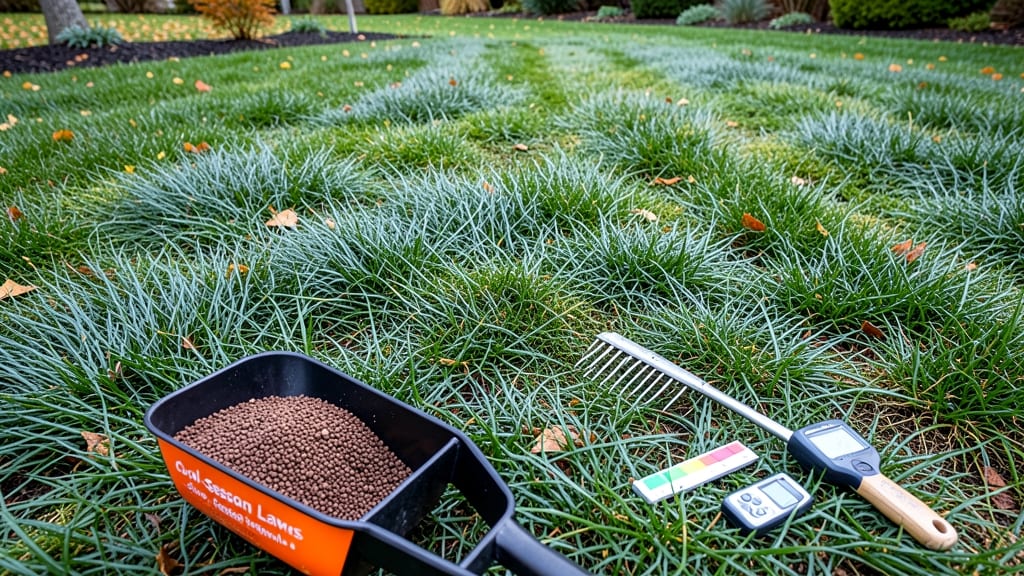
You should fertilize your lawn in the fall between early September and November, with cooler regions ideally targeting late September to early October to strengthen roots before winter dormancy. Cool-season grasses like fescue and ryegrass thrive with this timing, while warm-season varieties may need earlier feeding in mild climates.
The optimal timing for fall fertilization depends on your grass type and local climate. 🌱 Cool-season grasses like Kentucky bluegrass and tall fescue need nutrients to build root systems before winter, while warm-season grasses in southern regions may require feeding as early as August to prepare for dormancy.
Soil temperatures below 50°F slow nutrient absorption, so applying fertilizer too late can waste resources. I recommend testing your soil first—this helps determine if your lawn needs nitrogen, phosphorus, or potassium adjustments before the cold sets in.
For best results, choose a slow-release fertilizer with a 3-1-2 or 4-1-2 ratio (nitrogen-phosphorus-potassium) and apply it when daytime temperatures stay above 60°F. Water thoroughly after application to activate the granules, and avoid heavy foot traffic for 24 hours to prevent uneven distribution.
This timing ensures your lawn stays green longer and recovers faster in spring.
💡 In This Article
- Best Fall Fertilization Timing by Grass Type and Climate Zones
- Step-by-Step Fall Lawn Fertilizer Application Guide
Best fall fertilization timing by grass type and climate zones
The science behind fall fertilization revolves around grass growth cycles and soil temperature thresholds. Cool-season grasses like Kentucky bluegrass and tall fescue enter their most active growth phase in early fall when soil temperatures drop below 80°F but stay above 50°F.
This 60-70°F range triggers root expansion, allowing them to store nutrients for winter survival. Warm-season grasses, however, begin shutting down as temperatures fall below 65°F, making early fall feeding critical in regions with mild winters.
Climate zones drastically alter timing. In USDA zones 3-5 (northern regions), aim for late September to early October when daytime highs average 65-75°F. In zones 6-8, shift to mid-October to November, but avoid fertilizing when soil temps drop below 50°F—this halts nutrient uptake.
Southern zone 9-10 lawns may need feeding as early as August to prepare for dormancy. The key is matching fertilizer application to your grass's natural dormancy cycle and local frost dates.
Soil temperature isn't the only factor—rainfall patterns matter too. In drought-prone areas, apply fertilizer when 1-2 inches of rain is forecast within 48 hours to activate nutrients without burning grass. Overwatering after application can leach nutrients, while insufficient moisture prevents granule activation.
This is why slow-release fertilizers (like polymer-coated urea) outperform quick-release options—they sync nutrient release with root activity, maximizing efficiency during the 6-8 week window before dormancy.
Grass type dictates fertilizer ratios too. Cool-season grasses need higher nitrogen (3-1-2 ratio) to build roots, while warm-season varieties benefit from balanced formulas (4-1-2 ratio) to strengthen stems.
For example, fescue thrives with 0.5-1 lb of nitrogen per 1,000 sq ft, while Bermuda grass in zone 9 may only need 0.25 lb applied in September. 🌱 The difference lies in how each grass type metabolizes nutrients during its transition to dormancy.
Regional weather patterns create exceptions. In Pacific Northwest regions with wet falls, delay until late October to avoid fungal growth from excess moisture. Conversely, in desert climates like Arizona, apply in early September when monsoon rains provide natural irrigation.
Always check your local cooperative extension service for microclimate-specific recommendations—they account for factors like elevation and urban heat islands that standard zones don't capture.
Pro tip: Use a soil thermometer to verify conditions. Insert it 4 inches deep (root zone level) and monitor daily. The optimal window closes when soil temps consistently drop below 50°F at night—this signals your grass's metabolic shift toward dormancy.
Timing this precisely ensures nutrients are absorbed before the ground freezes, preventing waste and promoting spring vigor.