
Lawn
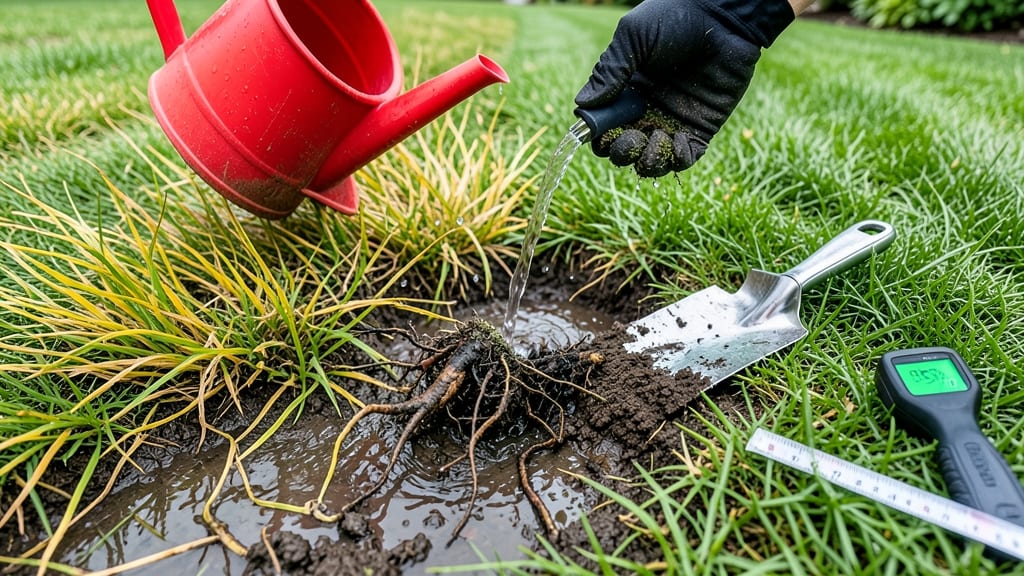
An overwatered lawn looks like a soggy, sad sponge—yellowing patches, mushrooms popping up like weeds, and grass that feels mushy underfoot. 🌱 I've seen it turn from lush green to a swampy mess in just a week, and the worst part?
It's often invisible until it's too late. The key signs include dark green grass that stays damp for days, thin, wilting blades, and puddles that don't evaporate even hours after watering.
That musty smell? That's your lawn crying for help. Overwatering creates the perfect breeding ground for fungal diseases like brown patch or dollar spot, which leave behind circular dead patches that look like someone dropped coins on the grass.
The soil itself becomes compacted and airless, suffocating roots and inviting pests like chinch bugs—tiny but destructive.
Fixing it starts with cutting back on water—deep, infrequent watering (1-1.5 inches per week) beats daily light sprinkles. Aerate compacted soil to help water drain, and rake up those mushrooms before they spread spores.
Within 2-3 weeks, you'll see blades perk up and that unhealthy sheen fade away, replaced by a revitalized, springy lawn that actually thrives.
Prevention is easier than cleanup: check soil moisture by hand (dig 3 inches deep—if it's wet, wait), adjust sprinklers to avoid runoff, and mow higher in summer to shade roots. Your lawn will thank you with stronger growth and fewer "oops" moments next season.
Common Causes Of Overwatering
Overwatering isn’t just a case of leaving the hose running too long—it’s often the result of a mix of human habits, environmental factors, and even lawn design mistakes. Understanding these root causes can help you avoid turning your yard into a swamp. Here’s why it happens:
The most obvious culprit is simply watering too much. Many homeowners follow the "if in doubt, water it out" rule, but grass doesn’t need as much H₂O as you might think.
Here’s why schedules go awry: - Automatic timers set too long: A common mistake is programming sprinklers for 15–30 minutes at a time, assuming it’s "safe." In reality, most lawns only need ½ to 1 inch of water per week (including rainfall).
Overwatering daily in short bursts prevents deep root growth and encourages shallow, thirsty grass. - Ignoring weather conditions: Rainy days + automatic sprinklers = disaster. Many systems lack rain sensors, so they keep running even when Mother Nature is doing the job.
A quick check of the National Weather Service can save gallons of wasted water. - Mornings vs. evenings: Watering in the late afternoon or evening (when grass can’t evaporate moisture) leads to prolonged sogginess. Early morning (before 10 AM) is ideal—it gives soil time to dry slightly.
Pro Tip: 🌡️ Use the "screwdriver test"—if you can’t push a 6-inch screwdriver into the soil easily, you’re overwatering.
Not all lawns are created equal, and some are naturally prone to waterlogging. If your yard has: - Clay-heavy soil: Clay particles pack tightly, blocking water flow.
When you water, the H₂O pools instead of draining. Solution: Test your soil’s drainage by digging a 12-inch hole, filling it with water, and timing how long it takes to drain.
If it’s slower than 4–6 hours, you’ve got a problem. - Low-lying areas or slopes: Gravity doesn’t help—water pools in depressions or runs off slopes, leaving patches either drenched or parched. Fix: Rethink your sprinkler placement or install French drains in trouble spots. - Compacted soil: Heavy foot traffic, construction, or even mower wheels can crush soil, reducing its ability to absorb water. Action: Aerate annually to relieve compaction.
Your sprinklers might be working against you.
Common equipment failures include: - Misaligned or clogged sprinkler heads: A single broken head can spray water in odd patterns, creating soggy circles while other areas dry out. Check: Walk your lawn after watering—look for uneven wet spots or misting instead of deep soaking. - Overlapping sprinkler zones: If two sprinklers cover the same area, you’re double-dosing water. Solution: Map your zones and adjust timers so overlaps get less water, not more. - Leaky or broken pipes: Underground leaks waste water and can erode soil, creating sinkholes or muddy patches. Test: Turn off all sprinklers and check your water meter—if it’s still rising, you’ve got a leak.
Not all grass loves the same amount of water.
Cool-season grasses (like Kentucky bluegrass) hate drought but also rot in standing water, while warm-season grasses (like Bermuda) are drought-tolerant but can suffocate if overwatered. Mistakes to avoid: - Planting thirsty grasses in humid climates (e.g., fescue in Florida). - Over-seeding without adjusting water needs—new grass sprouts need moisture, but established lawns don’t. - Ignoring shade vs. sun exposure: Shady areas dry out slower and stay wet longer. Adjust: Reduce watering frequency in shaded spots by 20–30%.
Mother Nature plays a role too. Heavy rain, high humidity, or even fungal activity can make your lawn retain too much moisture: - Frequent rainfall: If you’re getting 1+ inch of rain per week, skip scheduled watering entirely.
Overwatering on top of rain drowns roots. - High humidity: Air that’s already saturated means water evaporates slower, leaving grass clinging to moisture longer. - Thatched buildup: A thick layer of dead grass (thatch) acts like a sponge, trapping water at the soil surface. Fix: Dethatch annually if the layer exceeds ½ inch.
Sometimes, we know we’re overwatering but keep doing it anyway. Common psychological traps: - "But my neighbor waters every day!" Comparison leads to overwatering.
Grass needs vary by soil, climate, and species—not your neighbor’s habits. - Fear of brown patches: Many assume brown = dead, but grass often goes dormant to survive drought. Test: Pull up a brown patch—if the roots are white and firm, it’s dormant, not dead. - Convenience over science: Leaving sprinklers on while mowing or forgetting to turn them off after a rainstorm happens more often than you’d think. Set reminders or invest in a smart irrigation controller to automate adjustments.
Overwatering disrupts three critical lawn processes:
- Oxygen Deprivation: Water fills soil pores, pushing out oxygen. Roots suffocate, turning yellow or black.
- Fungal Feasts: Excess moisture creates the perfect environment for lawn diseases like brown patch or dollar spot.
Fungi thrive in wet, warm conditions (60–80°F). 3. Nutrient Leaching: Too much water washes away nitrogen, phosphorus, and potassium—the nutrients grass needs to stay green. Result? Weak growth and increased susceptibility to pests.
Key Takeaway: Your lawn doesn’t need daily drinks—it needs deep, infrequent sips to encourage strong roots. Next up, we’ll cover how to diagnose if your lawn is truly overwatered (and what to do about it).
Fixing Your Soggy, Waterlogged Lawn
Overwatering can turn your lawn into a swampy mess, but the good news? Most damage is reversible with the right steps. Below, we’ve mapped out practical fixes based on the root cause—plus prevention tips to keep your grass healthy long-term.
If puddles linger for days, your lawn’s drainage system is the culprit. Here’s how to fix it:
🔧 Improve Soil Drainage (Step-by-Step)
- 🔥 Test Your Soil’s Drainage Grab a shovel, dig a 6-inch hole, and fill it with water. If it drains in less than 6 hours, your soil is okay.
If it takes longer, you’ve got poor drainage. Pro Tip: 💡 Use a permeability test kit (or a simple jar test) for accuracy.
- 🍳 Add Organic Matter Mix compost, peat moss, or coconut coir into the top 2–3 inches of soil. This loosens compacted dirt and helps water flow. 🌱 Best for: Clay-heavy or dense soils.
- 👨🍳 Create Swales or Berms For sloped lawns, gradually shape the land to slow water flow naturally. Avoid deep trenches—they can erode over time. ✨ Bonus: Plant deep-rooted grasses (like tall fescue) along low spots—they absorb excess moisture.
- ⏰ Install French Drains (For Severe Cases) Bury a perforated pipe surrounded by gravel in a trench near problem areas. Direct water to a dry well or storm drain. 🔥 Warning: 🚧 Call a pro if your yard has a septic system—incorrect drainage can damage it.
If your lawn is soggy, spongy, or covered in mushrooms, fungi are thriving. Here’s how to starve them out:
🌡️ Adjust Watering Habits
- ⏰ Water Less Frequently – Aim for deep, infrequent watering (1–1.5 inches per week, including rain).
- 🌞 Water Early – Morning (before 10 AM) reduces evening dampness, which fuels fungi.
- 🎯 Avoid Overhead Watering – Use soaker hoses or drip irrigation to keep leaves dry.
🔪 Remove Fungal Hotspots
- 🍄 Pull Mushrooms & Fungi – Snip them at the base (don’t compost them—they’ll spread!).
- 🌱 Rake Out Thatch – A thick thatch layer traps moisture.
Dethatch in spring or fall. 3. 💪 Apply Fungicide (If Needed) – Use a preventative fungicide (like propiconazole) for severe cases.
💡 Pro Tip: 🌡️ Improve airflow by mowing high (3–4 inches) and aerating compacted soil.
If your lawn looks sodden but struggling, it’s likely drowning in water. Here’s how to revive it:
📊 Check for Root Rot
- 🔍 Dig up a small patch – If roots are dark, mushy, or smell foul, root rot has set in.
- 💪 Solution: Aerate aggressively and reduce watering immediately.
🌱 Overseed Bare Spots
- 🌱 Choose Drought-Tolerant Grass – Switch to tall fescue, zoysia, or buffalo grass if your area gets heavy rain.
- 🍳 Spread Seed After Aerating – Lightly rake in grass seed + starter fertilizer for faster regrowth.
✨ Prevention Tip: 🎯 Test your soil’s pH (ideal: 6.0–7.0). Compacted or acidic soil worsens waterlogging.
Once your lawn is back in shape, keep it that way with these habits:
| Problem | Prevention Fix | When to Do It |
|---|---|---|
| Compacted Soil | Core aeration + sand/topsoil mix | Spring or fall |
| Poor Drainage | Install French drains or swales | Before heavy rains |
| Fungal Recurrence | Fungicide treatment + less watering | Early spring/fall |
| Thatch Buildup | Dethatching + sharp mowing | Late spring/early fall |
💡 Final Tip: 🌡️ Invest in a rain gauge—most lawns get 2–3x more water than they need!
Remember: Patience is key—overwatered lawns recover in 4–8 weeks with consistent care. Start with drainage, adjust watering, and monitor progress! 🌱💦
Frequently asked questions
How can I tell if my lawn is overwatered vs. just wet?
Look for three key signs: grass blades that feel slimy or mushy when you walk on them, puddles lasting more than 24 hours, and a musty, sour smell (like wet socks). Healthy lawns dry within 6 hours after watering. Also check for mushrooms or mold—these only grow in constantly damp soil.
Why does my lawn stay green but feel spongy?
That dark, glossy green is a red flag! Overwatered grass stays green because it can't photosynthesize properly—roots suffocate from lack of oxygen. The spongy feel comes from waterlogged soil where air pockets are replaced by H₂O. Dig a small test spot: if the soil smells foul or looks gray, you're drowning your lawn.
Can I fix an overwatered lawn in just a few days?
No—recovery takes 2-4 weeks of proper care. First, stop watering immediately and let the soil dry out. Aerate compacted areas, and if you see mushrooms, remove them completely. For severe cases (like root rot), you may need to reseeding in the affected spots. Patience is key—don't rush back to daily watering!
Will overwatering kill my lawn permanently?
Not necessarily! While chronic overwatering can lead to root rot and fungal diseases, most lawns recover if you correct the problem early. The key is catching it before roots turn black/mushy. Even severely damaged lawns can bounce back with proper drainage fixes, reduced watering, and occasional overseeding. Think of it like a plant—it can survive a flood but won't thrive if constantly soggy.
How do I adjust my sprinkler system to prevent overwatering?
Start by watering deeply but less often—aim for 1-1.5 inches per week (including rain). Check your sprinkler heads: broken or misaligned heads create uneven watering patterns. Install a rain sensor to shut off sprinklers during rainfall, and program watering for early morning (5-9 AM) to reduce evaporation loss. Finally, map your zones to avoid overlaps.