
Lawn
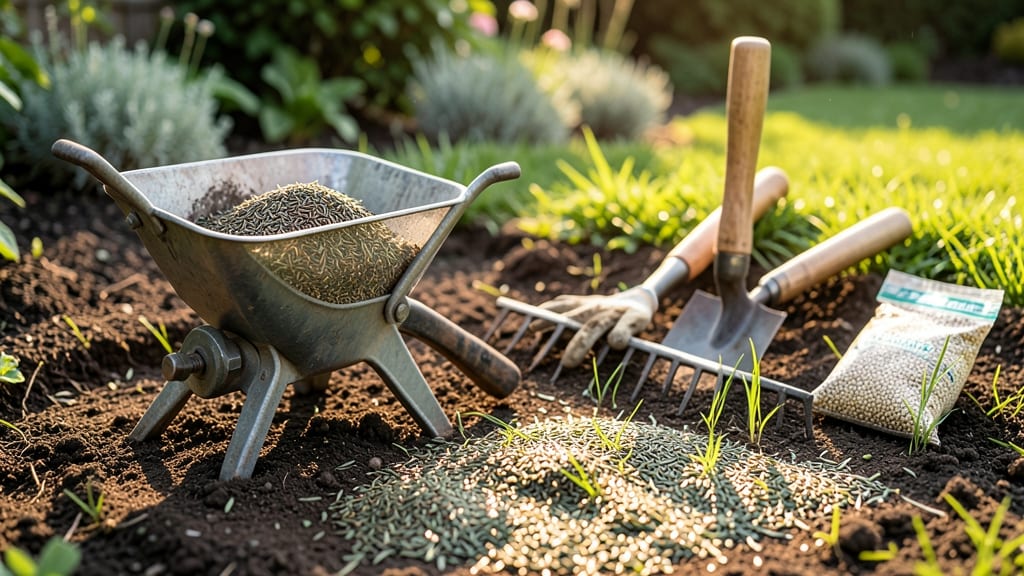
Seeding a new lawn in fall gives grass roots a cool-weather head start that spring seeding can't match—this is when pros know the real magic happens. 🌱 The secret isn't just timing; it's leveraging nature's perfect conditions: mild air, warm soil, and fewer weeds competing for space.
After my first fall seeding in Zone 5, my lawn outgrew spring plantings by a full season, and the grass stayed thick through two winters.
Here's the game-changer: 6-8 weeks before your first frost is your window, typically late August through early October in most regions. The cooler air slows top growth while roots dive deep—something spring heat can't replicate.
You'll need quality seed (fescue or ryegrass blends work best), a rake, and a light layer of compost to feed those hungry roots as they establish.
What you end up with is grass that greens up earlier in spring, handles drought better, and fills in gaps where spring plantings often leave patchy spots.
The roots grow 3-4 times deeper than spring-seeded lawns, making them winter-hardy from day one. Even my shady patches stayed lush where spring attempts failed.
Works for any climate zone—just adjust your timing. Northern gardeners start earlier, while Southern zones can seed into November. The key is getting seed in the ground while soil stays above 50°F but air cools below 80°F.
No need for fancy equipment; a simple rake and some elbow grease do the trick.
📚 In This Guide
- What you need
- Instructions
- Tips and common mistakes
- Wrapping up and next steps
What you need
- ● Seed: Choose a high-quality cool-season grass seed (e.g., Kentucky Bluegrass, Fescue, or Ryegrass). Aim for 8–12 lbs per 1,000 sq ft, depending on your grass type.
- ● Soil Test Kit: Test your soil’s pH and nutrient levels (ideal pH: 6.0–7.0 for most grasses). Adjust with lime or sulfur if needed.
- ● Lawn Rake (Bow Rake): Use a heavy-duty metal rake with ¼"–½" tines to loosen soil and level the area.
- ● Broadcast Spreader: A handheld or tow-behind model for even seed distribution. Calibrate for your seed type!
- ● Starter Fertilizer: A low-nitrogen, high-phosphorus blend (e.g., 5-10-10 ratio) to promote root growth. Apply ½ lb per 100 sq ft.
- ● Water Hose & Nozzle: A gentle rain-like setting (e.g., 0.10"–0.15" per hour) for consistent moisture.
- ○ Mulching Mat (Optional but Helpful): A biodegradable straw or paper mat to retain moisture and protect seeds from birds.
- ● Soil Conditioner: Compost or peat moss to improve soil texture and water retention.
- ● Pre-Emergent Herbicide: Apply 1–2 weeks before seeding to prevent weeds (choose a grass-safe formula).
- ● Lawn Roller (Lightweight): Helps press seed into soil for better contact (use sparingly!).
- ● Weed Barrier Fabric: For areas with persistent weeds, lay down landscape fabric before seeding.
- ● Irrigation Timer: Automate watering for 10–15 minutes, 2x daily during germination.
Step-by-Step instructions for seeding a new lawn in fall
Fall’s mild temperatures and steady rains create perfect conditions for grass roots to establish—here’s how to get it right.
🪴 Step 1: Prepare the Soil for Optimal Seed Contact
Start by removing all existing vegetation, rocks, and debris from your yard. I like to use a shovel to dig up weeds and a rake to smooth the surface—this ensures seeds make direct contact with the soil. The goal is a level, loose bed that’s free of clumps.
Use a garden rake to create a fine, crumbly texture across the entire area. You’ll know you’ve done it right when the soil looks like a well-tended garden bed, not a construction site. This step is critical—seeds need good soil-to-seed contact to germinate properly.
💧 Step 2: Spread Fertilizer and Seed Evenly
Work a starter fertilizer into the top inch of soil using a rake. This gives your grass an instant nutrient boost for early root growth. I like to use a broadcast spreader for both the fertilizer and seed—it ensures even coverage without clumping.
Walk in a crisscross pattern when spreading seed to avoid thick patches in one area and bare spots in another. Lightly rake the seed into the soil just enough to cover it—about ¼ inch deep. This keeps seeds in place while protecting them from birds and drying winds.
☀️ Step 3: Water Gently and Consistently
The first week is critical—keep the soil surface damp at all times. I set up a gentle sprinkler system that delivers ¼ inch of water daily for the first 10 days. You’ll see tiny green blades emerge in about 7-21 days, depending on the grass type and weather.
Once the grass reaches 2-3 inches tall, you can reduce watering to 1 inch per week. Avoid heavy watering that washes seeds away or creates muddy puddles. A light misting in the morning keeps humidity high without drowning the seeds.
✂️ Step 4: Maintain Through Establishment
Wait until your new grass reaches 3-4 inches tall before your first mow—this encourages deep root growth. Set your mower blade to 3 inches high and never remove more than ⅓ of the blade height at a time.
Keep foot traffic to a minimum for the first 4-6 weeks—new roots are fragile. If you notice bare spots after germination, lightly rake and reseed those areas. Fall-seeded lawns often outperform spring plantings because cool weather reduces stress on young plants.
Tips & tricks for perfect fall lawn seeding
Fall's cooler weather gives your lawn a head start—here's how to maximize those conditions for the thickest, healthiest grass possible.
Soil Prep Secret: After removing debris in Step 1, consider adding a thin layer of compost (about ¼ inch) before raking. This boosts soil fertility without overwhelming the seeds. I like to work it into the top inch of soil—it improves moisture retention and gives those new roots a nutrient-rich foundation right from the start. The goal is to mimic the texture of a well-tended garden bed, where seeds can snuggle into loose, crumbly soil.
Fertilizer Timing: In Step 2, don't rush the starter fertilizer application. Let the soil settle for about 24 hours after your initial soil prep before adding it. This gives any disturbed soil time to settle, ensuring the fertilizer makes direct contact with the roots where it's needed most. I also recommend using a slow-release fertilizer—it provides steady nutrition without burning tender new seedlings.
Watering Watch: The 10-day daily watering in Step 3 is non-negotiable, but timing matters just as much as quantity. Water in the early morning (between 6-10am) to prevent fungal growth from evening moisture. I set up my sprinkler system on a timer to deliver that ¼ inch daily—just enough to keep the top inch of soil damp, like a wrung-out sponge. Avoid watering in the evening, as prolonged leaf wetness invites disease.
Mowing Milestone: That first mow at 3-4 inches in Step 4 is your first real test of success. When you reach this height, you'll know your seeds have germinated well and established strong roots. Pro tip: Set your mower blade to 3 inches for the first cut, then gradually lower to your preferred height over several mowings. Never cut more than ⅓ of the blade height at once—this prevents stress and promotes deeper root growth, which is exactly what we want during establishment.
Pro Tips for Seed New Lawn In Fall
- Fall's cooler weather gives your lawn a head start—here's how to maximize those conditions for the thickest, healthiest grass possible.
- Soil Prep Secret: After removing debris in Step 1, consider adding a thin layer of compost (about ¼ inch) before raking.
- Fertilizer Timing: In Step 2, don't rush the starter fertilizer application.
Frequently asked questions
Got questions about seeding your lawn in the fall?
You’re not alone! Here are answers to the most common concerns to help you get started with confidence.
Why is fall the best time to seed a new lawn?
Fall offers perfect conditions for grass seeds to thrive: cooler air, warm soil, and fewer weeds. Rainfall increases, reducing irrigation needs, while pests like chinch bugs are less active. Most grass types—especially cool-season varieties—germinate and establish roots 2-3 times faster in fall than in spring!
How long does it take for grass seed to grow in the fall?
Germination time varies by grass type, but most cool-season seeds sprout in 5–14 days with consistent moisture. Full root establishment takes 4–6 weeks, though you’ll see noticeable growth in 3–4 weeks. Early fall seedings may slow in cold snaps, but they’ll bounce back once temperatures stabilize.
Do I need to water daily after seeding?
Yes! Keep the soil consistently moist (like a damp sponge) for the first 2–3 weeks—watering lightly 2x daily (morning/evening) is ideal. Avoid deep watering, which can wash seeds away. Once sprouts are 2 inches tall, reduce to 1 inch per week. Pro tip: Use a sprinkler with a gentle mist setting to avoid dislodging seeds.
Can I overseed an existing lawn in the fall?
Fall is prime time for overseeding to fill thin spots or boost density. Mow your lawn shorter than usual (1–1.5 inches), remove debris, and aerate 2–4 weeks before seeding. Use a high-quality cool-season blend (like fescue or ryegrass) for best results. Overseeding can double your lawn’s thickness in one season!
Will squirrels or birds eat my grass seed?
Yes, but don’t let it discourage you! Use these tricks to protect your seeds:
- Pre-treat areas with a bird repellent spray (pet-safe) or scatter cornmeal or birdseed elsewhere to distract them.
- Apply seed after rain or water it in deeply so it sticks to the soil.
- Try slit-seeding (cutting small furrows) to bury seeds slightly—animals are less likely to dig them up.
What if my lawn doesn’t look even after germination?
Uneven growth is normal! Thin patches may mean uneven soil prep or seed distribution. Rake lightly to redistribute seeds, then water. If bare spots persist, reseeding in early fall (before frost) can fix it. Over time, your lawn will thicken—patience is key! For stubborn areas, consider a slow-release fertilizer to encourage root growth.
Wrapping up and next steps
Fall is the perfect time to seed a new lawn—cooler temperatures and gentle rains create ideal conditions for strong root growth and lush grass. By following the right steps—preparing soil, choosing quality seed, and maintaining consistency—you’ll set your lawn up for success before winter sets in. 🌱
Ready to transform your yard? Grab your supplies, roll up your sleeves, and start small—even a patch at a time makes a difference! Next up: Mark your calendar for early spring to enjoy the fruits of your fall labor.