
Lawn
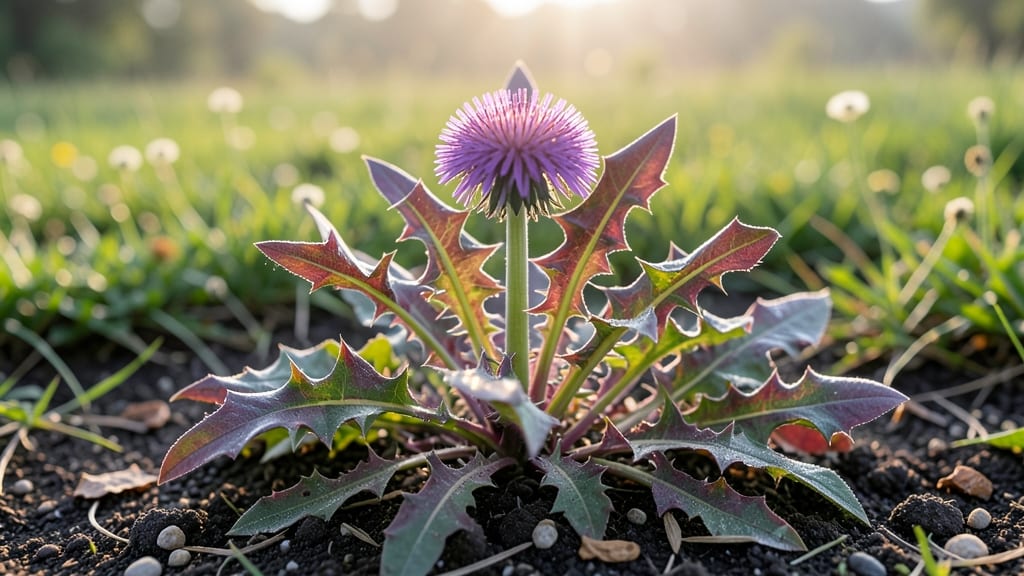
That purple-leaved weed creeping into your lawn isn't just an eyesore—it's a sign your grass is fighting back. 🌱 I've wrestled with clover-like purple foliage in my own yard, and the good news is you can reclaim your lawn without harsh chemicals.
The secret lies in understanding what you're dealing with first.
Most purple-leaved weeds you'll find are either henbit (with square stems) or purple deadnettle (with serrated edges), both of which thrive when lawns are stressed. They pop up when grass is thin, shaded, or compacted, turning your yard into a patchwork of green and purple.
The key to removal is timing—spring and fall are prime windows for organic control.
You'll start seeing real improvement within 3-4 weeks of consistent treatment, with thick grass crowding out those purple intruders for good. The best part? Your lawn will look healthier than ever, with vibrant green blades that actually stay put.
No more chemical residue, just lush grass that feels good to walk on.
Whether you're dealing with a small patch or a full lawn takeover, this approach works for any yard size. Let's get your grass back to its best—without the purple invaders.
Understanding The Root Causes
That striking purple-leaved weed popping up in your lawn isn’t just a random nuisance—it’s often a sign that something deeper is going on with your soil or grass health.
Before you reach for herbicides, it helps to know why these vibrant invaders appear. Let’s dig into the science behind their persistence.
Purple-tinged weeds like chickweed or henbit often thrive when your lawn’s soil is lacking in key nutrients. Here’s why:
- Phosphorus Shortage: Purple hues in weeds (especially in early spring) usually signal low phosphorus levels. This nutrient is critical for root development and energy transfer in plants. When your grass struggles to access enough phosphorus, weeds with high phosphorus needs—like henbit—take over.
- Nitrogen Imbalance: Too little nitrogen can stress grass, creating gaps where weeds sprout. But too much nitrogen can also encourage weeds by promoting rapid, shallow root growth in grass, leaving it vulnerable to competition.
- Potassium Deficiency: Purple edges on leaves (a sign of potassium deficiency) weaken grass resilience. Weeds like purple deadnettle exploit this by outcompeting stressed turf.
💡 Pro Tip: Test your soil’s pH and nutrient levels with a DIY kit or lab analysis. Aim for a pH of 6.0–7.0—outside this range, nutrients like phosphorus become locked away, favoring weeds.
Weeds don’t just appear out of nowhere—they’re often opportunists thriving in conditions that stress your grass. Common triggers include:
- Compacted Soil: Heavy foot traffic, construction, or clay-heavy soil compacts the ground, reducing oxygen and water flow to grass roots. Weeds like creeping charlie (with its purple-tinged varieties) thrive in these low-oxygen zones because their roots are shallow and adaptable.
- Drought or Overwatering:
- Drought stress weakens grass, creating bare patches where weeds like purple nutsedge (a sedge, not a grass) take hold.
- Overwatering leads to fungal issues (like red thread) and soil erosion, both of which invite weeds.
- Shade or Sunburn: Grass struggling in too much shade (e.g., under trees) or intense afternoon sun (common in southern lawns) becomes thin, leaving room for shade-tolerant weeds like clover or moss.
🌡️ Actionable Fix: Aerate compacted soil in fall, adjust your watering schedule to 1 inch per week (including rain), and mow at the highest recommended height for your grass type to reduce stress.
Even the hardiest lawns fall prey to weeds when basic care is neglected. Here’s how your routine might be unintentionally inviting purple-leaved intruders:
| Habit | Why It Helps Weeds | Fix It With |
|---|---|---|
| Mowing too short | Weakens grass roots, exposing soil to weeds like purple oxalis. | Set mower blades to 3–4 inches for cool-season grasses, 2–3 inches for warm-season. |
| Skipping overseeding | Thin grass patches invite weeds with aggressive seeds (e.g., henbit). | Overseed in early fall with a mix matched to your climate. |
| Ignoring thatch buildup | Thatch (>½ inch thick) blocks water/nutrients, stressing grass and favoring weeds. | Dethatch in early spring if layer exceeds ½ inch. |
| Using broadleaf herbicides incorrectly | Kills clover/dandelions but leaves gaps for grassy weeds like nutgrass. | Apply pre-emergent in early spring/fall to block seeds. |
✨ Key Insight: Weeds like purple deadnettle spread via seed pods that explode when disturbed. Avoid raking or aerating after weeds bloom to prevent spreading seeds.
Now that you know the why, the next step is addressing these root causes—without resorting to harsh chemicals. Stay tuned for natural solutions to reclaim your lawn’s vibrancy!
Eliminate Purple Stains Naturally
Now that you know why those stubborn purple-leaved weeds are taking over your lawn, it’s time to tackle them effectively—without harsh chemicals. Below, we’ve mapped out practical, step-by-step solutions tailored to the most common causes, along with prevention tips to keep your lawn lush and green.
---
If your lawn is soggy or waterlogged, purple weeds like creeping charlie (Glechoma hederacea) or henbit (Lamium amplexicaule) thrive in damp conditions. Here’s how to dry it out and prevent regrowth:
Step 1: Improve Drainage 🌧️ - Test your soil: Dig a 6-inch hole and fill it with water. If it drains in under 4 hours, drainage is decent. If not, amend the soil. - Add compost or sand: Mix in 2–3 inches of organic compost or coarse sand to loosen heavy clay soil. For sandy soil, top-dress with peat moss to retain moisture better. - Rake and level: Break up compacted areas with a garden fork, then rake to smooth out low spots.
Step 2: Adjust Watering Habits 💧 - Water deeply but less often: Aim for 1–1.5 inches per week, including rainfall. Use a soaker hose or drip irrigation to avoid surface puddling. - Water in the morning: This reduces evaporation and prevents fungal issues that weaken grass. - Check for hidden issues: If water pools in specific spots, consider French drains or swales (shallow trenches) to redirect water.
💡 Pro Tip: If your lawn has a clay-heavy base, consider aeration in fall or spring to help roots breathe and water absorb properly.
---
For purple-leaved weeds like clover or chickweed, natural herbicides can work if applied correctly. These methods are fast, chemical-free, and safe for pets once dry.
Option 1: Vinegar Spot Treatment 🍶 - Mix: 1 gallon of white vinegar (5% acetic acid) + 1 cup salt + 1 tbsp dish soap (as a surfactant). - Apply: Spray directly on weeds on a sunny day (avoid wind). The solution burns the leaves within 24–48 hours. - Reapply: If weeds persist, treat again after 5–7 days.
Option 2: Boiling Water Blast 🔥 - Best for: Small, isolated weeds like henbit or purple deadnettle. - Method: Pour boiling water directly onto the weed’s leaves and roots. Repeat 2–3 times over a week. - Why it works: The heat denatures proteins in the plant, killing it instantly.
⚠️ Caution: Avoid vinegar/boiling water near desired plants—it’s non-selective and will kill grass too.
---
A thick, healthy lawn is the best defense against purple invaders. Follow these steps to crowd out weeds naturally:
Step 1: Overseed Bare Spots 🌱 - Best time: Early fall (when weeds are weak and grass recovers fast). - Choose the right seed: Pick a shade-tolerant or sun-loving mix (e.g., Kentucky bluegrass, fescue, or ryegrass). - Spread evenly: Use a drop or broadcast spreader for uniform coverage. - Cover lightly: Top with ¼-inch of compost to protect seeds and retain moisture.
Step 2: Fertilize Smartly 🌿 - Test soil first: Use a DIY kit or send a sample to a lab to check pH (ideal: 6.0–7.0) and nutrient levels. - Apply slow-release fertilizer: Use a balanced 10-10-10 or organic option (like fish emulsion or compost tea) in early spring and fall. - Avoid over-fertilizing: Too much nitrogen can promote weed growth—stick to ¼–½ lb of nitrogen per 1,000 sq ft per year.
Step 3: Mow High and Often ✂️ - Set mower blades to 3–4 inches (taller grass shades out weeds and develops deeper roots). - Never remove more than ⅓ of the blade at once—this stresses grass. - Bag clippings if weeds are spreading via seeds (like chickweed).
---
If weeds are deep-rooted or patchy, physical removal is often the most effective method.
For Broadleaf Weeds (Like Purple Deadnettle): - Pull when soil is moist (after rain or watering). - Use a weeding tool (like a dandelion digger) to grab the root. - Drop weeds in the trash (not compost—seeds may survive).
For Creeping Weeds (Like Creeping Charlie): - Cut with a string trimmer to weaken the plant. - Apply corn gluten meal (a natural pre-emergent) in early spring to prevent regrowth.
🌡️ Pro Tip: Wear gloves—some weeds (like stinging nettle) can irritate skin!
---
Once your lawn is weed-free, keep it that way with this maintenance checklist:
| Season | Task | Why It Works | |------------|----------|------------------| | Spring | Aerate + Overseed | Fills thin spots before weeds germinate. | | Summer | Water deeply 2x/week | Encourages deep roots, drought-resistant grass. | | Fall | Apply compost + pre-emergent | Boosts soil health and blocks weed seeds. | | Year-Round | Mow high + bag clippings | Reduces seed spread and shades weeds. |
---
To prevent purple weeds from returning, try these low-effort barriers: - Landscape fabric under mulch in garden beds. - Thick layer of wood chips or straw (smothers weeds while improving soil). - Ground cover plants (like creeping thyme or clover) that outcompete weeds.
--- By combining targeted treatments with preventive care, you’ll banish purple-leaved weeds and restore a vibrant, chemical-free lawn in no time! 🌿💚
Frequently asked questions
What are the most common types of purple-leaved weeds in lawns?
The purple foliage you're seeing is likely one of these three: henbit (with square stems and jagged leaves), purple deadnettle (with serrated edges and red stems), or chickweed (with small oval leaves). All three thrive in compacted, nutrient-poor soil and spread aggressively when lawns are stressed.
Can I just pull out purple-leaved weeds by hand?
Yes, but timing matters! Pull weeds when the soil is moist (after rain) to avoid breaking roots. For deep-rooted weeds like creeping charlie, use a weeding tool to dig out the entire root system. Drop pulled weeds in the trash—not compost—to prevent seed spread. Gloves are recommended for weeds like stinging nettle.
Will vinegar really kill purple-leaved weeds without harming grass?
Vinegar works best as a spot treatment for isolated weeds. Mix 1 gallon of white vinegar (5% acid) with 1 cup salt and 1 tbsp dish soap, then spray directly on weeds on a sunny day. Avoid windy conditions—vinegar can drift and damage nearby plants. Reapply every 5-7 days if needed.
How long does it take to see results after treating purple-leaved weeds?
For natural methods like vinegar or boiling water, you'll see visible wilting within 24-48 hours, with full kill in 1-2 weeks. Overseeding and soil amendments take 3-4 weeks to show improvement as grass fills in bare spots. Consistency is key—weeds return quickly if root causes (like soil compaction) aren't addressed.
Are there any purple-leaved plants that aren't weeds?
Yes! Some ornamental grasses like purple fountain grass or creeping red fescue have purple foliage and can be desirable in garden beds. If you're unsure, check for these key differences: weeds have aggressive spread, no flowers (or weedy flowers), and thin stems—while ornamental plants have clumped growth and structured blooms.