
Lawn
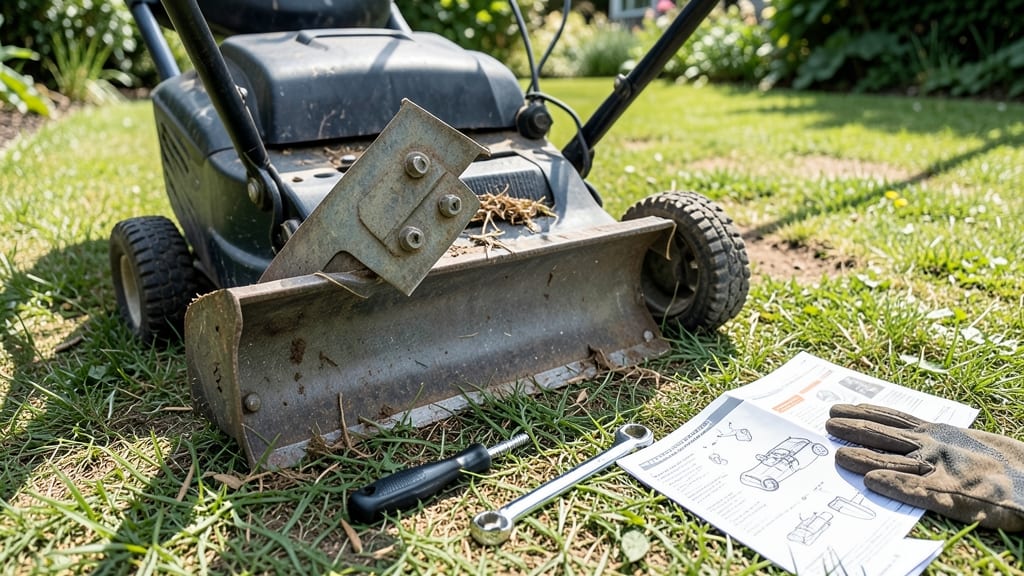
Most lawn mower blades use standard right-hand threads, but some commercial-grade models—like those from Honda—feature reverse (left-hand) threads for safety and design reasons. Always verify your mower’s manual before working with blades to prevent cross-threading damage.
Understanding whether your lawn mower blades use reverse threads is crucial for maintenance and safety. 🔧 The standard right-hand threading is most common because it aligns with typical tools and hardware, but reverse threads serve a specific purpose: they resist loosening during operation, reducing vibration risks and potential accidents.
Brands like Honda intentionally use left-hand threads to meet safety standards, especially in high-performance models where blades experience constant stress.
To identify thread direction, look closely at the blade hub or consult your owner’s manual—most manufacturers specify this detail. If you’re unsure, a simple test is to try turning the blade with your hand: right-hand threads will turn clockwise when viewed from above, while reverse threads turn counterclockwise.
Using the wrong tool or technique can strip threads or damage the hub, so always match your wrench to the thread direction.
💡 In This Article
- Why Some Lawn Mower Blades Use Reverse Threads
- How to Identify and Fix Reverse-Threaded Blades Safely
Why some lawn mower blades use reverse threads
Reverse (left-hand) threads on lawn mower blades serve a critical safety function by preventing accidental loosening during operation. When a blade spins clockwise (as viewed from above), standard right-hand threads would naturally tighten—but reverse threads actually resist this motion.
This design counteracts the centrifugal forces generated by the rotating blade, which can reach 3,000+ RPM on residential mowers and up to 10,000 RPM on commercial models. The resulting vibration and torque would gradually loosen standard threads over time, creating a serious safety hazard.
Manufacturers like Honda implement reverse threads as part of their safety standards, especially in models designed for heavy-duty use. The engineering behind this involves calculating the blade's rotational force and matching it with thread pitch—typically 10-20 threads per inch—that creates sufficient friction to maintain tension.
For example, a 42-inch commercial blade might generate 1,200 pounds of centrifugal force at operating speed, requiring reverse threads to stay secure. This is why you'll often see reverse threading on blades from brands prioritizing durability and operator protection.
The visual difference between right-hand and reverse threads is subtle but critical. Right-hand threads appear as angled lines spiraling clockwise when viewed from the top, while reverse threads spiral counterclockwise.
This distinction becomes obvious when attempting to turn the blade by hand—right-hand threads will tighten when rotated clockwise, while reverse threads will tighten when rotated counterclockwise. Many DIYers make the mistake of assuming all blades use standard threads, which can lead to stripped threads or blade detachment during mowing.
Another key factor is the blade's mounting hub design. Reverse-threaded blades often feature a unique hub with deeper grooves or locking tabs that work in tandem with the threads. For instance, Honda's HRX series mowers use a 12-point locking mechanism combined with reverse threads to prevent any movement.
This dual-system approach ensures the blade stays perfectly aligned even under extreme conditions, which is particularly important for zero-turn radius mowers where blade speed and stress are highest.
Consider the real-world impact: A loose blade can become a projectile at high speeds, posing dangers to operators and bystanders. The National Institute for Occupational Safety and Health (NIOSH) reports that blade-related injuries account for 20% of all lawn mower accidents.
Reverse threads reduce this risk by maintaining consistent torque, though they do require specialized tools—a left-hand socket wrench or adjustable wrench with proper grip—to install or remove them safely. The trade-off between safety and convenience explains why reverse threading remains a niche feature in the industry.
What most people don't realize is that reverse threads also affect blade balance. The asymmetrical force distribution from spinning blades creates a 1-2% imbalance that standard threads might exacerbate over time. Reverse threads help maintain this balance, which is why professional turf managers prefer them for high-end equipment.
The engineering pays off in smoother operation and longer blade life—though it does require owners to pay closer attention to maintenance protocols.