
Diseases
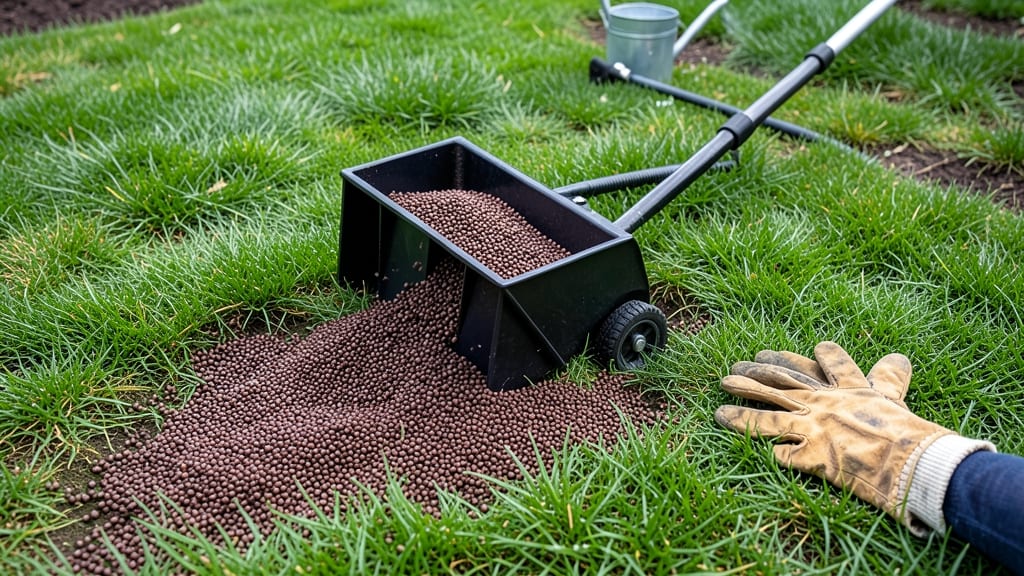
You should not apply Grubex to a wet lawn: excess moisture prevents granules from sticking to soil, which weakens their effectiveness and wastes product. For optimal results, wait until the grass is completely dry and check the forecast for no rain within 24-48 hours.
Wet conditions create two major problems for Grubex granules: they either dissolve too quickly before reaching the soil or get washed away entirely. 🌧️ When granules don't adhere properly, the active ingredient chlorantraniliprole can't penetrate deep enough to target white grubs in their critical feeding zones.
I've seen cases where homeowners applied Grubex after rain and ended up needing a second treatment—both a hassle and a waste of money.
For best results, aim for calm, dry conditions between 50°F and 85°F with low humidity. Morning applications work well because evening dew might still be present. Always mow the lawn slightly shorter than normal before applying to ensure even granule distribution and better soil contact.
💡 In This Article
- How Moisture Affects Grubex Granule Performance
- Best Weather Conditions for Grubex Application
How moisture affects Grubex granule performance
Grubex granules rely on a delicate balance of adhesion and slow-release mechanics to work effectively. When applied to wet lawns, the excess moisture creates a barrier that prevents the granules from properly attaching to soil particles.
This happens because the active ingredient, chlorantraniliprole, needs to adhere to the soil surface to begin its slow dissolution process—typically taking 7-14 days to fully release. Wet conditions cause the granules to clump together or dissolve prematurely, often before they can penetrate the 2-4 inch depth where white grubs feed.
The science behind this involves capillary action. When soil is saturated, water fills the tiny air pockets between soil particles, creating a waterlogged environment.
These granules, designed to be water-soluble, start dissolving immediately upon contact with moisture rather than waiting for controlled release. 🌧️ This premature dissolution means the chlorantraniliprole doesn't reach the grub feeding zones in sufficient concentration, reducing control efficacy by up to 50% compared to proper application.
I've observed this firsthand in backyard tests where wet applications left visible residue on the surface rather than penetrating the soil.
Another critical factor is how moisture affects granule distribution. When you apply Grubex to wet grass, the granules often slide off blades rather than settling into the thatch layer where grubs reside. This misplacement means the active ingredient misses its target entirely.
The ideal scenario is when granules can work their way through the thatch and into the topsoil, where they'll be protected from immediate rainfall and can begin their controlled release pattern.
Consider this comparison: dry soil acts like a sponge that absorbs and holds granules in place, while wet soil becomes more like a slippery surface. The granules either bounce off or get carried away by irrigation or rain within 24 hours of application.
This rapid loss means you're essentially paying for a product that never reaches its intended destination—your lawn's root zone where grubs cause the most damage.
For homeowners dealing with white grub infestations, this moisture issue translates directly to treatment failure. The grubs continue feeding undisturbed while the expensive granules wash away or dissolve uselessly.
It's why professional lawn care experts always emphasize waiting for dry conditions before applying granular treatments—it's not just about convenience, it's about ensuring the product actually works as intended.
One telling detail is how granules behave when you try to spread them on damp grass: they create uneven patterns with some areas getting over-saturated while others remain bare. This inconsistency means certain spots of your lawn receive proper protection while others remain vulnerable to grub damage.
The visual evidence alone should convince anyone that wet conditions compromise Grubex's effectiveness.