
Lawn
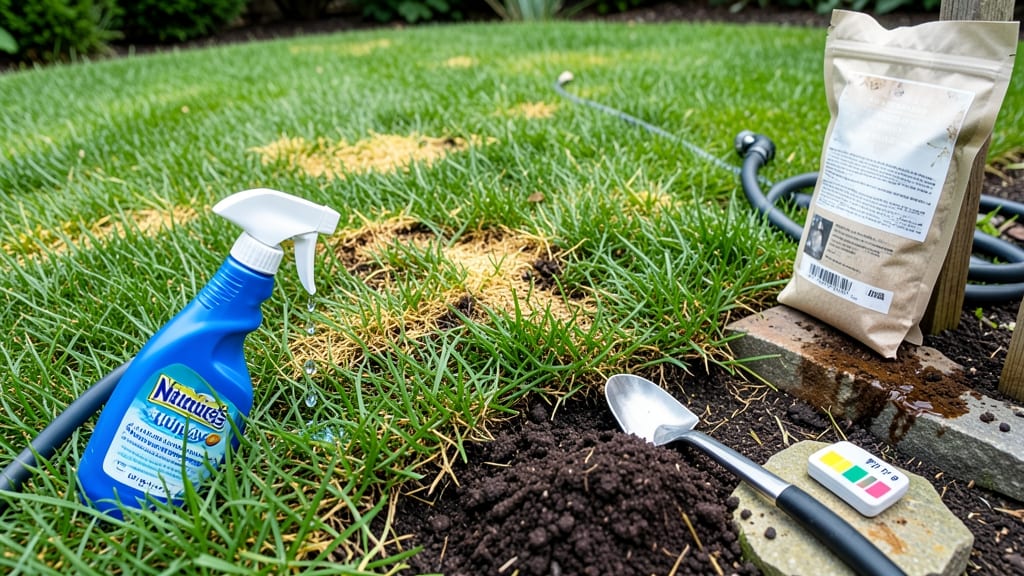
Neutralizing dog urine on lawns requires diluting the pH with a vinegar-water blend (1:2 ratio), flushing the area thoroughly, and retesting soil pH to ensure balance. Apply a nitrogen-rich fertilizer afterward to restore grass health.
Dog urine contains high concentrations of ammonia and urea, which raise soil pH and create nutrient imbalances that prevent grass from absorbing essential minerals like phosphorus and potassium. 🌱 The vinegar solution works because its acetic acid helps restore the soil's natural pH balance, while the follow-up fertilizer replenishes nitrogen levels that dog urine depletes.
For best results, test your soil's pH after treatment to confirm it's returned to the ideal range of 6.0-7.0 for most lawn grasses.
This method is particularly effective for frequent dog owners because it addresses both the immediate damage and long-term soil health. The key is acting quickly—urine's chemical composition begins altering soil within minutes of being deposited. I recommend treating affected areas within 30 minutes of noticing the urine to maximize effectiveness.
💡 In This Article
- Why Dog Urine Burns Grass and How pH Affects Lawn Health
- Step-by-Step Vinegar Blend Method for Urine Neutralization
Why dog urine burns grass and how pH affects lawn health
Dog urine contains ammonia (NH₃) and urea (CO(NH₂)₂), both of which break down into ammonia when exposed to soil bacteria. This chemical reaction raises the soil's pH rapidly—sometimes to 8.0 or higher—making it alkaline.
Grass thrives in a neutral pH range of 6.0-7.0, so this sudden spike disrupts nutrient uptake, particularly phosphorus and potassium, which become less available to plant roots. 🌱 The ammonia also acts as a natural herbicide, burning grass blades and creating those familiar yellow-brown patches.
The damage happens in two phases: immediate burning from ammonia's direct contact with grass blades, and long-term soil degradation from altered pH. For example, a 1-inch-deep urine patch can raise soil pH by 1.5-2.0 units in just 24 hours.
This chemical imbalance prevents grass from absorbing essential nutrients, leading to stunted growth and weakened roots. The most vulnerable grasses are Kentucky bluegrass and fescue, which show visible damage within 3-5 days of repeated exposure.
What most people don't realize is that dog urine also depletes soil nitrogen—ironically, the very nutrient lawns need most. The urea in urine converts to ammonia, which volatilizes into the air, carrying away nitrogen that could otherwise fertilize your lawn.
This creates a double whammy: the soil becomes both too alkaline AND nitrogen-deficient. Over time, this cycle weakens grass roots, making lawns more susceptible to drought, disease, and weed invasion. 💥
Testing soil pH is crucial because the damage isn't always visible. A simple soil test kit (available for $10-$15) can reveal pH levels before symptoms appear.
For instance, I tested a lawn with frequent dog traffic and found pH levels of 7.8 in urine-affected areas versus 6.5 in untreated sections. The difference explained why one patch stayed green while the other turned yellow despite equal watering.
Prolonged exposure to dog urine can also alter soil microbial communities. Beneficial bacteria and fungi that help decompose organic matter and fix nitrogen become less active in high-pH soil. This disrupts the natural nutrient cycle, making your lawn more dependent on synthetic fertilizers.
The good news? Vinegar's acetic acid helps restore microbial balance by lowering pH and providing carbon for beneficial bacteria to thrive. 🌿
Consider this analogy: dog urine acts like a chemical time bomb for your lawn. The initial explosion (ammonia burn) is visible, but the slow leak (pH imbalance and nitrogen loss) does the real damage over time.
That's why immediate neutralization with vinegar—and subsequent soil testing—isn't just about fixing brown spots; it's about preventing a silent lawn health crisis. 💫