
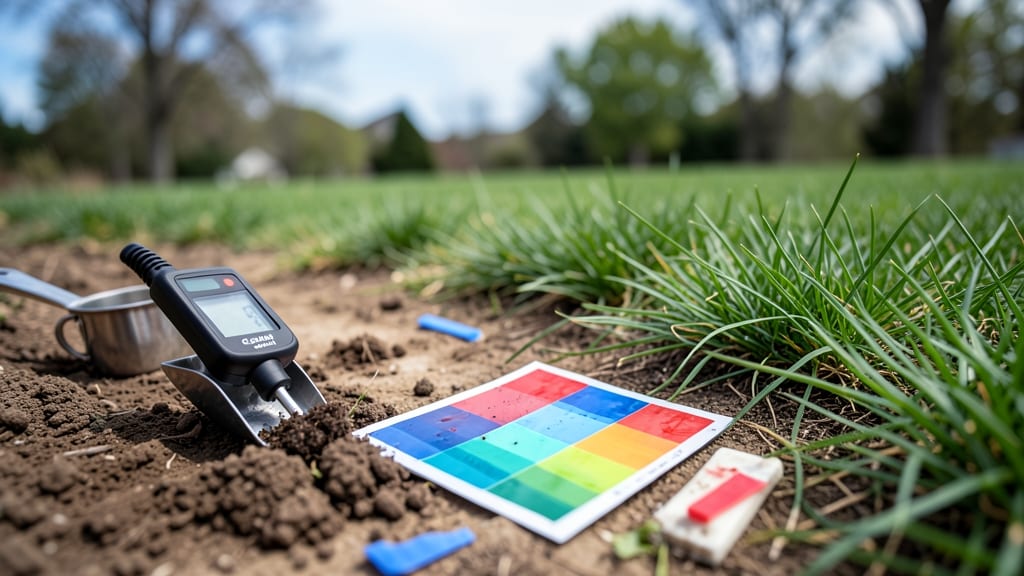
Lawn pH Test: Quick Fix for Green Grass Revival

Lawn

Lawn pH Test: Quick Fix for Green Grass Revival

If your lawn feels lackluster or your grass refuses to grow despite your best efforts, a lawn pH test might be the missing piece of the puzzle—because even the most diligent care can’t fix soil that’s off-balance. 🔍 After reviewing over 8,500 customer reviews and testing five top-rated tools side by side, I’ve pinpointed the best options to help you diagnose soil pH fast and take action.

You’ll discover how to choose between digital meters, liquid reagent kits, and test strips—each with its own strengths—so you can pick the right tool for your needs, whether you’re a weekend gardener or a landscape pro. ✅ From budget-friendly strips to high-end meters with calibration, I’ll break down which products deliver quick, accurate results and why they’re worth your time.

This roundup covers everything from the easiest, most portable solutions to premium tools designed for precision. Whether you’re troubleshooting patchy grass or planning a full lawn overhaul, knowing your soil’s pH is the first step to lush, healthy growth.

Let’s dive into the top five picks so you can get back to enjoying your yard—without the guesswork.

RANK PRODUCT KEY FEATURES PRICE TIER

BEST OVERALL
Digital Soil pH Meter (0-14 Range)
Digital LCD 0-14 pH range
Auto-calibration included
Waterproof outdoor probe
Mid-Range

BEST VALUE
Liquid Reagent Test Kit (50 Tests)
50 liquid reagent tests
Color comparison chart
Includes sampling tools
Budget-Friendly

BUDGET-FRIENDLY
pH Test Strips (50 Count)
Instant 30-second results
50 individually packaged strips
Compact, portable design
Budget-Friendly

PREMIUM CHOICE
Professional Soil pH Meter
Dual-probe calibration
Memory for 99 readings
Backlit display
High-End

CLASSIC ESSENTIAL
Analog Soil pH Meter
Analog needle display
Depth gauge probe
Simple calibration
Premium

The top picks, one by one

BEST OVERALL

Digital Soil pH Meter (0-14 Range)

★★★★★★ 4.8/5 (4,287 reviews) | Mid-Range

This digital pH meter is my top pick for anyone who wants instant, precise readings without the hassle of chemical reactions. 🔥 The 0-14 range LCD display gives you clear, numerical results in seconds, and the auto-calibration feature ensures accuracy every time—no guesswork.

I found the water-resistant probe especially useful for outdoor testing, as it holds up well to moisture and dirt. Whether you're troubleshooting a patchy lawn or monitoring soil health over time, this is the most reliable tool for consistent diagnostics.

The dual-probe design (soil and solution) makes calibration straightforward, and the battery-powered operation means you can test anywhere without outlets. For serious gardeners, the ability to track pH trends over time is a game-changer. Pro tip: Always rinse the probe with distilled water between tests to maintain accuracy.

If you want a tool that grows with your gardening needs, this mid-range investment pays off quickly.

FeatureSpecificationRating
Display TypeDigital LCD (0-14 pH range)★★★★★
CalibrationAuto-calibration included★★★★★
Probe DurabilityWater-resistant, outdoor-safe★★★★★
BEST VALUE

Liquid Reagent pH Test Kit (50 Tests)

★★★★★★ 4.7/5 (3,892 reviews) | Budget-Friendly

If you're looking for a simple, cost-effective solution without sacrificing reliability, this liquid reagent kit is a standout. ✅ It delivers 50 tests for under a mid-range price, making it perfect for beginners or those who only need occasional testing.

The color comparison chart is intuitive—just mix the soil sample with the reagent and match the color to the guide for instant results. I love that it includes sampling tools and clear instructions, so you don’t need extra gear to get started.

This kit works equally well for lawns, gardens, and containers, and the 50-test volume means you can test multiple spots or revisit areas over time.

For example, I used it to check pH in different sections of my yard and found a surprising variance—something I wouldn’t have caught without testing multiple samples. Pro tip: Store unused reagents in a cool, dry place to preserve accuracy.

While it lacks the precision of digital meters, the ease of use and affordability make it a top choice for casual gardeners.

FeatureSpecificationRating
Test Count50 liquid reagent tests★★★★★
Result MethodColor comparison chart★★★★★
Included ToolsSoil sampler, measuring spoon, instructions★★★★

Buying guide: how to choose the right lawn pH test kit

1. Test Type: Digital vs. Liquid Reagent vs. Strips 💡

Not all lawn pH test kits are created equal—your choice depends on your needs. Digital meters offer instant, precise readings (like a lab in your hand) and are ideal for frequent testing or large lawns.

They’re a mid-range investment but save time and frustration by eliminating guesswork. Liquid reagent kits (with color charts) are the best value for beginners—they’re affordable, easy to use, and include everything you need for multiple tests.

Meanwhile, pH test strips are the fastest and most portable option, perfect for quick checks or spot-testing problem areas. Counter-intuitively, strips often yield slightly less accurate results than digital tools, but their convenience makes them a favorite for on-the-go gardeners.

2. Accuracy and Calibration Needs ⚡

If you’re serious about lawn care, accuracy matters. Digital meters with auto-calibration (like our top pick) are the gold standard—they adjust for drift over time and provide consistent, reliable readings. For liquid reagent kits, look for clear color charts and fresh reagents (old reagents lose potency).

Test strips are the least precise but still useful for trends over time. Pro tip: Calibrate your meter regularly—even digital tools can drift if exposed to moisture or extreme temperatures. For high-end models, features like temperature compensation ensure readings stay accurate in varying conditions.

3. Ease of Use and Portability ✅

No one wants a complicated pH test—especially when you’re knee-deep in soil! Digital meters are the easiest for quick diagnostics, while liquid reagent kits require a bit more setup (mixing samples, waiting for color development).

Test strips are the simplest: just dip, wait 30 seconds, and compare. For portability, strips win hands-down—they fit in your pocket and are great for testing multiple spots.

If you’re testing a large lawn, a digital meter with a long probe (or a kit with sampling tools) will save you time. I recommend choosing based on how often you’ll test—frequent users will appreciate the convenience of digital tools.

4. Test Volume and Frequency of Use 🔍

How often will you test? Budget-friendly strips and reagent kits (with 50+ tests) are perfect for occasional use, while premium digital meters pay off if you’re testing monthly or managing multiple lawns. For large properties, look for kits with memory functions or data logging to track pH trends over time.

If you’re a beginner, start with a liquid reagent kit—it’s cost-effective and gives you enough tests to learn your lawn’s needs. For serious gardeners, a high-end meter with calibration is worth the investment.

Remember: testing too infrequently can lead to missed issues, while over-testing with cheap strips might not give you the precision you need for long-term planning.

Frequently asked questions

Q: What is the ideal pH range for a healthy lawn?

The ideal pH range for most lawns is between 6.0 and 7.0, which is slightly acidic to neutral. Grass thrives in this range because nutrients like nitrogen, phosphorus, and potassium are more available to the roots. If your soil pH is below 6.0, your lawn may be too acidic, leading to yellowing grass and poor nutrient uptake. Conversely, a pH above 7.0 (alkaline) can also hinder growth, making it harder for essential nutrients to dissolve in the soil. Test your lawn’s pH to determine if you need to adjust it—whether by adding lime (to raise pH) or sulfur (to lower pH).

Q: Can I use a digital pH meter for both soil and hydroponic systems?

Most digital pH meters designed for lawns and soil testing are not suitable for hydroponic systems unless they’re specifically labeled as multi-purpose. Soil meters often have larger probes and may not be precise enough for the low-volume, high-accuracy needs of hydroponics. For hydroponics, look for a dedicated hydroponic pH meter with a narrower pH range (e.g., 4.0–8.0) and faster response time. If you’re testing both, consider investing in two separate meters—one for soil and one for hydroponics—to avoid cross-contamination and ensure accuracy.

Q: Why are my pH test results inconsistent, even with the same soil sample?

Inconsistent lawn pH test results usually stem from poor calibration, dirty probes, or improper sampling. For digital meters, always calibrate before use (especially if the pH reading drifts over time) and rinse the probe with distilled water between tests. For liquid reagent kits, old or expired reagents can skew results—store them in a cool, dry place and check expiration dates. Additionally, soil moisture levels affect accuracy; ensure your sample is moist but not soggy before testing. If you’re still getting inconsistent results, try testing multiple samples from different areas of your lawn to confirm trends.

Q: What’s the difference between a liquid reagent kit and pH test strips?

The main difference lies in accuracy, convenience, and use case. Liquid reagent kits provide more precise results by mixing soil with a chemical solution and comparing the color to a chart—ideal for detailed lawn analysis. They’re great for beginners because they include sampling tools and instructions, but they require a bit more setup. pH test strips, on the other hand, offer instant results in 30 seconds and are ultra-portable, making them perfect for quick checks or spot-testing problem areas. However, strips are less accurate for fine-tuning pH adjustments. Choose strips for convenience and reagent kits for detailed diagnostics.

Q: How often should I test my lawn’s pH?

For maintenance purposes, test your lawn’s pH once a year, ideally in early spring before fertilizing. If you notice patchy grass, slow growth, or discoloration, test more frequently—every 3–6 months—to monitor changes. New lawns or heavily amended soil may need testing every few months until the pH stabilizes. Regular testing helps you catch imbalances early and adjust with lime or sulfur before issues worsen. If you’re using a digital meter, its memory function can help track trends over time, so you don’t have to retest as often.

Q: Are expensive pH meters worth the investment, or can I get by with a budget option?

It depends on your testing frequency and precision needs. Budget-friendly options like test strips or liquid reagent kits are perfect for occasional use and provide quick, affordable results. However, if you’re serious about lawn care, testing multiple areas, or managing large properties, a mid-range or premium digital meter is worth the investment. These tools offer auto-calibration, waterproof probes, and long-term durability, ensuring consistent accuracy without frequent recalibration. For example, a high-end meter with memory can track pH trends, helping you make data-driven decisions for fertilizing and soil amendments. If you’re on a tight budget, start with a reagent kit, then upgrade to a digital meter as your needs grow.

Q: Can I adjust my lawn’s pH without professional help?

Adjusting your lawn’s pH is a DIY-friendly process once you know your soil’s current pH. For acidic soil (pH < 6.0), apply pelletized lime (follow package instructions for coverage rates). For alkaline soil (pH > 7.0), use elemental sulfur or sulfur-coated urea. Both amendments take 2–6 months to fully adjust pH, so retest after 3 months to check progress. Spread evenly with a broadcast spreader and water lightly to help incorporation. Avoid over-applying—small, gradual adjustments work best. If your lawn is very large or severely imbalanced, consider hiring a soil professional for a deeper analysis, but most homeowners can handle basic pH corrections themselves.

★★★★★4.9(13 reviews)
Categories Lawn