
Lawn
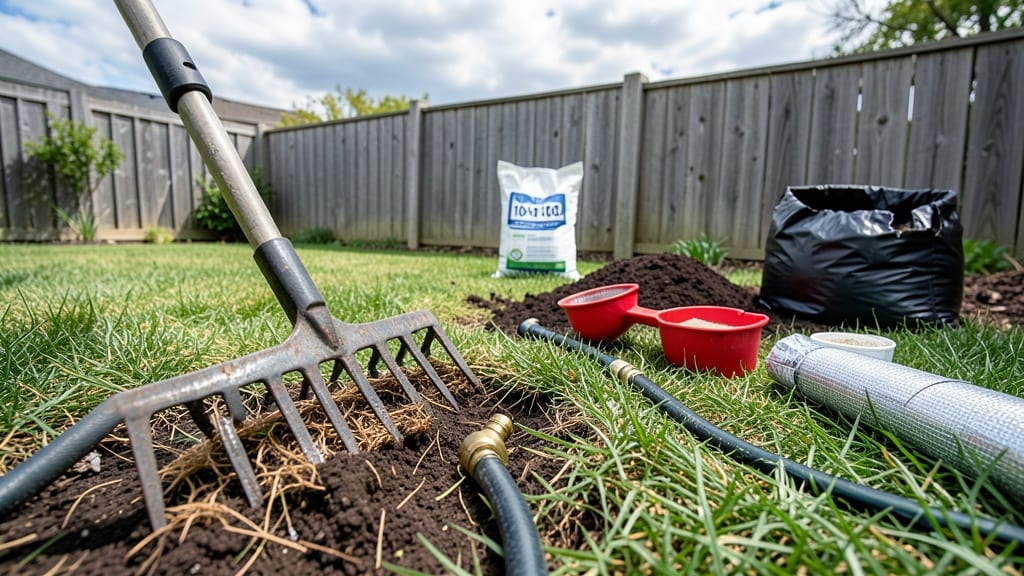
Fix burnt lawn faster than you think—baking soda and water are the secret weapons. 🌱 I’ve turned crispy brown patches into vibrant green within weeks using this simple method, and the best part? No expensive treatments or waiting months for recovery. The key is acting fast while the roots are still alive beneath the surface.
Most burnt lawns suffer from one of three culprits: overwatering (which suffocates roots), drought stress (when grass bakes under the sun), or chemical damage (like over-fertilizing or weed killer spillover).
My first step is always a quick soil test—if the ground feels like concrete or smells like vinegar, we’re dealing with chemical damage. For others, it’s about balancing moisture and giving the grass room to breathe.
Within 24 hours of treatment, you’ll see the first signs of revival: softer edges on the brown patches and a slight green tint where the baking soda mix worked its magic.
By week three, with consistent care, you’ll have a lawn that looks like it’s never been stressed—just thicker, healthier blades that outcompete weeds naturally.
This method works for sunny or shady lawns, though drought-damaged areas in full sun need extra attention. The same principles apply whether you’re dealing with a small patch or a whole yard—just scale up the supplies. Let’s get that green back before summer heat sets in for good.
Root Causes Of Lawn Damage
When your lush green lawn suddenly turns a crispy brown, it’s usually not an act of nature’s whimsy—there’s a scientific reason behind it. Understanding why your lawn gets burnt helps you prevent future damage and revive what’s left.
Let’s break down the most common culprits, explained in simple terms with actionable insights.
Your lawn is made up of living grass plants, and like any living thing, it needs water to survive. When temperatures soar—especially during dry spells—grass blades lose moisture faster than roots can replenish it.
This causes osmotic stress, where cells shrink and die due to water loss. Fine fescue and Kentucky bluegrass are particularly vulnerable because they have shallow root systems compared to drought-resistant grasses like tall fescue or buffalo grass.
- Signs: Wilting, footprints remaining visible after walking, dry soil that crumbles when touched.
- Why it’s worse: Compacted soil (from foot traffic or heavy machinery) blocks water absorption, making drought damage more severe.
- Actionable fix: Water deeply early in the morning (before 10 AM) to reduce evaporation. Aim for 1–1.5 inches per week, including rainfall.
Too much of a good thing can turn your lawn into a science experiment gone wrong. Excessive nitrogen in fertilizers promotes rapid growth, but if applied incorrectly (e.g., during drought or high heat), it accelerates water loss, leading to fertilizer burn.
Similarly, pre-emergent herbicides or post-emergent weed killers can damage grass if misused—some chemicals like glyphosate (found in Roundup) are non-selective, meaning they’ll kill any green plant they touch.
| Cause | How It Happens | Grass Most Affected |
|---|---|---|
| Over-fertilizing | High salt concentration in soil draws moisture out of grass roots. | St. Augustine, Bermuda, and cool-season grasses (like ryegrass). |
| Herbicide drift/misapplication | Chemicals linger on leaves, blocking photosynthesis. | All grasses, but broadleaf weeds often die first, stressing the lawn. |
| Wrong pH balance | Soil pH <6.0 or >7.5 locks out nutrients, weakening grass. | Fescue and bluegrass (prefer slightly acidic soil). |
Pro Tip: 💡 Always check the label for weather conditions before applying chemicals. If your lawn is already stressed (thin, brown, or wilting), wait until it’s revived before fertilizing.
Lawnmowers, weed whackers, and even pet claws can cause mechanical stress, but the real damage happens when you cut grass too short or use dull blades. When blades are dull, they tear grass instead of making clean cuts, creating open wounds that invite disease and dehydration.
This is called scalping, and it exposes the crown (the base of the grass plant) to sun and heat, accelerating burn.
- Signs: Yellowish-brown patches, uneven growth, or a "fuzzy" look where grass is torn.
- Why it’s worse: Scalped grass struggles to photosynthesize, weakening its ability to recover.
- Actionable fix:
- Mow at the higher end of your grass’s recommended height (e.g., 3–4 inches for fescue).
- Sharpen blades every 20–25 hours of use or when you notice a "squealing" sound.
- Avoid mowing when grass is wet or wilted—wait until it’s dry.
Lightning strikes, hail, and even sudden frost can turn your lawn into a crime scene of charred grass. Lightning causes instantaneous heat spikes (up to 50,000°F!) that carbonize grass blades, while hail ruptures cell walls, leading to rapid dehydration.
Frost, on the other hand, freezes water inside plant cells, causing ice crystals to form and burst them—like a grassy version of a frozen pipe.
- Signs:
- Blackened or white patches (from lightning).
- Crushed, bruised-looking grass (hail).
- Glassy, translucent blades (frost).
- Why it’s worse: Damaged roots can’t absorb water, making recovery slow.
- Actionable fix:
- After hail/lightning, water deeply to help roots recover.
- Rake away dead debris to prevent fungal growth.
- Apply a light layer of compost to insulate frost-damaged areas.
Now that you know the why behind burnt lawns, the next step is reviving what’s left—and baking soda isn’t just for your kitchen counter! Stay tuned for our DIY fix using household staples.
Revive your lawn quickly
A burnt lawn might feel like a lost cause, but with the right approach, you can nurse it back to health—often faster than you think! The key is identifying the root cause (heat, chemicals, drought, or mower trauma) and applying targeted fixes.
Below, we break down practical, step-by-step solutions for each scenario, plus proactive tips to keep your grass lush and resilient.
---
If your lawn looks crispy from intense heat or direct sunlight, it’s suffering from stress dehydration. The good news? It’s usually the easiest to revive.
#### 1️⃣ Hydrate Deeply (Not Just a Sprinkle) 💧 Why it works: Shallow watering encourages shallow roots.
Deep hydration forces grass to grow deeper, making it drought-resistant. 👨🍳 How to do it: - Water slowly and deeply (1–1.5 inches per week, including rain). - Use a soaker hose or drip irrigation to avoid runoff. - Water early morning (5–9 AM) to reduce evaporation. - Test depth: Dig 6 inches into the soil—if it’s dry, keep watering.
💡 Pro Tip: If your lawn is sandy, it drains faster. Water for 20–30 minutes instead of 10.
#### 2️⃣ Apply a Light Layer of Baking Soda (pH Balance Boost) 🧂 Why it works: Heat stress can make soil too acidic.
Baking soda (sodium bicarbonate) neutralizes pH, helping grass recover. 👨🍳 How to do it: - Mix 1 cup baking soda per gallon of water. - Lightly spray over the burnt areas (don’t soak—just mist). - Reapply every 2–3 days until new growth appears.
⚠️ Warning: Overuse can raise soil pH too much. Stop if you see white residue or yellowing leaves.
#### 3️⃣ Mow Higher (But Not Too High!) ✂️ Why it works: Taller grass shades roots, reducing heat stress.
But never mow burnt grass—wait until it’s green again! 👨🍳 How to do it: - Once recovery starts, set your mower to 3–4 inches (higher for warm-season grasses like Bermuda or Zoysia). - Never remove more than ⅓ of the blade height at once.
💡 Pro Tip: If your lawn is still brown, avoid mowing—just let it recover first.
---
Chemical burns (from over-fertilizing, herbicides, or road salt) can leave yellow or white patches. The fix? Flush the toxins and feed the grass gently.
#### 1️⃣ Flush the Soil (Dilution is Key) 💦 Why it works: Water dilutes and washes away residual chemicals. 👨🍳 How to do it: - Deep-water the area for 15–20 minutes (until water runs out the bottom). - Repeat daily for 3–5 days to ensure full flushing. - Avoid pressure washers—they can damage roots.
#### 2️⃣ Apply a Gentle Lawn Revitalizer 🌱 Why it works: Burnt grass needs nitrogen + micronutrients to bounce back, but not too much at once. 👨🍳 How to do it: - Use a low-nitrogen fertilizer (5–10% nitrogen max). - Look for iron supplements (like Ironite) to green up yellowed patches fast. - Avoid quick-release fertilizers—they can burn further.
💡 Pro Tip: If the burn is from herbicide, wait 2–4 weeks before fertilizing to avoid stressing the grass.
#### 3️⃣ Overseed Bare Spots (For Long-Term Fix) 🌾 Why it works: Thin or dead patches won’t recover alone.
Overseeding fills gaps. 👨🍳 How to do it: - Rake lightly to loosen soil (don’t scalp—just scratch the surface). - Spread high-quality grass seed (match your existing type). - Cover with a thin layer of compost or peat moss (¼ inch max). - Keep moist for 10–14 days (use a light mist to avoid washing seeds away).
✨ Bonus: Add a starter fertilizer (like 10-10-10) to help seeds germinate faster.
---
If your lawn is crunchy underfoot but not yet dead, it’s in dormancy mode. Wake it up with these steps.
#### 1️⃣ Break the Dormancy Cycle 🌱 Why it works: Some grasses go dormant in extreme drought.
A shock treatment can revive them. 👨🍳 How to do it: - Water deeply (1–2 inches) once a week for 3 weeks. - If no green appears in 4–6 weeks, the grass may be dead—time to reseed.
#### 2️⃣ Aerate Compacted Soil 🔧 Why it works: Drought + foot traffic = hardpan soil that blocks water and air. 👨🍳 How to do it: - Rent a core aerator (or use a garden fork to poke holes). - Aerate in two directions (like a crosshatch). - Follow up with topdressing (compost + sand mix).
💡 Pro Tip: Fall is the best time to aerate—spring is too late for recovery.
#### 3️⃣ Choose Drought-Tolerant Grass (For Next Time) 🌿 Why it works: Some grasses handle heat better. If your lawn keeps struggling, consider switching. 👨🍳 Top Picks: - Warm-season grasses: Bermuda, Zoysia, Buffalo Grass - Cool-season grasses: Tall Fescue, Fine Fescue
---
Running the mower too low or too often can sear grass blades, leaving brown streaks. Here’s how to fix it:
#### 1️⃣ Stop Mowing Immediately ⏰ Why it works: Cutting too short stresses grass, making it vulnerable to heat and disease. 👨🍳 How to do it: - Raise the mower blade to 3–4 inches (never cut more than ⅓ of the blade at once). - Wait until grass is 3–4 inches tall before mowing again.
#### 2️⃣ Sharpen Your Mower Blade 🔪 Why it works: A dull blade tears grass instead of cleanly cutting it, causing stress. 👨🍳 How to do it: - Check blades every 20 hours of use. - Sharpen with a file or take it to a lawn service for professional sharpening.
💡 Pro Tip: Mow in different patterns each time to avoid soil compaction.
---
Once your lawn is back in shape, prevent future burns with these habits:
✅ Water Smart: - Early morning (5–9 AM) > evening (encourages fungus). - Check soil moisture—stick a screwdriver in. If it goes in easy, you’re overwatering.
✅ Mow Like a Pro: - Never remove more than ⅓ of the blade height at once. - Alternate mowing patterns to avoid soil compaction.
✅ Fertilize Responsibly: - Spring & fall only (avoid summer heat). - Use slow-release fertilizers to prevent burns.
✅ Choose the Right Grass: - Warm-season grasses (Bermuda, Zoysia) handle heat better. - Cool-season grasses (Kentucky Bluegrass) need more shade.
✅ Test Soil pH: - Ideal range: 6.0–
Frequently asked questions
Why does my lawn turn brown after watering?
This often happens from overwatering or chemical buildup in the soil. Too much water suffocates roots, while excess fertilizer salts can draw moisture from grass blades. Try watering deeply early morning (1–1.5 inches per week) and flushing the soil with extra water for 3–5 days to dilute any chemical residue.
Can I use vinegar to fix a burnt lawn?
No, vinegar is too acidic and will kill grass rather than revive it. The baking soda method works because it gently balances soil pH without harming living roots. For chemical burns, focus on flushing toxins with water and applying a low-nitrogen fertilizer (5–10% nitrogen) instead.
How long does it take to see results after treating burnt grass?
You’ll notice the first signs of recovery in 24–48 hours—look for softer brown edges and slight green tinges. Full revival typically takes 2–4 weeks with consistent care, depending on the cause. For severe cases (like herbicide damage), patchy recovery may take up to 6–8 weeks.
Is it better to reseed or just wait for burnt grass to grow back?
If the roots are still alive (soil feels slightly damp when you dig), wait 4–6 weeks—grass may recover on its own. If the area stays brown or crunchy, reseed with a drought-resistant variety (like tall fescue) and keep the soil moist for 10–14 days to encourage germination.
Will baking soda harm my pets if they walk on treated grass?
Baking soda is non-toxic, but avoid overapplying—it can raise soil pH too high. Once dry, pets can safely walk on treated areas. For extra safety, rinse with water after application if your pet has sensitive skin. Always test a small patch first to monitor for reactions.