
Mower
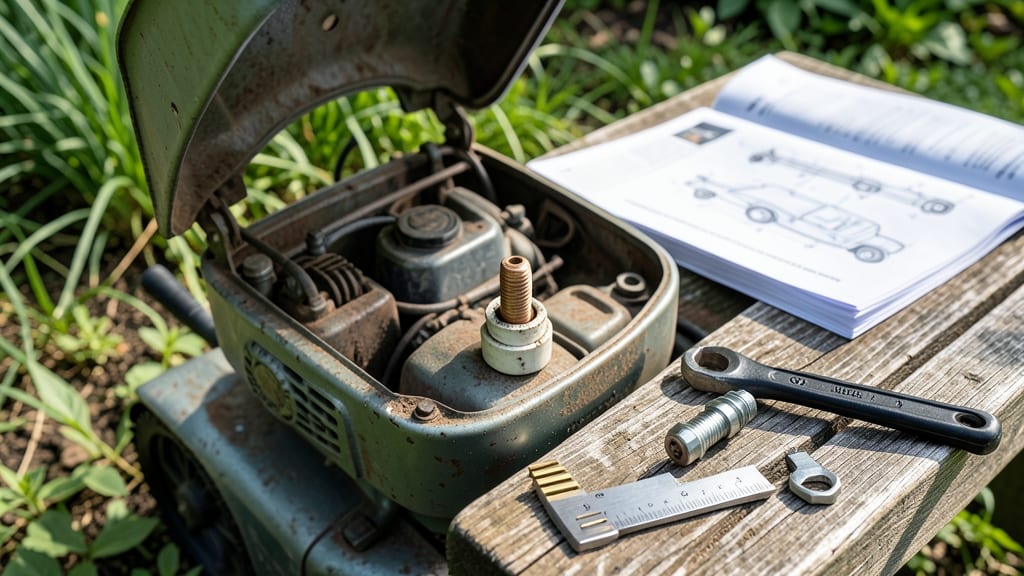
Setting the correct lawn mower spark plug gap is critical: modern 4-cycle engines need 0.025–0.035 inches, while older air-cooled models often require 0.030–0.040 inches. Always verify with your owner's manual, as improper gaps cause misfires, fuel waste, or engine damage.
Getting this measurement right makes a surprisingly big difference in how your mower runs. 🔥 A gap that's too wide creates weak sparks, while one that's too narrow causes overheating—both lead to poor combustion and wasted fuel.
I've seen engines lose power or even stall when the gap isn't set properly, especially in humid conditions where moisture affects ignition. The key is using a feeler gauge (the thin metal strips with numbers) to find that precise fit between the plug's electrodes.
What's interesting is how engine design affects the ideal gap. Modern liquid-cooled engines run cooler and often need tighter gaps, while older air-cooled models require slightly more space for the same spark intensity.
Always double-check your specific model's specs—some manufacturers even specify different gaps for high-altitude use. That extra 0.005 inches can mean the difference between a smooth start and a frustrating pull.
💡 In This Article
- How Spark Plug Gaps Affect Lawn Mower Performance
- Tools and Techniques for Measuring Spark Plug Gaps Accurately
How spark plug gaps affect lawn mower performance
The spark plug gap is essentially the small air gap between the center and side electrodes that allows the spark to jump across. This tiny space—measured in thousandths of an inch—determines how strong and consistent the spark is during combustion.
When the gap is too wide (say, 0.040 inches on a 4-cycle engine that needs 0.030 inches), the spark becomes weak and intermittent, leading to misfires and rough idling.
The engine struggles to ignite the fuel-air mixture properly, causing it to run poorly, waste gas, and lose power—especially noticeable when mowing uphill or through thick grass.
Conversely, a gap that's too narrow (like 0.020 inches instead of the recommended 0.035 inches) creates an overly strong spark that can overheat the plug.
This excessive heat builds up carbon deposits faster, reduces the plug's lifespan, and may even cause pre-ignition—where the fuel ignites too early, damaging pistons and cylinders.
Air-cooled engines, which run hotter than liquid-cooled models, are particularly sensitive to narrow gaps because they lack the cooling benefits of liquid coolant. 🔥 The result? A mower that struggles to start, runs hot, and eventually fails prematurely.
Engine type plays a huge role in determining the ideal gap. For example, 2-cycle engines (common in older mowers) often require slightly wider gaps (0.030–0.040 inches) because their fuel-oil mix burns faster and hotter.
Meanwhile, modern 4-cycle engines with electronic ignition systems typically need tighter gaps (0.025–0.035 inches) to work with their precise timing.
Even within the same engine family, high-altitude models may need adjusted gaps because thinner air at elevations reduces spark intensity—think of it like trying to light a fire in a wind tunnel versus calm conditions.
What most people don't realize is how moisture affects spark plug performance. In humid conditions, the air between the electrodes becomes more conductive, making it harder for the spark to jump the gap.
This is why a mower that runs fine in dry weather might misfire after a rainstorm—even with the correct gap setting. The solution? Always check your spark plug gap before the mowing season starts, especially if you store your mower in a damp garage.
A quick adjustment can save you from frustrating mid-mow breakdowns.
Here’s a quick comparison to visualize the impact:
- Correct gap: Strong, consistent spark → smooth combustion → optimal power and fuel efficiency
- Too wide: Weak spark → misfires → rough running, poor acceleration, and wasted fuel
- Too narrow: Overheating → carbon buildup → pre-ignition → engine damage
The bottom line? That tiny gap isn't just about starting the mower—it's about preserving your engine's health and ensuring every pull-start delivers the power you need. 💫