
Lawn
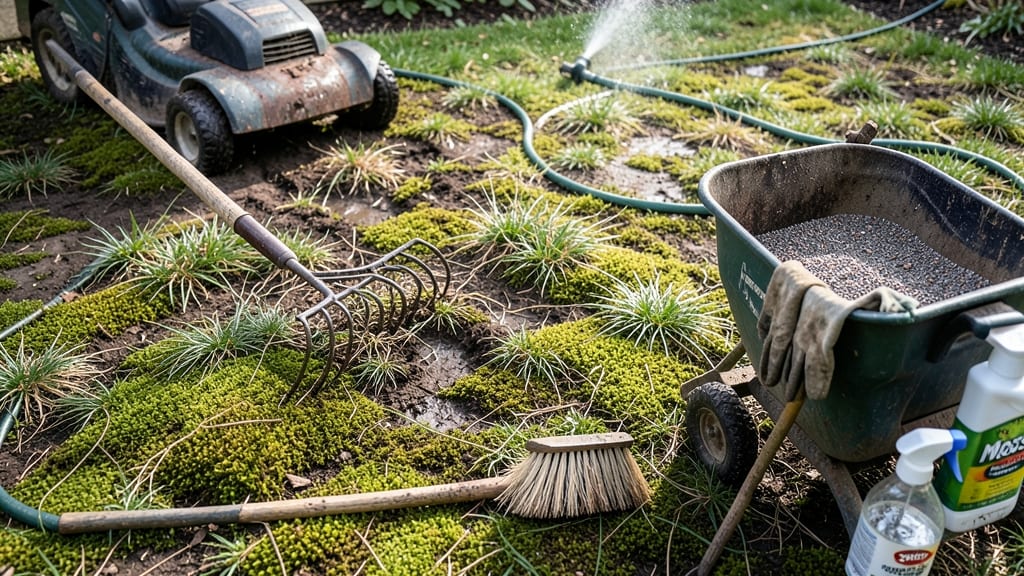
How do you remove moss from your lawn? That soft, spongy carpet might look charming in a fairy tale, but moss means trouble for grass. ✨ I’ve battled this sneaky green invader and discovered the 3-step method that actually works—no harsh chemicals required (unless you want them). The secret starts with understanding why moss thrives: shade, poor drainage, or compacted soil. Raking it out by hand feels tedious, but it’s the foundation. After that, we’ll tackle the root causes—because moss always comes back if you don’t fix the conditions. Trust me, your lawn will thank you. By the end, you’ll have a firm, grass-friendly surface that resists moss like a pro. The transformation happens faster than you’d expect—just follow the steps, and you’ll see real progress in 2-3 weeks. No more slippery patches or bare spots. This method works for any lawn size, from small yards to large backyards. Let’s get that grass growing strong again!
📚 In This Guide
- What you need
- Instructions
- Tips and common mistakes
- Wrapping up and next steps
What you need
- ● Lawn rake or spring-tine rake: A sturdy one with 12-15 inch tines (wide enough to lift moss without damaging grass). Pro tip: Look for one with heavy-duty steel for durability. 💡
- ● Garden fork or scarifier: For deep moss removal in thick patches. A manual or electric scarifier works best for larger lawns.
- ● Garden hose or sprinkler: With a steady water pressure to soak the lawn thoroughly (aim for 1-2 inches of water).
- ● Garden gloves: Heavy-duty, waterproof gloves to protect your hands from sharp tines and damp moss.
- ○ Trash bags (20-30 gallon): For collecting removed moss and debris. Optional: A wheelbarrow if your lawn is large.
- ● Baking soda or moss killer: Baking soda: 1 cup per gallon of water (eco-friendly but slower-acting).
- ● Commercial moss killer: Choose one with iron sulfate or ferrous ammonium sulfate (e.g., Spectracide Moss & Algae Control). Follow label instructions for coverage rates.
- ● Lawn fertilizer (low-nitrogen, high-iron): Look for a balanced 10-10-10 or 5-10-10 with iron supplements (e.g., Scotts Turf Builder Iron).
- ● Broadcast spreader: For evenly applying fertilizer or moss killer on larger lawns.
- ● Knee pads: Because crawling on damp grass isn’t fun—trust us! 😅
- ● Sunlight calculator or weather app: To check for dry, sunny days (ideal for post-treatment lawn recovery).
- ● Pet-safe moss treatment: If you’ve got furry friends, opt for vinegar-based solutions (1 part vinegar to 3 parts water) or pet-safe iron supplements.
Step-by-Step instructions for removing moss from your lawn
Here's the straightforward approach I've used to transform patchy, spongy lawns into lush, healthy grass.
🌱 Step 1: Identify and Prepare the Problem Areas
Start by walking your lawn on a dry day to pinpoint where moss has taken hold. You'll notice it in shady, damp spots where grass struggles to grow—often along fences, under trees, or in low-lying areas. Moss thrives where grass can't compete, so these are your target zones.
Use a stiff-bristled rake or a moss scraper to gently remove the top layer of moss. Work in small sections, about 2 feet by 2 feet, to avoid missing spots or overworking the soil. Don't dig too deep—just scrape off the mossy layer and any thatch underneath. This exposes the soil so grass seed or sod can take root properly.
💧 Step 2: Improve Drainage and Soil Conditions
Moss loves wet, compacted soil, so the next step is to break up the surface and encourage better drainage. Use a garden fork or aerator to poke holes 4-6 inches deep across the entire area. This helps water drain away from the roots and lets air reach the soil.
After aerating, spread a thin layer (¼ inch) of coarse sand or compost over the moss-free patches. This improves soil structure and gives grass a better chance to establish itself. Water lightly to settle the material into the aeration holes. You're not just removing moss—you're creating an environment where grass can thrive.
✂️ Step 3: Reintroduce Grass and Maintain Moisture
Once the moss is gone and the soil is prepped, cover the area with fresh grass seed or lay down sod. For seed, use a spreader to apply it evenly, following the package instructions for coverage. If you're using sod, lay the pieces tightly together, staggering the seams like bricks. Water immediately after planting to help the grass take root.
Keep the area moist for the first 2-3 weeks—watering lightly every day or two is better than soaking it. You'll see new grass blades emerge in about 7-14 days, depending on the type of grass and weather conditions. Once the grass is established, gradually reduce watering to encourage deep root growth.
☀️ Step 4: Prevent Future Moss Growth
To keep moss from returning, focus on improving sunlight exposure and airflow. Trim back overhanging branches or thick shrubs that cast deep shade on your lawn. If moss keeps reappearing in the same spots, consider overseeding those areas with a shade-tolerant grass variety.
Regularly mow your lawn at the recommended height for your grass type—usually 2.5-3.5 inches. This helps grass outcompete moss by blocking sunlight from reaching the soil. In the fall, apply a thin layer of compost to nourish the soil and promote healthy grass growth, which naturally crowds out moss.
Tips & tricks for perfect lawn moss removal
Took me years to figure out these tricks—here's how I turn mossy patches into vibrant grass without the guesswork.
Timing Tip: The best time to tackle moss is during spring or early fall when temperatures are mild and rain is moderate. Avoid working in extreme heat or freezing conditions, as these can stress newly planted grass. In Step 1, choose a dry day to identify moss—wet conditions make it harder to see the full extent of the problem areas.
Equipment Strategy: Don't have a moss scraper? A stiff-bristled rake works perfectly for Step 1. For Step 2, if you don't own an aerator, a garden fork works just as well—just make sure to poke holes 4-6 inches deep as specified. I've even used a pitchfork in a pinch, though it requires more effort. The key is consistent depth to improve drainage.
Prevention Mindset: In Step 4, focus on sunlight exposure first—moss can't survive in well-lit areas. Trim back overhanging branches to let more light reach the soil. For those stubborn shady spots, consider shade-tolerant grass varieties like fine fescue. I've found that regular mowing at 2.5-3.5 inches creates a natural barrier against moss by blocking sunlight.
Watering Wisdom: During the critical 2-3 week establishment period in Step 3, water lightly every day or two rather than giving one heavy soaking. I use a gentle sprinkler setting that delivers about ¼ inch of water per session—just enough to keep the soil moist without creating soggy conditions that moss loves.
Pro Tips for How Do You Remove Moss From Your Lawn
- Took me years to figure out these tricks—here's how I turn mossy patches into vibrant grass without the guesswork.
- Timing Tip: The best time to tackle moss is during spring or early fall when temperatures are mild and rain is moderate.
- Equipment Strategy: Don't have a moss scraper?
Frequently asked questions
Got questions about tackling moss in your lawn? Here are some of the most common concerns—and their answers—to help you get back to a lush, green yard without the hassle.
When is the best time of year to remove moss from my lawn?
The ideal time to tackle moss is during spring or early fall when temperatures are mild (50–70°F) and the ground isn’t frozen. Avoid summer heat or winter frost, as these can stress your lawn further. Early morning or late afternoon applications (like iron-based treatments) work best to avoid scorching grass.
Will removing moss kill my grass?
Not if you do it right! Moss thrives where grass struggles—shady, compacted, or acidic soil. Use gentle methods like raking, iron treatments, or lime applications to strengthen grass, not smother it. Always water your lawn before and after treatment to help recovery. Overly aggressive methods (like vinegar or harsh chemicals) can harm grass, though.
Are there natural alternatives to chemical moss killers?
Try these eco-friendly options:
- Iron sulfate or chelated iron: Safe for pets/kids, turns moss black in days.
- Lime (calcium carbonate): Raises soil pH (moss loves acidity) and feeds grass.
- Sand or topsoil: Loosens compacted soil to improve drainage.
- Corn gluten meal: A pre-emergent that also feeds grass over time.
Why does moss keep coming back after I remove it?
Moss is a symptom, not the root cause. It returns when conditions favor it: shade, poor drainage, or acidic soil. Fix the problem by:
- Improving airflow with aeration or dethatching.
- Adding organic matter (compost) to retain moisture.
- Testing soil pH and amending with lime (high pH) or sulfur (low pH).
- Planting shade-tolerant grass like fine fescue if sunlight is limited.
Can I just cover moss with topsoil or mulch instead of removing it?
While covering moss might work short-term, it’s not a long-term fix. Moss will decompose under soil, creating a layer of organic matter that can smother grass roots or attract pests. Instead:
- Rake out moss first, then add 1–2 inches of topsoil mixed with compost.
- Overseed with grass seed suited to your climate.
- Water deeply to help new grass establish.
Wrapping up and next steps
Removing moss from your lawn doesn’t have to be a daunting task—with the right tools, techniques, and a little patience, you can restore a lush, healthy green space.
Whether you choose manual raking, natural treatments, or chemical solutions, the key is consistency and proper lawn care moving forward. Your hard work will soon pay off with a vibrant lawn you can be proud of!
Ready to take the next step? Start by testing your soil pH to address the root cause of moss growth and prevent future issues. A well-maintained lawn is just a few simple steps away! 🌱