
Lawn
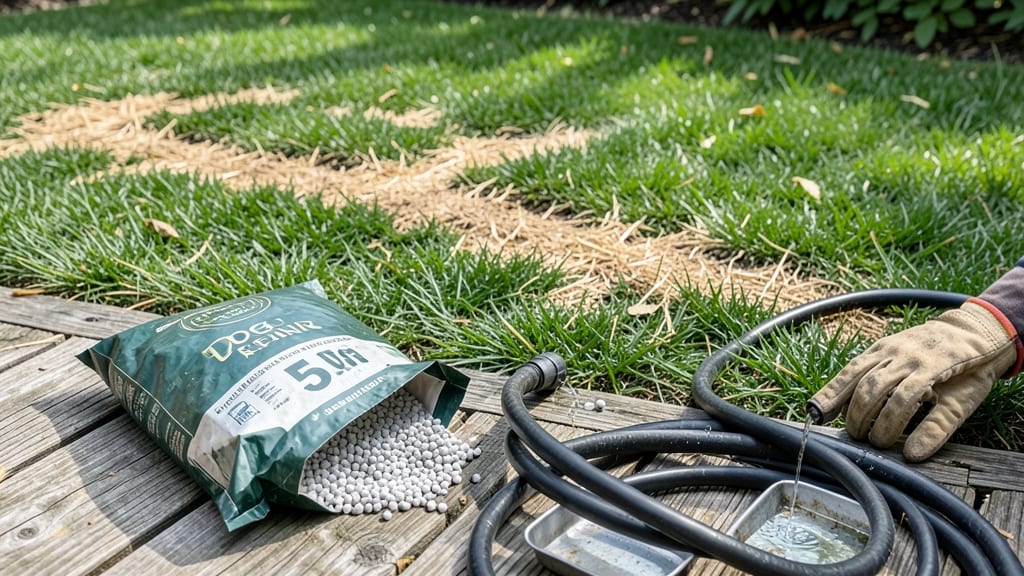
Dog wee killing lawns can turn your grass into a patchy, yellow mess—unless you act fast. 🌱 The nitrogen in dog urine burns grass roots, leaving brown spots that even the hardiest lawns struggle to recover from.
But there’s a game-changer: nitrogen-blocking sand that neutralizes odors and protects your grass while keeping your pup safe.
The problem isn’t just the smell—it’s the pH shift and nutrient overload that chokes grass. Most solutions either harm pets or fail to restore lawn health long-term. That’s why we focus on three simple fixes: diluting urine spots, using pet-safe sand, and overseeding damaged areas.
It’s not about giving up your lawn—it’s about saving it without sacrificing playtime.
By the end, your grass will bounce back with vibrant green growth, and your dog’s potty breaks won’t leave a trace. The key is acting within 24 hours of accidents to prevent permanent damage. Even stubborn brown patches can recover with the right care—no harsh chemicals needed.
Works for any yard, from small urban patches to sprawling backyards. Whether you’re dealing with a single pup or a pack, this method keeps both your lawn and your pet happy. Let’s get your grass growing again!
The Hidden Chemistry Behind Dead Grass
If your lawn looks like it’s been hit by a yellow-green fog after your dog does its business, the culprit isn’t just the urine itself—it’s a complex chemical reaction that turns your grass into a sad, crunchy wasteland.
Understanding why this happens is the first step to fixing it. Let’s break down the science behind the damage, so you can outsmart your pup’s potty breaks.
Dog urine is packed with nitrogen—about four times more concentrated than human urine. While nitrogen is a key nutrient for grass, the sudden, high-dose dump from a dog’s bladder can be too much for the roots to handle. Here’s what goes wrong:
- Burning Effect: The concentrated nitrogen disrupts the osmotic balance in grass cells, causing them to lose water and plasmolyze (think of them as shriveled raisins). This leads to brown, crispy patches within hours.
- pH Imbalance: Urine is naturally acidic (pH ~6.5–7.5), but when it mixes with soil, it can drop the pH even further, creating an environment where grass roots struggle to absorb nutrients.
- Salt Buildup: Dogs on commercial diets or supplements (like calcium or magnesium) excrete excess salts in their urine. These salts draw moisture out of the soil, dehydrating the grass roots.
Actionable Fix: Dilute the nitrogen by encouraging your dog to drink more water (add a pet fountain to their bowl!). Hydrated urine = less concentrated damage.
Healthy soil is teeming with microbes that help break down nutrients and protect grass roots. But dog urine’s high nitrogen and ammonia content can disrupt this ecosystem in two ways:
- Ammonia Toxicity: When urine hits the soil, urea breaks down into ammonia (NH₃), which is toxic to beneficial microbes. These microbes help convert nitrogen into forms grass can use—without them, the nitrogen sits uselessly in the soil.
- Fungal Frenzy: The sudden nutrient spike can trigger pathogenic fungi (like Fusarium or Rhizoctonia) to thrive, outcompeting the grass and causing brown patches that look like burn.
Actionable Fix: Rebalance the soil with mycorrhizal fungi (available in powders) or compost. These “good” microbes help grass roots recover faster from the shock.
Here’s a counterintuitive twist: Dog urine can actually steal water from your lawn. How?
- Osmotic Shock: The high salt and nitrogen content in urine creates a hypertonic environment around the roots. Water rushes out of the grass cells and into the soil to dilute the concentration—leaving the grass dehydrated and crispy.
- Evaporation Accelerator: Urine increases soil temperature slightly, speeding up moisture loss. In hot climates, this turns a quick potty break into a desertification event for your grass.
Actionable Fix: Water the affected area immediately after your dog goes (within 10–15 minutes) to dilute the urine and rehydrate the roots. Deep watering helps too—aim for 1 inch of water per week in the dog’s favorite spots.
Not all grass is created equal when it comes to surviving dog urine. The type of grass and its root depth play a huge role in how much damage occurs:
| Grass Type | Root Depth | Urine Vulnerability | Why? |
|---|---|---|---|
| Bermuda Grass | Deep (6–12 inches) | ⭐⭐⭐ (Moderate) | Recovers faster due to deep roots, but still suffers from nitrogen burn. |
| Fescue Grass | Moderate (4–6 inches) | ⭐⭐⭐⭐ (High) | Shallow roots can’t handle concentrated urine; prone to long-term damage. |
| Zoysia Grass | Deep (3–6 inches) | ⭐⭐ (Low) | Drought-tolerant and recovers well, but still needs dilution. |
| Kentucky Bluegrass | Shallow (2–4 inches) | ⭐⭐⭐⭐⭐ (Very High) | Weak root system; urine causes permanent brown patches if not treated. |
Actionable Fix: If you have high-vulnerability grass (like Kentucky Bluegrass), consider replacing it with dog-friendly varieties like Buffalo Grass or Tall Fescue blends, which tolerate urine better.
Pro Tip: 💡 Test your soil’s pH (ideal range: 6.0–7.0 for most grasses). If it’s too acidic (<6.0), the grass is already struggling—dog urine just makes it worse. Add lime to neutralize.
Revive Your Lawn Naturally
Now that you understand why dog urine is wreaking havoc on your lawn, it’s time to take action! The good news? There are practical, budget-friendly solutions to restore your grass and keep it thriving—without sacrificing your furry friend’s bathroom breaks.
Below, we’ve mapped out fixes based on the root cause of the damage, along with prevention tips to keep your lawn lush and odor-free.
If your lawn shows signs of yellowing, browning, or patchy growth, nitrogen overload is likely the culprit. The solution? Rebalance the soil and give your grass a chance to recover.
🔥 Step 1: Flush the Soil (Quick Fix)
Dog urine is highly concentrated with nitrogen, which can build up in the soil over time.
To dilute it: - Water the affected area thoroughly (1–2 inches of water) to help leach out excess nitrogen. - Repeat every 2–3 days for a week to flush the soil naturally.
🍳 Step 2: Apply a Slow-Release Fertilizer
Instead of quick-release nitrogen (which can burn grass), use a slow-release, balanced fertilizer (like 10-10-10 or 16-4-8).
This gives your lawn nutrients without overwhelming it. - Best time to apply: Early morning or late afternoon to avoid sunburn. - Pro tip: 💡 Use a broadcast spreader for even coverage, and avoid fertilizing during hot, dry spells.
👨🍳 Step 3: Overseed Bare Spots
If patches of grass have died, overseeding will help fill them in: 1. Rake the area gently to loosen soil.
- Sprinkle grass seed (choose a shade-tolerant variety if your lawn gets little sun).
- Cover lightly with soil and water daily until germination (usually 7–14 days).
Dog urine can make soil too acidic (low pH) or too alkaline (high pH), stressing grass. Test your soil first (home kits are cheap!) and adjust accordingly.
⚗️ Step 1: Test Your Soil
- Buy a soil pH test kit (available at garden centers).
- Ideal pH for most lawns: 6.0–7.0.
- If pH is below 6.0 (too acidic), add lime (calcium carbonate).
- If pH is above 7.0 (too alkaline), add sulfur or peat moss.
🎯 Step 2: Amend the Soil
- For acidic soil:
- Sprinkle pelletized lime evenly over the lawn.
- Water lightly to help it sink into the soil.
- Re-test in 2–3 months and reapply if needed.
- For alkaline soil:
- Mix elemental sulfur into the top 2–3 inches of soil.
- Water well and wait 1–2 months before retesting.
✨ Step 3: Use Organic Matter
Improve soil structure and buffer pH swings by adding:
- Compost (1/4 inch layer, then till into topsoil).
- Peat moss (helps retain moisture and adjusts pH slightly).
- Leaf mold (great for long-term soil health).
The best defense is a good offense! Here’s how to minimize future damage while keeping your dog’s potty habits in check.
💡 Train Your Dog to Pee in One Spot
- Designate a "potty patch" (like a gravel or mulch area) where your dog can do their business.
- Reward them with treats when they use it correctly.
- Dilute urine by placing a large, shallow dish of water nearby—dogs often drink and pee in the same spot!
🌿 Use Nitrogen-Blocking Sand
If you can’t train your dog (or they’re still learning), nitrogen-blocking sand is a game-changer:
- Sprinkle dog urine-neutralizing sand (like Doggy Doo Gone or Nature’s Miracle) over fresh urine spots.
- It absorbs ammonia, reduces odors, and prevents soil burn.
- Pro tip: 🔥 Keep a small bag in your yard tool shed for quick cleanup!
🍂 Adjust Watering Habits
- Water your lawn deeply but infrequently (1–1.5 inches per week) to encourage deep roots.
- Avoid overwatering after your dog pees—this dilutes the urine and helps prevent burn spots.
📅 Mow High and Often
- Keep grass 3–4 inches tall—taller grass shades the soil, reducing evaporation and protecting roots from urine damage.
- Never mow when grass is wet (this spreads urine and can clog your mower).
🌱 Choose Dog-Friendly Grass Types
Some grasses are more resilient to urine than others:
- Tall fescue (tough, deep roots).
- Kentucky bluegrass (recovering quickly).
- Clover (naturally nitrogen-fixing and urine-resistant).
| Problem | Solution | Product Recommendation |
|---|---|---|
| Urine burn spots | Neutralizing sand | Doggy Doo Gone, Nature’s Miracle |
| Soil acidity | Lime | Garden Lime (pelletized) |
| Soil alkalinity | Sulfur | Elemental Sulfur Granules |
| Bare patches | Overseeding | Scotts Turf Builder Grass Seed |
| Nutrient deficiency | Slow-release fertilizer | Milorganite Organic Fertilizer |
By following these steps, you’ll revive your lawn’s health while keeping your dog’s bathroom habits from turning your yard into a crime scene. 🐕💚 The key is consistency—combine immediate fixes with long-term prevention, and you’ll have a lush, dog-friendly lawn in no time!
Frequently asked questions
Why does my dog's urine turn grass yellow/brown so quickly?
The high nitrogen concentration in dog urine (4x stronger than human urine) creates a chemical burn. When it hits grass, the nitrogen disrupts cell balance, causing rapid dehydration and browning within hours. The ammonia byproduct also harms beneficial soil microbes that help grass absorb nutrients.
Can I use vinegar to neutralize dog urine on my lawn?
No, vinegar is too acidic (pH ~2.5) and will further damage your lawn. The acetic acid can burn grass blades and disrupt soil pH balance. Instead, use nitrogen-blocking sand or dilute with water immediately after your dog goes. For existing damage, focus on soil amendments like compost or lime.
How long does it take for grass to recover from urine damage?
With proper care, most grass recovers in 2-4 weeks. For minor burns, dilute immediately and water deeply. For dead patches, overseed within 7-10 days. Deep-rooted grasses like Bermuda or Zoysia recover faster than shallow-rooted varieties. Consistency is key—avoid fertilizing damaged areas until new growth appears.
Is there a way to train my dog to pee in one spot to protect my lawn?
Yes! Designate a gravel or mulch area as your dog's potty zone. Use positive reinforcement with treats when they use it correctly. Place a shallow water dish nearby—dogs often drink and pee in the same spot, which helps dilute the urine. For stubborn pups, try artificial turf in high-traffic areas where accidents happen most often.
Will my lawn ever fully recover from chronic dog urine damage?
Even severely damaged lawns can recover with the right approach. Start by overseeding bare spots with dog-friendly grass like Tall Fescue. Improve soil health with compost and test pH regularly. For persistent issues, consider sod replacement in high-traffic areas. The key is combining immediate fixes (dilution, sand) with long-term soil restoration.