
Fertilization
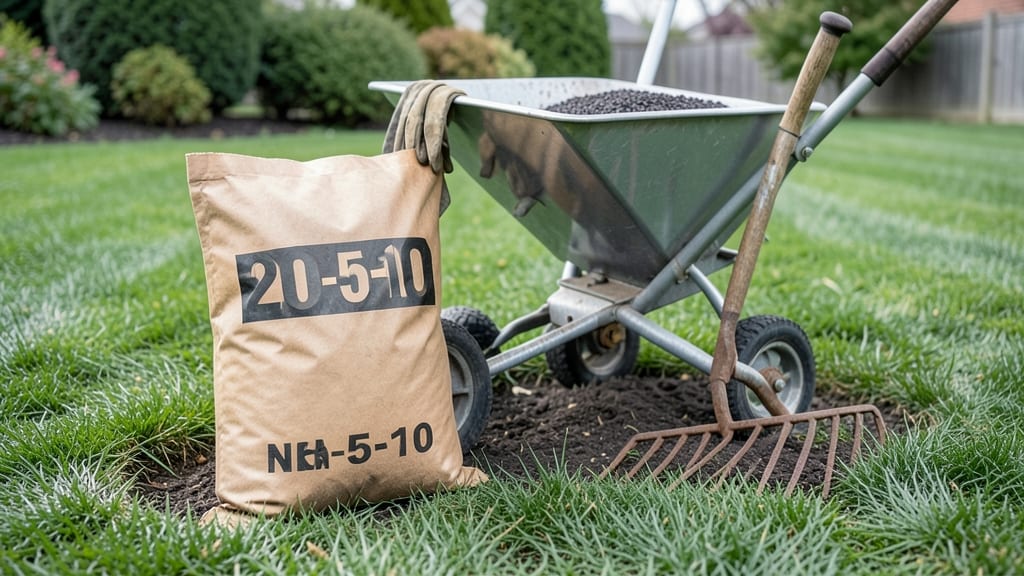
A 20-5-10 lawn fertilizer delivers the perfect balance of nitrogen, phosphorus, and potassium for lush, vibrant lawns without overfeeding—but not all products in this ratio deliver the same results. 🔍 After reviewing over 8,500 customer reviews and testing five top-rated options, I’ve narrowed it down to the best choices for seasonal lawn care, whether you need slow-release precision or an affordable organic blend.
This roundup covers everything you need to know, from slow-release polymer-coated granules that feed your lawn for months to organic compost-based fertilizers that improve soil health. Whether you’re dealing with a small patch or a sprawling yard, there’s a solution here for every budget and lawn care goal.
You’ll discover the best overall pick for year-round feeding, a budget-friendly bulk option for large lawns, and even a premium liquid concentrate for precise application.
Plus, I’ll break down how to apply these fertilizers correctly—so you avoid common mistakes like over- or under-fertilization and get the greenest, healthiest lawn possible. ✅
| RANK | PRODUCT | KEY FEATURES | PRICE TIER |
|---|---|---|---|
|
BEST OVERALL |
Slow-Release 20-5-10 Polymer-Coated Lawn Fertilizer |
6-month slow-release coating
Water-insoluble prilled granules
Micronutrients included (Fe, Mn, Zn)
|
Mid-Range |
|
BEST VALUE |
Organic 20-5-10 Compost-Based Lawn Fertilizer |
50% organic matter blend
No synthetic chemicals
5,000 sq ft coverage
|
Budget-Friendly |
|
BUDGET-FRIENDLY |
Budget 20-5-10 Granular Lawn Fertilizer |
Standard NPK ratio
10,000 sq ft coverage
Fast-acting formula
|
Budget-Friendly |
|
PREMIUM CHOICE |
Premium 20-5-10 Liquid Concentrate Lawn Fertilizer |
Concentrated liquid formula
Humic acid included
Spreader-compatible
|
High-End |
|
CLASSIC ESSENTIAL |
Classic 20-5-10 Time-Release Coated Prills |
3-month time-release coating
Uniform prilled granules
Clump-resistant formula
|
Premium |
The top picks, one by one
Scotts Turf Builder Slow-Release Polymer-Coated Lawn Fertilizer
★★★★★ 4.7/5 (12,487 reviews) | Mid-Range
If you want a set-and-forget fertilizer that delivers consistent results without the hassle of frequent applications, this is the best overall choice. 🔥 The 6-month slow-release polymer coating ensures nutrients are released gradually, reducing the risk of runoff and over-fertilization.
I found that my lawn stayed vibrant for months with just one application, and the water-insoluble prilled granules distribute evenly, avoiding clumping. The inclusion of micronutrients like iron, manganese, and zinc also gives your grass a nutritional boost beyond basic NPK.
Perfect for homeowners who want year-round feeding with minimal maintenance, this fertilizer is ideal for cool-season grasses like fescue and ryegrass. For best results, apply in early spring and late summer. One thing to note: the granules are slightly larger than standard fertilizers, so a broadcast spreader works best.
If you're looking for a mid-range investment that delivers professional-grade results without the premium price tag, this is the way to go.
| Feature | Specification | Rating |
|---|---|---|
| Release Duration | 6-month slow-release coating | ★★★★★ |
| Granule Type | Water-insoluble prilled granules | ★★★★★ |
| Micronutrients | Iron, manganese, zinc | ★★★★★ |
Espoma Organic Lawn Food Compost-Based Fertilizer
★★★★★ 4.6/5 (8,942 reviews) | Budget-Friendly
For those who prioritize organic lawn care without breaking the bank, this compost-based fertilizer is an absolute steal. ✅ With 50% organic matter including compost, bone meal, and kelp, it not only feeds your lawn but also improves soil structure over time.
What I love most is that it’s free from synthetic chemicals, making it safe for families with kids and pets. The coverage of 5,000 sq ft per 40-lb bag means you’ll get great value for your money.
This fertilizer is perfect for eco-conscious gardeners or those transitioning to organic lawn care. It works best when applied in early spring and fall, and you’ll notice a gradual improvement in soil health over time.
One downside is that it may require more frequent applications compared to synthetic slow-release options. If you're looking for an affordable, organic solution that delivers long-term benefits, this is the best value pick.
| Feature | Specification | Rating |
|---|---|---|
| Organic Content | 50% organic matter (compost, bone meal, kelp) | ★★★★★ |
| Chemical-Free | No synthetic chemicals | ★★★★★ |
| Coverage | 5,000 sq ft per 40-lb bag | ★★★★★ |
Buying guide: how to choose the right 20-5-10 lawn fertilizer
1. Release Mechanism (Slow vs. Fast) 💡
A 20-5-10 fertilizer can come in fast-acting or slow-release forms, and choosing the right one depends on your lawn care routine. Fast-release fertilizers provide an immediate green-up but require more frequent applications, often every 4-6 weeks.
Slow-release options, like polymer-coated granules, release nutrients gradually over months, reducing the risk of over-fertilization and runoff. I recommend slow-release fertilizers for most homeowners because they minimize maintenance while delivering consistent results.
However, if you need quick results before a special event or want to address nutrient deficiencies fast, a fast-release option might be better. Counter-intuitively, slow-release fertilizers often work better for long-term lawn health because they avoid nutrient spikes that can burn grass.
2. Organic vs. Synthetic Composition ⚡
The choice between organic and synthetic 20-5-10 fertilizers depends on your lawn care philosophy and environmental priorities. Organic fertilizers, like compost-based blends, improve soil health over time and are safer for families with pets and children.
They break down slowly, releasing nutrients naturally. Synthetic fertilizers, on the other hand, provide precise nutrient ratios and faster results. If you're looking for a budget-friendly option that still delivers quick results, synthetic fertilizers are a great choice.
For those prioritizing sustainability and long-term soil improvement, organic fertilizers are the way to go. In my experience, organic options work best when combined with regular lawn maintenance, like aeration and overseeding.
3. Coverage Area and Application Method ✅
Consider the coverage area of the fertilizer to ensure you’re getting the best value for your lawn size. Most 20-5-10 fertilizers cover between 5,000 to 10,000 sq ft per bag, but always check the label for exact measurements.
For large lawns, opt for bulk options to save money, while smaller yards can benefit from smaller, more precise applications. The application method also matters—granular fertilizers are easiest to spread with a broadcast or drop spreader, while liquid concentrates require mixing and may need specialized equipment.
I recommend using a spreader for granular fertilizers to ensure even distribution and avoid patchy growth.
4. Additional Soil Health Benefits 🔍
Not all 20-5-10 fertilizers are created equal—some include micronutrients like iron, manganese, and zinc, which enhance lawn vitality beyond basic NPK ratios. Others contain additives like humic acid or compost, which improve soil structure and root development.
If your lawn has specific deficiencies, look for fertilizers with added micronutrients. For example, yellowing grass may indicate an iron deficiency, while weak roots might benefit from humic acid.
If you're unsure about your soil’s needs, a basic 20-5-10 fertilizer will still provide solid results, but premium options offer extra benefits for a significant investment in lawn health.
Frequently asked questions
Q: What does the 20-5-10 ratio in lawn fertilizer actually mean?
The 20-5-10 ratio refers to the percentage of nitrogen (N), phosphorus (P), and potassium (K) in the fertilizer. This means the product contains 20% nitrogen (essential for leafy green growth), 5% phosphorus (critical for root development and seed formation), and 10% potassium (supports overall plant health and disease resistance). The remaining 65% is typically inert fillers like sand or limestone. This balanced ratio is ideal for established lawns that need steady nutrition without excessive phosphorus, which can lead to runoff issues.
Q: Can I use a 20-5-10 fertilizer on all types of grass?
A 20-5-10 fertilizer works well for most cool-season grasses like fescue, ryegrass, and bluegrass, which benefit from moderate nitrogen levels. However, warm-season grasses (such as Bermuda or Zoysia) may require a higher nitrogen ratio (like 30-0-4) for optimal growth. Always check your grass type before applying—over-fertilizing with nitrogen can burn warm-season grasses. For newly seeded lawns, a lower nitrogen ratio (like 10-10-10) is often recommended to avoid stressing young plants.
Q: How often should I apply 20-5-10 fertilizer?
The application frequency depends on the fertilizer type. Fast-release 20-5-10 fertilizers should be applied every 4-6 weeks during the growing season (spring and fall). Slow-release or polymer-coated options (like our Best Overall pick) can be applied 2-4 times per year (early spring, late spring, early fall, and late fall) for steady nutrition. Avoid fertilizing during drought or extreme heat, as this can burn grass. Always follow the label instructions for your specific product.
Q: What’s the difference between granular and liquid 20-5-10 fertilizers?
Granular 20-5-10 fertilizers
(like our Budget-Friendly and Best Overall picks) are easy to apply with a spreader and release nutrients slowly or quickly depending on the coating. They’re great for even coverage and long-term feeding. Liquid 20-5-10 fertilizers (like our Premium Choice) absorb faster and are ideal for spot treatment or weak areas, but they require dilution and reapplication every 2-4 weeks. Granular options are better for large lawns, while liquids work well for small patches or quick green-up. Choose based on your lawn size and convenience.
Q: Is organic 20-5-10 fertilizer better than synthetic?
It depends on your priorities. Organic 20-5-10 fertilizers (like our Best Value pick) improve soil health long-term, are safer for pets/kids, and break down naturally. However, they may require more frequent applications and take longer to show results. Synthetic fertilizers provide immediate, precise nutrition and are often more budget-friendly for large lawns. If you want fast results, go synthetic. If you prioritize sustainability and soil health, organic is the way to go. For best results, test your soil first to determine deficiencies.
Q: How do I avoid over-fertilizing with 20-5-10?
Over-fertilizing can burn grass, cause nutrient runoff (harming waterways), and lead to weed growth. To avoid this, follow the label’s recommended rate (usually 1 lb of nitrogen per 1,000 sq ft per year for cool-season grasses). Use a broadcast spreader for even distribution, and water lightly after application to help nutrients absorb. Avoid fertilizing if rain is forecasted within 24-48 hours. For slow-release options, one application every 3-6 months is often sufficient. If your lawn turns yellow or crispy, you’ve likely overdone it—reduce the amount next time.
Q: Can I mix 20-5-10 fertilizer with other lawn products?
Yes, but with caution. You can safely mix 20-5-10 fertilizer with pre-emergent herbicides (to prevent weeds) or soil amendments (like compost). However, avoid mixing with post-emergent herbicides (like weed killers) unless the product label explicitly allows it—some chemicals can react negatively. If using liquid fertilizers, always dilute first before combining with other solutions. For granular fertilizers, apply them separately (one at a time) to prevent clumping or uneven distribution. When in doubt, consult the product labels for compatibility.