
Lawn
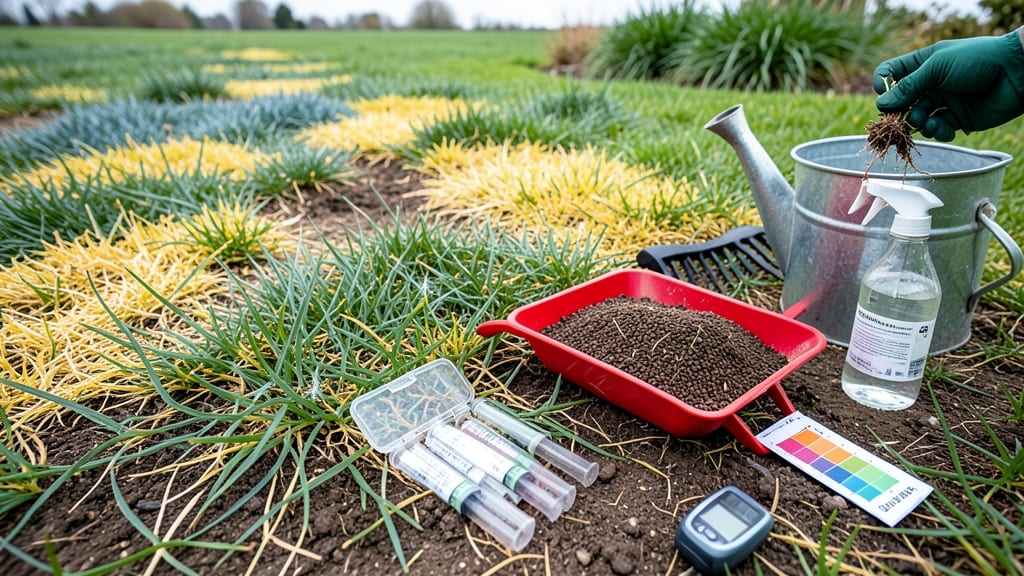
Your lawn’s yellow grass patches don’t need to be a mystery—grubs, fungus, or drought are usually the culprits, and we’ve got a 72-hour plan to turn them back into lush green. 🌱 I’ve seen these spots spread like wildfire (literally), but the right approach can revive them faster than you’d think.
The key? Figuring out what’s really wrong before you treat it.
Start by lifting a small patch of sod—if you see white grubs wriggling, that’s your problem. No grubs? Check for fungal mats (like dollar spots) or dry, crumbly roots (that’s drought or compaction).
Most people waste time on the wrong fix, but once you know the cause, the solution is straightforward: organic sprays for fungus, watering for drought, or nematodes for grubs. Each takes less than an hour to apply.
Within 72 hours, you’ll see the first signs of recovery—firm roots regrowing, fungus fading, or grubs disappearing. The real magic happens when you combine the right treatment with a simple soil boost: spread compost or a slow-release fertilizer to help the grass bounce back stronger than before.
No more guessing, just results.
This works for Kentucky bluegrass, fescue, or Bermuda—just adjust the treatment to match your grass type. The same steps prevent future patches too. Let’s get your lawn back to that proud, green look it deserves.
Root Causes of Dead Grass Spots
Yellow grass patches in your lawn aren’t just an eyesore—they’re a cry for help from your turf. Understanding the why behind these unsightly spots is the first step to restoring your lawn’s lush green glory.
Below, we break down the most common culprits, backed by science, so you can diagnose the issue like a pro.
Too much of a good thing can drown your grass roots. Overwatering suffocates soil, depriving roots of oxygen and leading to anaerobic conditions—a breeding ground for fungal diseases like Pythium or Rhizoctonia. Poor drainage exacerbates the problem, leaving waterlogged patches where grass struggles to breathe.
How to spot it:
- Soggy soil that stays damp for days.
- Grass that feels spongy or mushy underfoot.
- Yellow patches that spread quickly in wet weather.
💡 Pro Tip: Test your soil’s drainage by digging a 6-inch hole and filling it with water. If it drains in less than 4 hours, your soil is healthy. If not, amend with compost or sand to improve aeration.
Intense sunlight, especially during drought or high temperatures, can bleach grass blades, turning them yellow or white. Fine fescue and Kentucky bluegrass are particularly susceptible to sun scorch, where the grass loses moisture faster than it can absorb it.
How to spot it:
- Patches near south- or west-facing areas.
- Grass that feels crispy or straw-like to the touch.
- Symptoms worsen in mid-afternoon heat.
🌡️ Fix It: Water deeply in the early morning (before 8 AM) to reduce evaporation. Consider shade cloth or strategic planting of taller grasses (like ornamental grasses) to block harsh rays.
Grubs—larvae of beetles like the Japanese beetle or June bug—munch on grass roots, leaving behind dead patches that pull up easily. Other pests, like chinch bugs or mole crickets, also weaken turf by sucking sap or tunneling underground.
How to spot it:
- Grass that lifts like a carpet when pulled.
- Increased bird or animal activity (they’re feasting on the grubs!).
- Patches that appear after warm, rainy spells (grub season).
🔍 Test for Grubs: Dig a small square (6x6 inches) of lawn. If you find 5+ grubs, treatment is needed. Use beneficial nematodes or milky spore bacteria for organic control.
Fungi thrive in humid, warm conditions and attack stressed grass.
Common offenders include: - Brown Patch (Rhizoctonia solani) – Circular yellow rings with a reddish-brown center. - Dollar Spot (Sclerotinia homoeocarpa) – Small, straw-colored spots with a dark border. - Fairy Ring (Marasmius oreades) – Mushrooms at the edges of patches with darker, greener grass inside.
How to spot it:
- Patches that appear after heavy dew or rain.
- Fuzzy or slimy growth on grass blades (a red flag!).
- Symptoms spreading in concentric circles.
✨ Prevention: Improve airflow with proper mowing height (never cut more than ⅓ of the blade at once) and avoid late-night watering. Fungicides (like propiconazole) can help in severe cases.
Overuse of fertilizers, herbicides, or pesticides can burn grass roots, leading to yellowing. Common culprits:
- Salt buildup from ice melt or over-fertilizing.
- Herbicide drift from nearby weed treatments.
- Pet urine (high nitrogen content burns grass).
How to spot it:
- Yellowing along sidewalks or driveways (salt damage).
- Streaks or irregular patterns where chemicals were applied.
- Grass that recovers slowly after treatment.
🚫 Fix It: Flush the soil with water to dilute salts, and avoid fertilizing until the lawn recovers. Use pet-friendly grass (like buffalo grass) if you have a doggy yard.
Heavy foot traffic, machinery, or clay-heavy soil compacts roots, reducing water and nutrient uptake. Over time, this leads to nutrient-deficient patches where grass struggles to thrive.
How to spot it:
- Soil that feels hard or dense when pressed.
- Patches that appear after high-traffic areas (like play zones).
- Slow recovery even after watering/fertilizing.
🔥 Solution: Aerate your lawn in fall or spring using a core aerator. Top-dress with compost to replenish nutrients and improve soil structure.
Drought, wind, or even construction vibrations can stress grass beyond recovery. Sudden temperature swings (like early freezes) also weaken turf, making it vulnerable to disease.
How to spot it:
- Patches in exposed, windy areas.
- Grass that recovers slowly after extreme weather.
- No obvious pests or disease signs.
💪 Recovery Tip: Overseed bare spots with drought-resistant grass (like tall fescue) and apply a slow-release fertilizer to strengthen roots.
Not sure which cause fits your lawn? Ask yourself:
- Is the soil soggy or dry? → Drainage or drought issue.
- Do grubs pull up easily? → Pest problem.
- Are there mushrooms or slimy growth? → Fungal infection.
- Did you recently fertilize or treat weeds? → Chemical damage.
- Is the area high-traffic or compacted? → Soil stress.
Next Steps: Once you identify the cause, jump to the fix-it section of this guide for targeted solutions! 🚀
Fix Your Lawn’s Pale Spots Fast
Yellow grass patches in your lawn don’t have to be a permanent eyesore. With the right approach, you can restore your grass to its lush green self in 72 hours or less—no grub infestations or mystery diseases required.
The key is identifying the root cause (which we’ve already covered!) and applying targeted fixes. Below, we break down practical, step-by-step solutions for the most common culprits, plus prevention tips to keep your lawn thriving.
If your lawn feels like a trampoline underfoot, soil compaction is likely strangling your grass roots. Compacted soil blocks oxygen, water, and nutrients, leaving patches yellow and weak.
How to Fix It: 🔪 Aerate aggressively – Rent a core aerator (the kind that pulls out small soil plugs) and run it over the affected areas. For small patches, a manual aerator or even a garden fork will work. 💧 Water deeply – After aerating, soak the soil to help it settle and encourage root growth. 🌱 Top-dress with compost – Spread a thin layer (¼ inch) of compost or a 50/50 mix of sand and compost over the aerated spots. This loosens the soil and adds nutrients. ⏰ Wait 24–48 hours, then reseed or overseed if needed.
💡 Pro Tip: Aerate in early fall or spring when grass is actively growing. Avoid doing it during drought or extreme heat—soil stays too hard to penetrate.
Dry, yellow patches often mean your grass is thirsty or heat-stressed. Even drought-resistant grasses like Bermuda or Zoysia can suffer if they’re not getting enough water.
How to Fix It: 💦 Water deeply but infrequently – Instead of light daily sprinkles, water 1–1.5 inches per week, splitting it into 2–3 sessions. Early morning (4–8 AM) is best to reduce evaporation. 🌿 Mulch lightly – Spread a thin layer of straw or wood chips around the patches to retain moisture. Avoid thick mulch, which can suffocate grass. 🔄 Adjust mowing height – Raise your mower blade to 3–4 inches to shade the soil and reduce water loss. 🌡️ Check for heat shock – If temps hit 90°F+, water twice a day (morning + evening) until the grass recovers.
💡 Pro Tip: Use a soaker hose or drip irrigation to deliver water directly to roots without wasting it on evaporation.
Yellowing grass often signals a lack of nitrogen, iron, or other essential nutrients. A quick soil test (available at garden centers) can pinpoint the issue, but here’s how to fix the most common deficiencies:
| Problem | Quick Fix | Prevention |
|---|---|---|
| Nitrogen deficiency | Apply a quick-release fertilizer (like 24-0-4) or blood meal. | Fertilize 4 times a year (spring, summer, fall, winter). |
| Iron deficiency | Sprinkle iron sulfate or use a chelated iron spray. | Add compost or peat moss to improve soil pH. |
| Potassium deficiency | Use a potassium-rich fertilizer (like 0-0-30) or wood ash. | Test soil pH—aim for 6.0–7.0 for most grasses. |
| General weak growth | Apply a balanced lawn fertilizer (10-10-10) or fish emulsion. | Overseed thin areas in fall for stronger roots. |
💡 Pro Tip: Avoid over-fertilizing—it burns grass and harms the environment. Follow label instructions and water lightly after applying to activate nutrients.
If your yellow patches have a dull, spongy texture or appear in shady, damp areas, fungus could be the culprit. Fungal diseases like dollar spot, brown patch, or snow mold thrive in humid, poorly ventilated conditions.
How to Fix It: 🧴 Apply a fungicide – Use a systemic fungicide (like propiconazole or trichoderma) for severe cases. For mild infections, a baking soda spray (1 tbsp baking soda + 1 gallon water + a drop of dish soap) can help. 🌧️ Improve drainage – If water pools after rain, level low spots or install French drains. ☀️ Increase airflow – Thin out dense grass with a sharp mower blade (dull blades tear grass, inviting disease). 🌿 Remove debris – Clear thatch, leaves, and clippings from the lawn to reduce fungal spores.
💡 Pro Tip: Mow high (3–4 inches) in humid weather to shade out fungus-prone soil.
Once your lawn is back to green, keep it that way with these easy maintenance habits:
- Mow regularly (never cut more than ⅓ of the blade at once).
- Water wisely (deep, infrequent sessions > daily light sprinkles).
- Test soil every 2–3 years (adjust pH and nutrients as needed).
- Overseed bare spots in early fall for thick, resilient grass.
- Aerate annually if your lawn gets heavy foot traffic.
🎯 Final Reminder: Most yellow patches recover in 72 hours if you act fast. Start with watering + aerating, then adjust based on the root cause. Your lawn will be back to its vibrant green self in no time!
Frequently asked questions
Why do my lawn patches turn yellow only in certain spots?
Yellow patches usually appear due to localized stress. Check for grubs (dig up a small area—if you see 5+ white larvae, that’s your problem), fungus (look for slimy growth or mushrooms), or compaction (press your foot down—if it feels hard, roots are suffocating). Uneven watering or nutrient deficiencies can also cause spotty yellowing.
Can I save my lawn if the yellow patches have been there for months?
Yes, but act fast! Start by aerating the compacted areas, then apply a slow-release fertilizer (like 10-10-10) and overseed with drought-resistant grass (tall fescue works well). For fungus, use a baking soda spray (1 tbsp baking soda + 1 gallon water). Most lawns recover within 4–6 weeks with consistent care.
How do I tell if my yellow grass is from grubs or drought?
Do the grub test: Lift a small patch of sod. If it pulls up like carpet and you see white grubs wriggling, that’s your issue. For drought, check soil moisture—if the top 2 inches are dry, water deeply in the morning. Grubs leave spongy, dead patches, while drought causes crispy, straw-like grass.
Is it safe to use chemical treatments on my lawn?
Chemicals like fungicides (propiconazole) or grub killers (imidacloprid) work fast but can harm pets, kids, and beneficial insects. For safer options, try beneficial nematodes (for grubs) or neem oil (for fungus). Always follow label instructions and water lightly after applying to activate treatments.
Will overseeding fix my yellow patches permanently?
Overseeding helps, but it’s not a magic fix. First, address the root cause (grubs, fungus, compaction). Then overseed with the right grass type for your climate (e.g., Kentucky bluegrass for cool regions, Bermuda for heat). Combine with annual aeration and proper watering to prevent future patches.