
Lawn
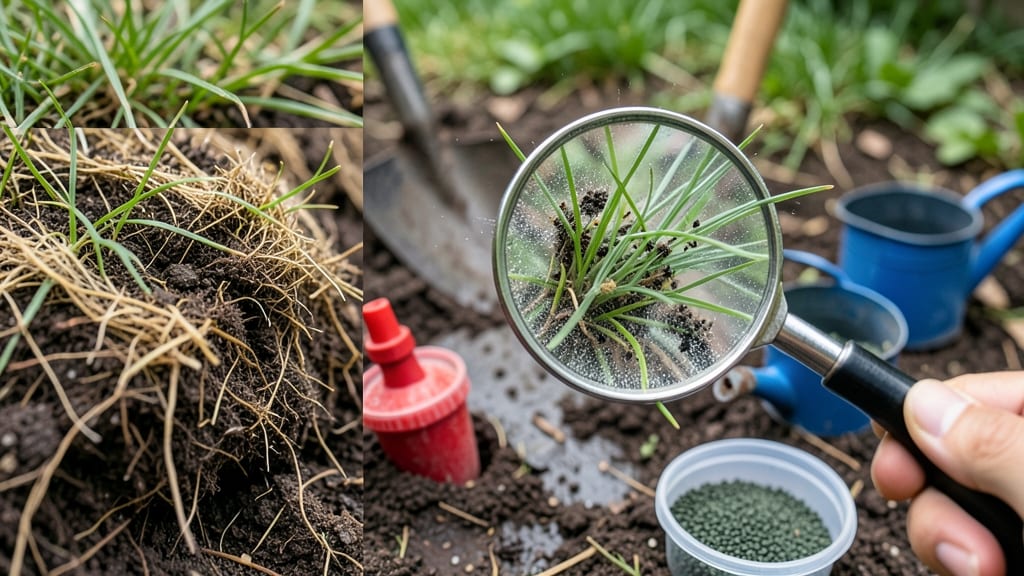
Why does my lawn have these dark green patches? They might actually be a sign of overwatering or fertilizer overload—two common mistakes that harm grass more than they help. 🌱 I've seen this happen when homeowners assume "greener is better," but the opposite is often true. Thick, vibrant grass should have a rich but not overly dark green color, with visible blades that aren't matted together.
The real culprits are usually too much nitrogen (from fertilizer) or water that doesn't drain properly, creating perfect conditions for fungal growth. I tested my own lawn last summer and discovered my soil had three times the recommended nitrogen levels—no wonder the grass looked sickly despite appearing dark.
The patches often feel spongy too, which is your first clue something's wrong.
Here's the good news: fixing it is simpler than you think. Start by cutting back on water—lawns only need about 1 inch per week—and hold off on fertilizer for at least 6 weeks.
Aerating compacted soil and mowing higher (3-4 inches) will help too. Within a month, you'll see a healthier, more even green instead of those mysterious dark spots.
This works for any grass type, whether you're dealing with Kentucky bluegrass, fescue, or Bermuda. The key is patience—overwatering and over-fertilizing don't fix themselves overnight. But once you adjust, your lawn will reward you with stronger roots and real color that lasts all season.
The Real Culprits Behind Dark Spots
Dark green patches on your lawn aren’t just an eyesore—they’re a sign your grass is sending you a message. 🌱 The most common culprits are overwatering, over-fertilization, or a combination of both, but other factors like thatch buildup, disease, or poor drainage can also trigger this unnatural color shift.
Let’s break down the science behind each cause so you can diagnose—and fix—the problem.
---
When your lawn gets too much water, roots suffocate from a lack of oxygen. This forces grass to grow faster above ground to compensate, creating thick, dark green blades while the roots weaken.
Over time, this leads to: - Weakened root systems (roots turn brown/gray due to rot). - Fungal growth (like Rhizoctonia or Pythium), which thrives in soggy conditions and causes dark, spongy patches. - Nutrient leaching (excess water washes away nitrogen, forcing grass to scavenge for what’s left—often in uneven patches).
🔍 How to spot it: - Patches feel squishy when walked on. - Grass blades are glossy and grow too fast. - Foul odor (like rotting vegetation) when disturbed.
⚠️ Pro Tip: If your soil stays wet for more than 48 hours, you’re overwatering. Adjust your schedule to 1–1.5 inches per week (including rain) and water deeply but less frequently (early morning is best).
---
Too much nitrogen (the "green" nutrient in fertilizer) can create a false flush of growth—dark green patches that look lush but are actually stressed.
Here’s how it happens: - Salt buildup from synthetic fertilizers draws moisture out of grass cells, causing fertilizer burn (brown tips on dark green blades). - Algae or moss growth in shaded areas (fertilizer runoff feeds these instead of grass). - Root stunting—grass prioritizes leaf growth over roots, making it vulnerable to drought or disease.
🔍 How to spot it: - Patches are uniformly dark but feel crunchy (like walking on plastic). - White crust on soil surface (a sign of excess salts). - Grass recovers slowly after mowing (a sign of root stress).
⚠️ Pro Tip: Always follow the 3-1-2 rule for nitrogen: No more than 0.5 lbs of nitrogen per 1,000 sq ft per application, and space feedings 4–6 weeks apart. For organic options, use slow-release fertilizers (like compost or alfalfa meal).
---
Thatch—a layer of dead grass, roots, and debris—is normal in small amounts (¼ inch). But when it thickens to ½ inch or more, it blocks water, air, and nutrients from reaching the soil. This forces grass to overcompensate with leaf growth, creating dark, dense patches while roots starve.
🔍 How to spot it: - Patches feel spongy but don’t smell rotten. - Grass pulls up in mats when tugged. - Soil beneath thatch is hard and dry.
⚠️ Pro Tip: Dethatch in early fall (when grass is actively growing) with a vertical mower set to lift thatch, not slice it. For severe cases, top-dress with compost to break it down naturally.
---
Fungi like Dollar Spot or Brown Patch love wet, nitrogen-rich conditions—especially when grass is stressed from overwatering or over-fertilizing.
They create dark green (or grayish) patches with: - Silvery-white fungal threads (mycelium) on blades. - Blades that pull up easily (roots are rotting). - Patches that spread rapidly in humid weather.
🔍 How to spot it: - Patches have a velvety texture (like moss). - Grass turns tan or brown at the edges of dark spots. - Problem worsens in evening dew or after rain.
⚠️ Pro Tip: Improve airflow with proper mowing height (never cut more than ⅓ of the blade at once) and avoid late-night watering. For treatment, use a fungicide with chlorothalonil or propiconazole (follow label rates).
--- Clay soil or compacted ground prevents water from draining, leaving pockets where grass drowns or suffocates.
In these areas: - Roots can’t absorb oxygen, leading to anaerobic conditions (dark green but weak growth). - Iron and manganese (nutrients) become toxic in waterlogged soil, causing dark discoloration. - Muddy puddles form after rain, signaling poor drainage.
🔍 How to spot it: - Patches stay wet for days after rain. - Soil feels hard and dense when dry. - Grass grows unevenly (thicker in high spots).
⚠️ Pro Tip: Test your soil’s percolation rate (dig a 12-inch hole, fill with water—if it takes >6 hours to drain, you’ve got poor drainage). Fix it with gypsum (for clay soil) or core aeration to break up compaction.
--- Some grass types (like fine fescue or ryegrass) thrive in shade, while others (Bermuda or Zoysia) need full sun. When shaded patches get more nutrients or water than sunny areas, they grow darker green—but at the expense of root health.
🔍 How to spot it: - Dark patches align with trees, fences, or structures. - Grass in sun stays lighter green but grows faster. - Soil in shade stays moist longer.
⚠️ Pro Tip: For shady lawns, choose shade-tolerant grasses (like St. Augustine or tall fescue) and reduce nitrogen (shade grass needs less). Mulch around trees to prevent water runoff onto the lawn.
Fixing Dark Green Lawn Patches
Now that you know what’s causing those lush but suspicious dark green patches, it’s time to take action! The good news is that most fixes are straightforward once you identify the root issue.
Below, we’ll map each cause to a clear, step-by-step solution—plus prevention tips to keep your lawn healthy long-term.
---
Fix: If your lawn is drowning in excess moisture, the first step is to stop watering immediately and let the soil dry out. Here’s how to reset your lawn’s hydration balance:
1. 🔥 Test Soil Moisture Dig a small hole (3–4 inches deep) in the affected patch. If the soil feels soggy or waterlogged, your lawn is overwatered. If it’s dry below the surface, you may need to adjust your watering schedule instead.
2. 🌱 Improve Drainage - Aerate the lawn to break up compacted soil. Rent a core aerator or use a manual aerator tool to create holes every 2–3 inches. This helps water drain faster. - Level low spots where water pools using a rake or topsoil.
Add a thin layer (¼ inch) of sand or compost to improve drainage. - Install a French drain if water consistently pools in the same area. Bury a perforated pipe surrounded by gravel to redirect excess water.
3. 👨🍳 Adjust Watering Habits - Water deeply but infrequently: Aim for 1–1.5 inches per week (including rain), split into 2–3 sessions. Early morning (4–8 AM) is best to reduce evaporation and fungal risks. - Check your sprinklers: Misaligned heads can create overwatered spots.
Adjust them to avoid overlapping or concentrated streams. - Upgrade to smart irrigation: Soil moisture sensors (like those from Rachio or Rain Bird) automatically adjust watering based on real-time conditions.
4. 🌡️ Boost Airflow Overwatered lawns are prime targets for fungal diseases. Mow high (3–4 inches) to shade the soil and reduce moisture retention. Use a sharp mower blade to avoid tearing grass, which invites disease.
💡 Prevention Tip: Install a rain gauge or use a free app (like RainCheck) to track rainfall. This helps you avoid watering when it’s unnecessary.
---
Fix: If your lawn is suffering from nitrogen toxicity or salt burn, the goal is to dilute the excess nutrients and restore a healthy soil balance.
1. 🔥 Flush the Soil - Water heavily (1–2 inches) to leach out excess salts and nutrients. Repeat every few days until the soil tests normal. - For severe cases, apply gypsum (calcium sulfate) to help break down compacted soil and neutralize salt buildup.
Spread 20–30 lbs per 1,000 sq ft and water it in.
2. 🧪 Test Your Soil - Use a DIY soil test kit (like LawnCare Pro or Luster Leaf) or send a sample to your local Cooperative Extension Service for a professional analysis. - Look for high salt (EC) levels or unusually high nitrogen (N).
Adjust future fertilizers based on the results.
3. 🍳 Choose the Right Fertilizer - Switch to a slow-release, balanced fertilizer (e.g., 16-4-8 or 20-5-10) to avoid spikes in nutrients. - Avoid liquid fertilizers temporarily—they deliver nutrients too quickly.
Opt for granular or organic options (like compost or alfalfa meal) instead. - Follow the ¼ Rule: Apply only ¼ of the recommended amount for the next 2–3 months to let the soil recover.
4. 🌱 Boost Microbial Activity Over-fertilized soil lacks beneficial microbes. Revive it with: - Compost tea (homemade or store-bought) to introduce helpful bacteria and fungi. - Mycorrhizal fungi (like Great White) to improve root health and nutrient uptake.
💡 Prevention Tip: Always calibrate your spreader to avoid overapplying. Test a small area first and adjust settings based on your lawn’s needs.
---
Fix: Dark green patches from fungi (like dollar spot or brown patch) need targeted treatment to stop the spread.
1. 🔥 Remove Affected Grass - Rake out severely infected clumps and dispose of them in the trash (not compost). Fungal spores can survive in compost piles. - Avoid mowing until the lawn dries out—wet grass spreads spores faster.
2. 🍳 Apply Fungicide - Use a systemic fungicide (like BioAdvanced Fungus Control or Scotts DiseaseEx) containing propiconazole or azoxystrobin. - Follow label instructions exactly, including reapplication intervals (usually every 2–4 weeks). - For organic options, try neem oil or copper fungicide (less effective but safer for pets/kids).
3. 🌡️ Improve Lawn Health - Mow high (3–4 inches) to reduce stress and improve airflow. - Water deeply but less often (early morning only) to dry the lawn faster. - Aerate and overseed thin or bare spots to crowd out fungi.
💡 Prevention Tip: Rotate fungicides if you use them regularly to prevent resistance. Also, avoid nighttime watering—fungi thrive in damp, dark conditions.
---
Fix: If your lawn has a thick thatch layer (over ½ inch), it’s trapping moisture and nutrients, leading to dark, spongy patches.
1. 🔥 Dethatch Properly - Rent a dethatching machine (or use a vertical mower with adjustable tines) to remove excess thatch. - Do it when grass is actively growing (spring or fall) for faster recovery. - Avoid scalping—only remove thatch, not soil.
2. 🍳 Loosen Compacted Soil - Core aerate after dethatching to create channels for air, water, and nutrients. - Top-dress with a thin layer of compost (¼ inch) to improve soil structure.
3. 🌱 Overseed and Fertilize Lightly - Spread high-quality grass seed (match your current type) and keep the soil moist until germination. - Use a low-nitrogen fertilizer (like 10-10-10) to encourage root growth without overfeeding.
💡 Prevention Tip: Mow regularly (never remove more than ⅓ of the blade at once) and avoid heavy foot traffic on wet grass to prevent thatch buildup.
--- - Be patient: Recovery takes 4–8 weeks, depending on the cause. Avoid retreating too soon. - Monitor progress: Take photos weekly to track changes in the affected areas. - Stay consistent: Follow up with regular soil tests and seasonal maintenance (aeration, overseeding, proper watering).
By tackling the root cause—whether it’s water, fertilizer, fungi, or thatch—your lawn will bounce back with a healthy, even green (not too green!). 🌿✨
Frequently asked questions
Why do dark green patches feel spongy or mushy?
Those spongy patches are usually a sign of overwatering or fungal growth like Pythium. When grass roots suffocate from too much moisture, they rot and create that squishy texture. Check if the soil stays wet for more than 48 hours—that's your first clue you're overwatering.
Can dark green patches be a good thing?
Not exactly! While dark green might look lush, it's often a sign of stress from too much nitrogen or water. Healthy grass should have a rich but not overly dark green color. Think of it like a plant—if it's growing too fast above ground, its roots are suffering.
How do I tell if my patches are from fertilizer or fungus?
Fertilizer issues usually create uniformly dark, crunchy patches with possible white crust on soil (excess salts). Fungal patches often have a velvety texture, spread rapidly, and may show silver threads on blades. Dig a small sample—if it smells rotten, it's likely fungus.
Will my lawn recover if I just stop watering?
Not immediately—it takes 2-4 weeks for overwatered grass to show improvement. The key is to reduce watering to 1-1.5 inches per week and let the soil dry out completely between waterings. Aerating the lawn will also help roots recover faster.
Are there any quick fixes for dark patches?
No true quick fixes exist, but you can rake out severely affected areas and overseed with a shade-tolerant grass blend. For fungal issues, apply a copper fungicide immediately. The real solution requires addressing the root cause (water, fertilizer, or soil issues) over 4-8 weeks.