
Lawn
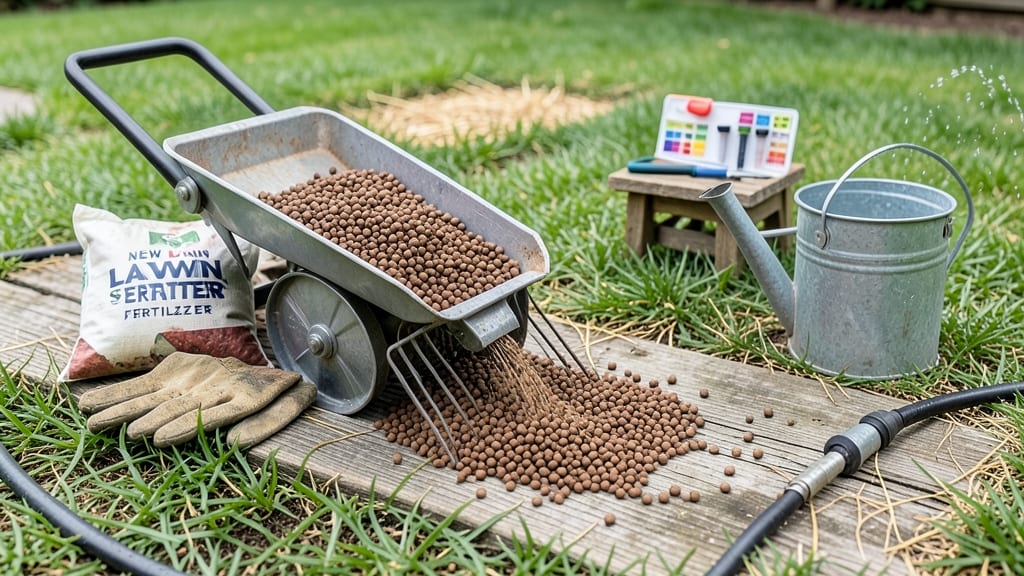
Fertilizing a new lawn at the right time is the difference between lush, deep roots and a patchy, struggling carpet of grass.
A new lawn is a blank canvas—full of potential, but only if you fertilize at the right time. Skip the 4-week rule, and you risk weak roots, patchy growth, or even wasted money on fertilizer that won’t stick.
The first 30 days after seeding or laying sod are critical, but timing isn’t just about weeks—it’s about soil temperature, grass type, and even the weather forecast.
Cool-season grasses (like Kentucky bluegrass) need their first feeding 4-6 weeks after planting, while warm-season types (like Bermuda) can wait until 6-8 weeks. Too early, and you burn tender seedlings; too late, and you stunt root growth.
I’ll break down the exact windows, the best fertilizers for new lawns, and how to adjust for rain, heat, or drought—so you don’t end up with a lawn that looks great on top but is weak beneath.
By the end, you’ll know not just when to fertilize, but how—including the one trick that saves time and money while keeping your lawn thriving for years.
The 4-Week fertilization timeline for new lawn seed (science-backed steps)
A new lawn’s strength starts with timing. Fertilizing too early or too late can stunt growth, but a 4-week schedule aligns with seedling stages—root development, shoot emergence, and canopy formation.
Cool-season grasses (like Kentucky bluegrass) and warm-season types (like Bermuda grass) follow slightly different timelines, but the core principle remains: feed when roots need it most.
Your first fertilization should happen 2-4 weeks after seeding, when seeds have sprouted but roots are still shallow. This kickstarts root establishment without overwhelming tender shoots. Skip this step, and you’ll see weak, patchy growth—even if you later add fertilizer.
Think of it as giving your lawn a nutrient jumpstart when it’s most vulnerable.
Here’s the exact week-by-week breakdown for both cool-season and warm-season grasses, including soil prep tips and critical windows for each application:
Test soil pH (6.0-7.0 ideal) and add compost or lime if needed. Lightly rake seeds into top ¼ inch of soil and water gently (½ inch/day). Avoid fertilizer—you’ll burn delicate sprouts.
Apply a low-nitrogen starter fertilizer (e.g., 10-10-10 NPK) when 10-15% of seeds sprout. Use ½ lb per 100 sqft and water deeply afterward. Cool-season grasses: Do this in early spring (March-April). Warm-season grasses: Wait until soil temps hit 65°F+ (late spring).
Switch to a moderate-nitrogen fertilizer (e.g., 20-0-5 NPK) to encourage root depth. Apply 1 lb per 100 sqft when grass reaches 2-3 inches tall. Cool-season: Do this in late spring. Warm-season: Time it for early summer (June).
For high-traffic areas, add a slow-release fertilizer (e.g., 24-0-4 NPK) to thicken the lawn. Apply ½ lb per 100 sqft when grass is 3-4 inches tall. Skip this if your lawn is already dense or you’re in a drought-prone area.
The key to this timeline is monitoring soil moisture. Fertilizer only works if roots can access it—water 1 inch/day for 2 weeks after each application to activate nutrients.
For cool-season grasses, your last fertilization should be by late summer to avoid fall regrowth. Warm-season grasses can handle a final feed in early fall to store nutrients for spring.
Pro tip: Use a soil probe to check root depth at Week 6. If roots are less than 2 inches deep, delay the second fertilization until they reach 3-4 inches. Deeper roots mean a drought-resistant lawn and fewer weeds.
Timing also depends on your climate zone. In USDA Zone 7+, warm-season grasses like Zoysia need their first feed when soil temps hit 70°F, while fescue (cool-season) thrives with early spring applications. Adjust by 2 weeks earlier in warmer zones or 2 weeks later in cooler ones.
Avoid high-nitrogen fertilizers early on—they promote top growth at the expense of roots. Instead, prioritize phosphorus (P) for root development in the first 4 weeks. Once roots are established (Week 6+), you can shift to nitrogen-heavy blends for greener blades.
Finally, mow high (set blade to 3-4 inches) after the second fertilization to encourage root growth. Never remove more than ⅓ of the blade height at once, or you’ll stress your young lawn.
With this 4-week plan, your grass will establish a deep, resilient root system in just 8-10 weeks—no patchy spots or weak spots in sight!
Common mistakes that ruin new lawn fertilization (and how to avoid them)
Fertilizing a new lawn feels like giving your grass a power boost—but timing and technique matter more than you think. I’ve seen over-fertilized lawns turn yellow, under-fertilized ones stay patchy, and poorly timed applications wash away before roots absorb a drop.
The key? Avoiding these common pitfalls that derail even the best-laid plans.
First, let’s talk about nutrient ratios. Many gardeners grab the first bag of fertilizer they see, but new lawns need low phosphorus (the middle number in NPK) to avoid burning tender seedlings.
A high-nitrogen starter fertilizer (like 24-0-5) is ideal—too much phosphorus can actually stunt root growth while you’re trying to establish your lawn.
Another big mistake? Applying fertilizer before seeds germinate. If you fertilize too early, the nutrients just sit in the soil until rain washes them away—or worse, they leach into groundwater.
Wait until you see sprouts breaking through (usually 7–14 days after planting) before adding anything. Patience here pays off with stronger roots down the road.
- Before seeding: Wait until sprouts appear (7–14 days post-planting).
- During extreme heat: Temperatures above 85°F stress grass and burn roots.
- Right before rain: Heavy rain washes fertilizer away—wait 24–48 hours after application.
- Winter months: Grass goes dormant; nutrients just sit unused in the soil.
Pro tip: Always check the weather forecast before fertilizing. If rain is predicted within 48 hours, delay your application.
Environmental factors like heat and rain can turn a good fertilization plan into a disaster. For example, applying fertilizer in midday sun causes it to volatilize quickly, while heavy rain right after application means your hard-earned nutrients end up in the storm drain.
I recommend fertilizing in the early morning when temperatures are cooler and dew is still on the grass—this gives nutrients time to soak in before the sun intensifies.
Don’t forget to watch for red flags in your soil. Compacted soil, for example, blocks water and nutrients from reaching roots. Before fertilizing, loosen the top 2–3 inches of soil with a rake or aerator. Also, test your soil’s pH level—most grasses thrive in a 6.0–7.0 range.
If your soil is too acidic or alkaline, amend it with lime or sulfur before adding fertilizer. Ignoring these signs leads to uneven growth and wasted fertilizer.
Finally, resist the urge to over-apply fertilizer for faster results. More isn’t better—it can burn grass blades and harm beneficial soil microbes. Stick to the recommended rate (usually 1 lb per 100 sq ft for starter fertilizer) and split applications if your lawn is large.
For example, fertilize half the lawn one day and the other half a week later to avoid overwhelming tender roots.
By avoiding these mistakes, your new lawn will establish deep, resilient roots and stand up to foot traffic, drought, and pests. Think of fertilization as a long-term investment, not a quick fix. With the right timing and care, you’ll have a lush, green carpet that lasts for years.