
Lawn
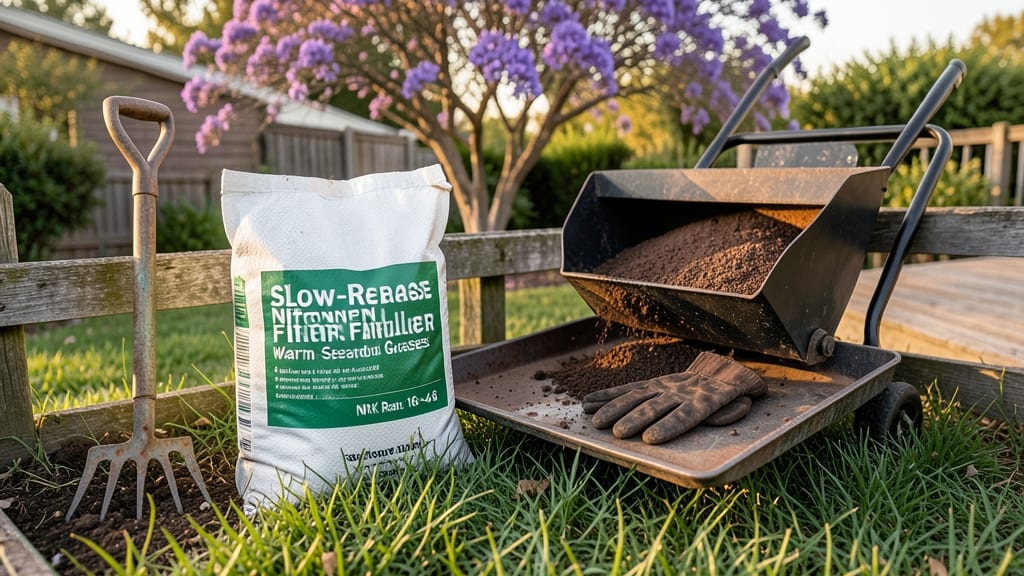
To fertilize lawns in Florida, schedule applications in early spring (February–March), late spring (May–June), and late summer (August–September) to match warm-season grass growth patterns while avoiding winter dormancy or summer heat stress. Always use a slow-release nitrogen fertilizer designed for Florida’s humid conditions.
Florida’s unique climate demands precision timing—fertilizing too early risks winter dormancy, while late summer applications help grass recover from summer heat before the cooler months arrive. 🌱 The state’s dominant warm-season grasses like St. Augustine and Centipede thrive when fertilized in these three key windows, with nitrogen levels adjusted to prevent runoff in heavy rainfall.
For best results, test your soil first to determine exact nutrient needs, and consider organic options if you prefer eco-friendly lawn care.
Central Florida’s slightly cooler winters may shift the first feeding to March, while South Florida’s year-round warmth can extend the late summer window into early September. Always water deeply after fertilizing to help nutrients penetrate the soil—this is especially critical in Florida’s sandy soils where nutrients can wash away quickly.
💡 In This Article
- Florida’s Warm-Season Grass Fertilizing Science
- Step-by-Step Florida Lawn Fertilizer Schedule
Florida’s warm-season grass fertilizing science
Florida’s warm-season grasses—like St. Augustine, Centipede, and Bahia—grow most actively when daytime temperatures consistently stay above 70°F.
This is why fertilization timing aligns with these temperature thresholds: early spring kickstarts growth after winter dormancy, late spring boosts recovery from potential winter damage, and late summer prepares grass for cooler months.
The key mechanism here is nitrogen availability—warm-season grasses rely on nitrogen for leaf growth, but too much nitrogen in hot weather (90°F+) can cause stress or even burn the grass by accelerating growth beyond the plant’s capacity to handle.
Florida’s humid climate adds complexity: heavy rainfall can wash away nutrients before they’re absorbed, while high humidity increases fungal risks if fertilization occurs during peak heat. That’s why slow-release fertilizers are critical—they provide steady nitrogen over 6-8 weeks, matching the grass’s natural growth cycles.
For example, St. Augustine grass thrives with 0.5-1.0 pounds of nitrogen per 1,000 sq ft per application, while Centipede grass, which is more drought-tolerant, needs only 0.25-0.5 pounds. The difference comes from their root structures and nutrient needs—St. Augustine has deeper roots that require more frequent feeding, while Centipede’s shallow roots absorb nutrients quickly but efficiently.
Here’s what’s actually happening at the cellular level: when nitrogen becomes available, grass plants increase chlorophyll production, which drives photosynthesis and leaf expansion. However, in Florida’s sandy soils, nutrients move quickly through the soil profile.
This is why deep watering (1-1.5 inches) immediately after fertilizing is essential—it helps nutrients penetrate deeper, where grass roots can access them. Without this step, up to 50% of applied fertilizer can be lost to runoff, especially in heavy rainfall common during Florida’s summer months.
The split-season approach also prevents nutrient buildup, which can lead to thatch accumulation or even toxic buildup of salts in the soil.
For instance, applying fertilizer in December would be wasted—warm-season grasses go dormant when temperatures drop below 60°F, and any nutrients applied then simply sit in the soil until spring.
This is why the three-season schedule works: it synchronizes with the grass’s natural dormancy and growth cycles, ensuring nutrients are used efficiently rather than wasted or causing harm.
Consider this comparison: a lawn fertilized in January in North Florida might see minimal growth until March, while the same fertilizer applied in February would see immediate uptake as temperatures rise. The difference isn’t just timing—it’s about aligning with the grass’s metabolic activity.
For example, Centipede grass may show visible growth within 7-10 days after a late spring application, while St. Augustine might take 2-3 weeks to respond due to its slower growth rate.
One nuance to watch is soil pH—Florida’s sandy soils often have a pH between 5.5-6.5, which is slightly acidic. If your soil tests lower than 5.5, the grass may not absorb nitrogen efficiently, even with proper timing.
In this case, a soil amendment with lime (to raise pH) before fertilizing can make a 30-50% difference in nutrient uptake. Always test your soil before fertilizing to avoid overapplying nutrients or creating imbalances.