
Pruning
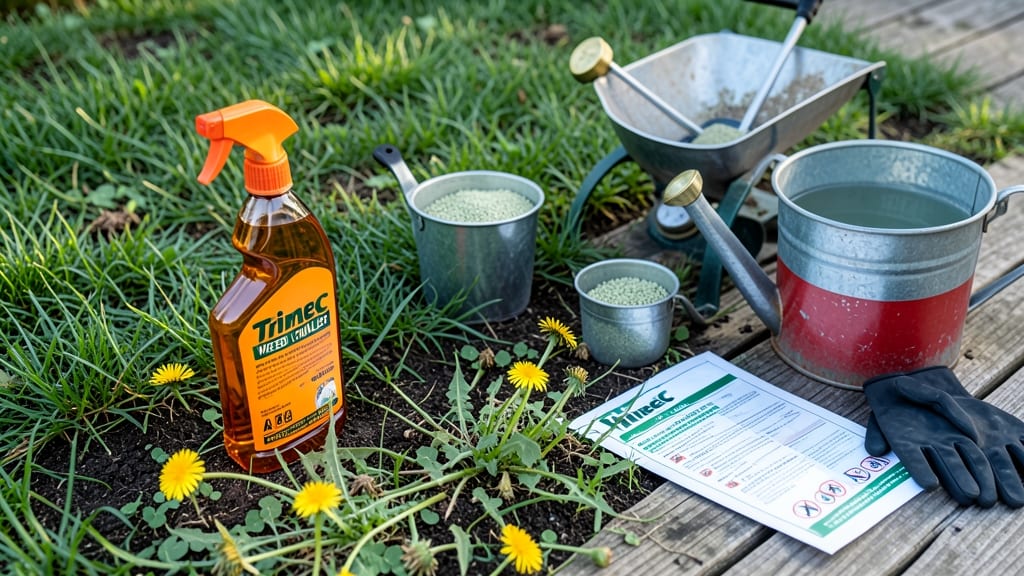
The Trimec lawn weed killer mix ratio is 1.5 ounces per gallon of water for liquid concentrate, or follow the label’s 1:1 ratio for granular versions. Dilute thoroughly and apply evenly for optimal weed control without overapplying to grass.
Getting the Trimec mix ratio right ensures you kill weeds without harming your lawn. The 1.5-ounce-per-gallon liquid concentration delivers the precise herbicide blend needed to target broadleaf weeds while preserving grass health.
Granular versions simplify application—just measure equal parts product to water—but require careful spreading to avoid uneven coverage. 🌱 I’ve found that consistency in application (whether liquid or granular) is key: uneven distribution can lead to missed weeds or grass damage.
For best results, always mix fresh and use the right tools—a hose-end sprayer for liquids or a broadcast spreader for granules. Test a small lawn area first to confirm the mix works for your specific weed types. Overapplying doesn’t kill weeds faster—it just wastes product and risks harming your grass.
💡 In This Article
- How Trimec’s Active Ingredients Affect Mix Ratios
- Step-by-Step Guide to Mixing Trimec for Different Lawn Sizes
How Trimec’s active ingredients affect mix ratios
Trimec’s effectiveness comes from its three-way herbicide blend: 2,4-D, dicamba, and mecoprop. Each ingredient targets specific weed weaknesses—2,4-D disrupts plant growth hormones in broadleaf weeds, while dicamba and mecoprop enhance absorption through leaves.
The 1.5-ounce-per-gallon ratio balances these chemicals to maximize weed kill while minimizing grass uptake. Too little concentration leaves weeds alive; too much risks damaging your lawn’s root system.
The science behind this ratio involves selective absorption. Grass blades have a waxy cuticle that repels these herbicides, but broadleaf weeds absorb them through their larger leaf surfaces. A 1:1 granular ratio (product to water) achieves similar results by ensuring even distribution when spread uniformly.
For example, a 5,000-square-foot lawn typically requires 5 gallons of mixed solution—calculated by multiplying square footage by 0.001 gallons per square foot—to cover the area without waste.
Concentration also affects how quickly weeds die. The 1.5-ounce-per-gallon mix ensures herbicides reach lethal levels in 7-14 days for most weeds, depending on species. Dicamba, for instance, works faster on young weeds but needs time to break down in soil.
Overconcentrating the mix can lead to phytotoxicity—visible as yellowing or browning in grass—while underconcentrating allows weeds to regrow resistant strains.
Weather plays a critical role in how these ratios perform. Apply Trimec on calm, dry days with temperatures between 60-85°F. Humidity helps herbicides adhere to leaves, but rain within 24 hours of application can wash away the treatment.
For granular versions, light irrigation after spreading helps activate the chemicals, but avoid heavy watering immediately—it can clump the granules and reduce effectiveness.
Resistance is another factor influenced by mix ratios. Repeated use of the same concentration without rotation can lead to superweeds that ignore the treatment. To prevent this, alternate Trimec with other herbicides or use it as a preventative measure rather than a cure-all.
For example, applying the 1.5-ounce-per-gallon mix every 8-12 weeks during peak weed seasons (spring and fall) maintains effectiveness while reducing resistance risks.
For tough weeds like dandelions or clover, you might need to adjust the ratio slightly—though never exceed the label’s maximum. A 2-ounce-per-gallon mix (still within safe limits) can tackle stubborn patches, but always spot-test first.
The key is precision: Trimec’s blend is designed to work at its specified ratios, and deviating can turn a targeted treatment into a lawn hazard.