
Watering
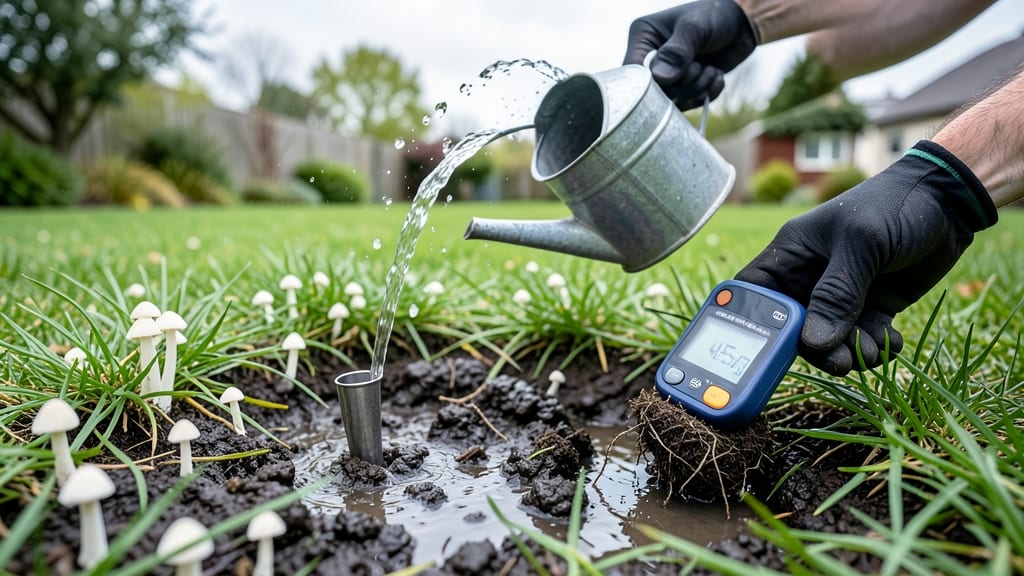
Your lawn's yellow patches and mushroom clusters aren’t just unsightly—they’re the clearest signs of an overwatered lawn screaming for help. 🌱 I've seen this exact scene play out in backyards across the region, and the fix starts with recognizing the subtle (and not-so-subtle) signs of overwatering before they ruin your grass for good.
The biggest giveaways are those dull, spongy spots where grass blades turn from vibrant green to sad yellow, and mushrooms popping up like nature's way of saying "this soil's too wet."
You might also notice pests taking advantage of the damp conditions, or thatch building up faster than you can rake it away. The good news? These problems reverse faster than you think with the right adjustments.
What you'll end up with is a lawn that stays green through summer droughts and winter freezes, with roots running deep instead of sitting in soggy soil.
The key is watering only when the top inch feels dry, and giving your grass room to breathe with proper aeration—no more guessing games about how much is too much.
This works for any grass type, from fescue to Bermuda, and even fixes those stubborn spots that seem impossible to revive. Let's turn those yellow patches into the envy of the neighborhood—starting with the soil test you'll do next weekend.
The Hidden Triggers Behind Soggy Grass
If your lawn is drowning in more than just rain, there’s usually a mix of human habits, environmental factors, and even grass behavior at play. Understanding these causes helps you adjust before your yard turns into a swamp.
Here’s why your lawn might be getting too much water—and what’s really going on beneath the surface.
Most homeowners water their lawns too often or for too long, thinking more moisture equals greener grass. But grass roots need air almost as much as water—like humans needing oxygen. Here’s the science:
- Soil Saturation Point: Healthy soil can only hold 40-60% of its volume in water before roots suffocate. Overwatering pushes oxygen out, leaving roots gasping for air. - The "1-Inch Rule" Trap: Many follow the "1 inch per week" guideline—but that’s for rain + irrigation combined. If you water daily for ¼ inch, you’re actually overdoing it unless it’s a drought. - Runoff Red Flags: If water pools or streams off your yard within 30 minutes of watering, your soil can’t absorb it fast enough. This is a classic sign of overwatering.Pro Tip: 💡 Use a rain gauge or tuna can (yes, really!) to measure water output. Aim for 0.5–1 inch per week, including rain.
Not all lawns are created equal—and neither are their drainage systems. If your yard struggles to shed excess water, even light rain can lead to chronic sogginess.
| Cause | What Happens | Fix It |
|---|---|---|
| Clay Soil | Tiny, dense particles trap water like a sponge. Roots can’t access oxygen, leading to anaerobic conditions (yes, your lawn is basically "drowning"). | Amend with compost or sand (50/50 mix) to improve aeration. |
| Compacted Soil | Foot traffic, heavy equipment, or poor maintenance crush soil particles, blocking water flow. 10% compaction can reduce drainage by 50%. | Rent a core aerator (spring/fall) to punch holes for water escape. |
| Low-Grade Slopes | Water pools in depressions or against foundations. Even a 1% slope (1 foot over 100 feet) can cause slow drainage. | Add swales (shallow trenches) or redirect sprinklers to higher elevations. |
Watch For: 🌡️ Puddles lasting hours after rain or watering, or grass that stays spongy to the touch.
Automatic sprinklers are convenient—but they’re also terrible at precision. Misaligned heads, wrong settings, or overlapping zones can turn your lawn into a misty desert (or swamp).
- Overlap Zones: Sprinklers spraying within 10 feet of each other can deliver double the water in overlapping areas. - Wrong Nozzles: High-pressure nozzles create large droplets that evaporate mid-air, while fine mist lingers on leaves, promoting fungal growth. - Run Times: Most systems run too long. A typical lawn only needs 15–20 minutes per zone (adjust based on soil type).Quick Test: 🔥 Place empty tuna cans in different zones and run the system. If one fills with 1.5 inches while another gets 0.3 inches, your sprinklers are uneven.
Fungi love wet conditions—so much that they’ll throw a party in your lawn if it stays damp for more than 48 hours. Common culprits:
- 🍄 Dollar Spot: Thrives in cool, wet grass (think early morning dew + sprinklers). Leaves behind straw-colored patches with dark edges. - 🍄 Brown Patch: Loves warm, humid nights (75°F+) and thick thatch layers. Creates circular dead zones 2–10 feet wide. - 🍄 Snow Mold: Waits for snowmelt + compacted soil to strike. Leaves a white, cottony film on grass in spring.Prevent It: ✨ Mow high (3–4 inches) to improve airflow, and water early morning (before 10 AM) to let grass dry by evening.
Not all grass is equal when it comes to water needs. Planting the wrong variety in your climate is like wearing a winter coat in July—it’s bound to fail.
| Grass Type | Water Needs | Overwatering Risk |
|---|---|---|
| Cool-Season Grasses (Kentucky Bluegrass, Fescue) | Needs 1–1.5 inches/week but hates standing water. | High—roots rot quickly in soggy soil. |
| Warm-Season Grasses (Bermuda, Zoysia) | Drought-tolerant but struggles in cold, wet springs. | Moderate—more about timing than total water. |
| Tall Fescue | Deep roots mean it needs less frequent but deeper watering. | Low—if watered correctly. |
Action Step: 🌡️ Check your USDA Hardiness Zone and pick grass that matches your climate + water access.
Revive Your Lawn: Fixing Overwatering Damage
---
If your lawn is drowning in too much water, don’t panic—there’s hope! Overwatering can leave grass weak, spongy, and prone to pests, but with the right steps, you can nurse it back to health.
Below, we’ve matched common causes of overwatering to practical fixes, plus tips to keep your lawn thriving long-term.
---
Overwatering often starts with poor drainage. If water pools on the surface or sits in low spots, your lawn suffocates.
#### 🔥 Aerate the Soil - Why? Compacted soil traps water, preventing roots from breathing. - How? - Rent or buy a core aerator (or use a garden fork for small areas). - Aerate in early fall or spring when soil is moist but not soggy. - Remove the soil plugs—they’ll break down naturally. - Pro Tip: 💡 Follow up with a light topdressing of compost to improve soil structure.
#### 🍳 Level Low Spots - Why? Water collects in depressions, creating muddy patches. - How? - Use a rake or shovel to redistribute soil from high areas to low ones. - For severe dips, mix in sand or topsoil to raise the level gradually. - Avoid piling soil too high—keep it even with the surrounding lawn.
#### 👨🍳 Install a French Drain (For Severe Cases) - Why? If your yard has chronic waterlogging, a French drain redirects excess water underground. - How? - Dig a trench (12–18 inches deep) along the problem area. - Lay a perforated drain pipe surrounded by gravel. - Cover with landscape fabric and backfill with soil. - Warning: ⏰ Call a professional if water tables are high—this requires precision.
---
Mushrooms, mold, and thatch buildup thrive in wet conditions. Act fast to prevent permanent damage.
#### 🔪 Reduce Thatch Layers - Why? Thatch (a layer of dead grass and roots) blocks water absorption and traps moisture. - How? - Use a thatch rake or vertical mower to dethatch in late spring or early summer. - Set the mower blades higher than usual to avoid scalping the lawn. - Pro Tip: 🌡️ Do this when soil temps are above 60°F—cold weather slows recovery.
#### ✨ Fungicide Treatment (For Stubborn Spots) - Why? Fungal infections (like brown patch or dollar spot) need chemical intervention if they persist. - How? - Choose a systemic fungicide (absorbed by grass roots) or a contact fungicide (for surface issues). - Follow label instructions—overapplying can harm the lawn. - Alternative: 🎯 Try a baking soda spray (1 tbsp baking soda + 1 gallon water) for mild cases.
#### 🌿 Improve Airflow - Why? Fungi love stagnant, humid air. Trim overgrown grass and nearby shrubs to encourage circulation. - How? - Mow high (3–4 inches) to shade the soil and retain moisture without suffocating roots. - Space out plants and mulch beds to reduce humidity near the lawn.
---
Prevention is the best cure. Overhauling your watering routine saves time, money, and your lawn’s health.
#### 📊 Upgrade to Smart Watering - Why? Most lawns only need 1–1.5 inches of water per week (including rain). - How? - Morning watering (4–8 AM): Reduces evaporation and fungal growth. - Deep and infrequent: Water 2–3 times per week for 30–45 minutes per session (vs. daily light sprinkles). - Use a rain gauge or tuna can to measure output—many sprinklers overwater by 30%! - Tech Tip: 🔥 Invest in a smart sprinkler controller (like Rachio) to adjust for rain forecasts.
#### 🌡️ Check for Runoff - Why? If water runs off instead of soaking in, you’re wasting H₂O and drowning roots. - How? - Adjust sprinkler heads to avoid overspray on sidewalks or driveways. - Test soil moisture: Stick a screwdriver in the ground—if it goes in easily, you’re overwatering.
#### 🎯 Seasonal Adjustments - Spring/Fall: Water deeply 2–3 times per week. - Summer: Increase frequency (early morning only) but avoid evening watering (encourages fungus). - Winter: Most lawns go dormant—skip watering unless it’s a drought-prone area.
---
Once your lawn recovers, keep it resilient with these habits:
- 💪 Choose Drought-Tolerant Grass: If your area floods often, consider tall fescue or buffalo grass—they handle moisture better than Kentucky bluegrass. - 🥗 Test Your Soil: A soil test (from your local extension office) reveals nutrient deficiencies that worsen overwatering damage. - 🍎 Feed Smart: Overwatered lawns need slow-release fertilizers (like compost or organic options) to rebuild roots without promoting rapid, weak growth. - 🔄 Rotate Mowing Patterns: Prevents soil compaction and improves water absorption over time.
---
With these fixes, your lawn should bounce back in 2–4 weeks, depending on the damage. Stay patient, and soon you’ll have a lush, resilient green carpet—without the soggy side effects! 🌿💦
Frequently asked questions
Why does my grass turn yellow when it's overwatered?
Yellowing grass is a classic sign of overwatering because excess moisture blocks oxygen from reaching roots. When roots suffocate, they can't absorb nutrients, causing blades to turn yellow or brown. The worst spots are usually where water pools—check for soggy soil or puddles that linger longer than 24 hours.
How can I tell if mushrooms in my lawn mean overwatering?
Mushrooms popping up are nature's way of saying your lawn is too wet! These fungi thrive in damp, oxygen-poor soil. If you see clusters of mushrooms after heavy rain or frequent watering, your grass roots are likely drowning. The fix? Let the soil dry between waterings and improve drainage with aeration.
Is it better to underwater than overwater my lawn?
Yes—most grass types handle drought better than soggy conditions. Overwatering causes root rot, fungal diseases, and weak growth, while underwatering just makes grass dormant (not dead). The key is watering deeply 2-3 times per week rather than daily light sprinkles—this encourages deep root growth.
Can I fix an overwatered lawn without aerating?
You can make progress, but aeration is the fastest way to improve drainage. Without it, you'll need to: water less frequently, reduce thatch buildup with vertical mowing, and consider soil amendments like compost. For severe cases, a French drain may be necessary—but aeration should always be step one.
Why do some lawns handle more water than others?
Grass types vary dramatically in water tolerance. Cool-season grasses like fescue handle moisture better than Kentucky bluegrass, while warm-season varieties like Bermuda recover faster from drought. Soil type matters too—sandy soils drain quickly while clay holds too much water. Match your grass to your climate!