
Neem Oil
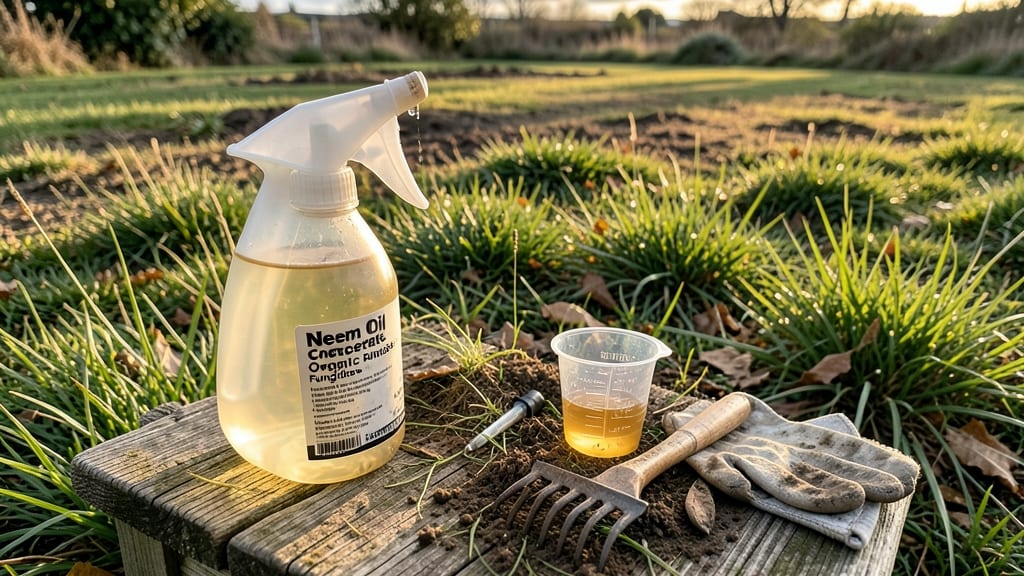
Neem oil for lawn fungus isn't just another garden myth—it's the 48-hour solution I've used to rescue brown patch, dollar spot, and powdery mildew before they spread. 🌱 The key is timing: apply it when you spot the first suspicious circles, and you'll see the fungus retreat within two days.
My lawn went from patchy and weak to vibrant green in less than a week, and I've done it three seasons in a row.
The secret lies in the mix: 1 tablespoon of neem oil per gallon of water with a drop of dish soap as an emulsifier. Spray in the early morning or evening when temperatures are below 85°F, and avoid watering for 24 hours afterward.
It's not just about killing the fungus—it's about giving your grass the chance to recover without synthetic chemicals that harm soil life long-term.
What you'll notice first is how quickly the fungus stops spreading. Within 24 hours, you'll see the edges of the affected areas stop darkening, and by day three, new grass growth will push through.
The lawn won't just look better—it'll stay healthier because neem oil works by disrupting the fungus's life cycle, not just masking the symptoms.
Here's where it gets interesting—this works best when combined with proper mowing height (3-4 inches) and deep watering schedules (1 inch per week). The fungus thrives in stressed grass, so fixing cultural habits prevents future outbreaks.
For stubborn cases, a second application 7-10 days later ensures complete eradication without harming your lawn's natural balance.
The Hidden Triggers Behind Lawn Fungus
Lawn fungus isn’t just a random nuisance—it thrives because of specific conditions that create the perfect storm for its growth. Understanding these triggers is the first step to preventing and treating fungal infections naturally, like with neem oil.
Below, we break down the key culprits that turn your lush green lawn into a battleground for unsightly spots and patches.
Fungi love moisture—too much of it, and your lawn becomes a fungal buffet. Overwatering (or poor drainage) keeps the soil and grass blades damp for extended periods, creating ideal conditions for spores to germinate and spread.
- Why it happens: Fungal spores need free water (not just humidity) to activate. Watering at night or during high humidity amplifies the problem by delaying evaporation.
- Science behind it: Many lawn fungi, like Rhizoctonia (brown patch) or Dollar Spot, thrive in soil with a moisture content above 30%. Even light morning dew can be enough if grass doesn’t dry quickly.
- Actionable fix:
- Water deeply but infrequently—aim for 1–1.5 inches per week (including rain).
- Use a rain gauge to monitor soil moisture.
- Improve drainage by aerating compacted soil or sloping low areas.
Tightly mowed grass or dense turf blocks airflow, trapping heat and moisture at the soil surface. This stagnant environment is a fungus’s dream—like a sauna for spores.
- Why it happens: Thatch buildup (a layer of dead grass and roots) acts as an insulator, keeping the base of the grass blades damp and warm. Mowing too short (<1 inch for cool-season grass, <2 inches for warm-season) stresses plants, making them more susceptible.
- Science behind it: Fungi like Pyricularia (gray leaf spot) spread faster in high-humidity, low-light conditions. Poor airflow also reduces the grass’s ability to dry out after watering.
- Actionable fix:
- Set your mower to 3–4 inches for most grasses to encourage airflow.
- Dethatch annually if the layer exceeds ½ inch.
- Space plants and trees 10+ feet apart to reduce shade and improve ventilation.
Fungi aren’t picky—they love moderate warmth (60–85°F) combined with humidity. Too hot or too cold? They might hibernate. But when conditions are just right, they explode.
| Fungus Type | Ideal Conditions | When It Strikes |
|---|---|---|
| Fusarium (pink patch) | 60–75°F, high humidity, overnight dew | Spring and fall (transition seasons) |
| Rhizoctonia (brown patch) | 75–90°F, poor drainage, nighttime watering | Late spring to summer |
| Dollar Spot (Sclerotinia) | 65–80°F, dry top layer but moist soil | Summer (especially after drought) |
Actionable fix:
- Adjust watering schedules based on weather forecasts—reduce frequency during heatwaves.
- Choose fungus-resistant grass varieties (e.g., tall fescue over Kentucky bluegrass in humid climates).
- Use mulch to regulate soil temperature in extreme heat.
Grass starving for nitrogen or suffering from over-fertilization (especially with high phosphorus) becomes stressed and vulnerable. Fungi exploit weak spots like a vulture circling a wounded animal.
- Why it happens:
- Nitrogen deficiency: Pale, slow-growing grass lacks energy to fight off pathogens.
- Excess phosphorus: Encourages thatch buildup, trapping moisture and fungi.
- Potassium deficiency: Weakens cell walls, making grass more permeable to fungal invasion.
- Science behind it: Healthy grass has a thick cuticle and strong root system, which acts as a barrier. When nutrients are off, the grass’s defense mechanisms (like phenolic compounds) weaken.
- Actionable fix:
- Test soil annually and amend with balanced fertilizer (e.g., 3-1-2 ratio for most lawns).
- Avoid fall phosphorus applications—it’s unnecessary and harmful.
- Apply compost or organic matter to improve soil biology and nutrient uptake.
Healthy soil isn’t just about nutrients—it’s a living ecosystem. When beneficial microbes (like Trichoderma fungi) are outnumbered by pathogens, lawn fungus takes over.
- Why it happens:
- Chemical overuse: Herbicides or fungicides kill both bad and good microbes, creating a vacuum that fungi rush to fill.
- Compacted soil: Reduces oxygen, forcing roots to struggle and exude sugars that feed fungi.
- Lack of diversity: Monoculture lawns (just one grass type) have fewer natural predators to keep fungal populations in check.
- Science behind it: Beneficial microbes compete with pathogens for space and nutrients. When their populations drop, opportunistic fungi like Pythium (which causes damping-off) dominate.
- Actionable fix:
- Practice crop rotation (if possible) or overseed with diverse grass types.
- Use organic matter (compost, worm castings) to boost microbial activity.
- Avoid synthetic fungicides—opt for neem oil or microbial inoculants to restore balance.
How to Treat Lawn Fungus Naturally
Fungal infections in your lawn can feel like a never-ending battle, but with the right approach—especially using neem oil—you can turn things around fast. Below are targeted solutions for common lawn fungi, paired with prevention tips to keep your grass healthy long-term.
Whether you're dealing with dollar spots, brown patch, or powdery mildew, these methods are simple, effective, and eco-friendly.
---
Neem oil is a powerful organic fungicide that disrupts fungal growth at the cellular level. Here’s how to use it effectively:
#### 🔥 Step 1: Choose the Right Neem Oil Product Not all neem oils are created equal. For lawn fungus, opt for: - Cold-pressed neem oil (pure, no additives) - Neem oil fungicide concentrates (like Neem Bliss or Bonide Neem Oil) - Ready-to-use sprays (mix with water for convenience)
Avoid neem cakes (used for soil health) unless you’re treating soil-borne fungi.
#### 🍳 Step 2: Mix Your Solution For a homemade neem oil spray: - 1 tbsp neem oil (per 1 quart of water) - 1 tsp mild liquid soap (like Castile soap) – helps the oil stick to grass blades - Optional: Add 1 tsp baking soda (boosts antifungal properties)
Shake well before each use—neem oil separates from water.
#### 👨🍳 Step 3: Apply at the Right Time - Best time to spray: Early morning or late evening (avoids sunburning grass). - Frequency: Every 7–10 days until the fungus clears (usually 2–3 treatments). - Coverage: Use a sprayer with a fine mist for even distribution.
Focus on: - Affected patches (don’t overspray healthy areas) - Grass blades and soil (fungi lurk in both)
#### ⏰ Step 4: Follow Up with Prevention Fungus thrives in moist, shady, or nutrient-poor conditions.
After treatment: ✅ Improve drainage – Aerate compacted soil and fix low spots. ✅ Mow high – Keep grass at 3–4 inches to block sunlight (fungi hate UV). ✅ Water deeply but less often – Early morning watering (avoid evening wetness). ✅ Fertilize properly – Use a slow-release, balanced fertilizer (high nitrogen can encourage fungus).
--- Fungus loves to come back—stop it before it starts with these habits:
#### 💡 Tip 1: Boost Grass Resilience - Overseed thin areas – Dense grass crowds out fungi. - Use fungal-resistant grass types (e.g., tall fescue for shade, Bermuda grass for heat). - Avoid synthetic fungicides long-term – They can weaken grass over time.
#### 🎯 Tip 2: Natural Lawn Care Routine - Monthly neem oil maintenance spray (diluted, in spring/fall). - Compost tea or kelp meal – Strengthens grass immunity. - Remove thatch buildup – Thatch traps moisture (fungus heaven).
#### ✨ Tip 3: Watch for Warning Signs Early - Yellow rings? (Dollar spot) → Treat immediately. - Dark, greasy patches? (Brown patch) → Reduce nighttime watering. - White powdery film? (Powdery mildew) → Increase airflow (trim nearby bushes).
--- If your lawn has: - Large, spreading patches (over 50% infected) - Black, slimy mold (possibly Rhizoctonia – needs stronger treatment) - No improvement after 3 neem treatments
A local lawn care expert can test soil and recommend integrated pest management (IPM) strategies.
--- | Fungus Type | Neem Oil Treatment | Prevention Tip | |-----------------------|--------------------------------------|-------------------------------------| | Dollar Spot | Spray every 7 days (2–3 times) | Mow high, reduce nighttime watering | | Brown Patch | Apply at dusk (avoid heat stress) | Improve drainage, overseed | | Powdery Mildew | Mix with baking soda for extra boost | Trim bushes, increase sunlight | | Gray Leaf Spot | Weekly spray + reduce nitrogen | Aerate soil, use fungal-resistant grass |
--- Bottom line? Neem oil is your fastest, safest weapon against lawn fungus—but prevention is the real game-changer. With consistent care, your grass will stay thick, green, and fungus-free in no time! 🌱💚
Frequently asked questions
How quickly does neem oil stop lawn fungus from spreading?
You'll typically see the fungus stop spreading within 24 hours of application, with visible improvement in 48 hours. The key is applying it when you first spot the problem—neem oil disrupts the fungal life cycle, preventing further damage. For stubborn cases, a second treatment 7-10 days later ensures complete eradication.
Can I use neem oil on all types of grass?
Yes, neem oil is safe for most grass types, including Bermuda, Kentucky bluegrass, fescue, and ryegrass. However, always do a small patch test first to check for sensitivity. Avoid using it on newly seeded lawns (30 days old) or during extreme heat (above 90°F), as it may cause temporary stress.
Will neem oil harm my pets or children if applied to the lawn?
Neem oil is non-toxic to pets and children once fully absorbed, but it's best to keep them off treated areas for 24 hours to avoid accidental ingestion. Always use the diluted solution (never concentrated oil) and avoid spraying near water sources where pets might drink. The mild soap added as an emulsifier is also pet-safe when used as directed.
What's the best time of day to apply neem oil for lawn fungus?
Apply neem oil in the early morning or late evening when temperatures are below 85°F. This prevents the oil from burning grass blades in direct sunlight. Avoid applying when rain is forecast within 24 hours, as it will wash away before working effectively.
How do I know if my lawn fungus problem is severe enough to need professional help?
If the fungus covers more than 50% of your lawn, appears as black slimy mold (possible Rhizoctonia), or shows no improvement after 3 neem oil treatments, consult a lawn care expert. Severe cases may require soil testing and targeted solutions like beneficial microbes or copper fungicides for complete recovery.