
Lawn
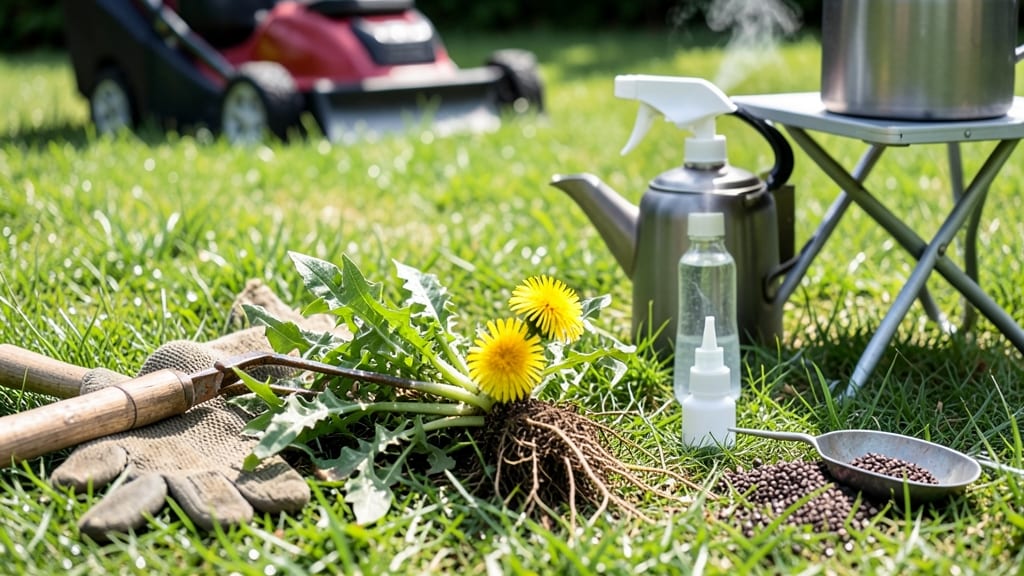
Killing dandelions in your lawn without killing the grass is totally doable—here's how to wipe them out while keeping your lawn lush and green. 🌱 The secret lies in spot treatments that hit the yellow invaders where they stand, not blanket sprays that risk harming your turf.
First, mow your lawn short (about 1-1.5 inches) and water it lightly the day before treatment. This helps the weed killer absorb better while protecting your grass. Then, choose your weapon: either a vinegar-based spray for organic control or a selective herbicide like 2,4-D for tougher cases.
After application, avoid watering for 24-48 hours to let the treatment work. You'll see those stubborn dandelions wither within days, while your grass stays unharmed. The key is precision—never overapply, and always test a small area first.
This method works for both small patches and larger lawns, and it's safe once fully dry. Say goodbye to those bright yellow weeds without saying goodbye to your green carpet!
Root Causes of Dandelion Invasion
Dandelions thrive in lawns while leaving grass unharmed because they’re biologically wired to exploit gaps in turf health and turf management. Understanding these root causes helps you strategize a targeted approach—one that weakens dandelions without harming your grass. Here’s why they take over, broken down by science and lawn dynamics:
---
Dandelions love compacted soil because their deep taproots (up to 15 inches!) can penetrate hardpan layers where grass roots struggle. Grass roots, especially in thin or stressed lawns, become stunted, leaving dandelions to dominate the surface.
- Why it happens: - Heavy foot traffic, machinery, or clay-heavy soils compress the soil, reducing oxygen and water flow. - Grass roots suffocate, while dandelion roots thrive in these conditions, accessing moisture and nutrients deeper underground. - Actionable insight: Test your soil’s compaction with a screwdriver—if it won’t penetrate past 2 inches, your lawn is at risk.
Aeration (core or spike) in fall or spring opens up the soil, giving grass a fighting chance.
---
Dandelions are opportunistic weeds—they flourish when grass lacks key nutrients, especially nitrogen (N), phosphorus (P), and potassium (K). A lawn deficient in these will show yellowing, thinning patches—perfect dandelion real estate.
- Why it happens: - Overuse of high-nitrogen fertilizers without balanced P/K can create weak roots, while low soil pH (below 6.0) locks out essential nutrients. - Dandelions, unlike grass, can fix nitrogen from the air via bacteria in their roots, giving them a competitive edge. - Actionable insight: Conduct a soil test (DIY kits or lab tests) to check pH and nutrient levels.
Adjust with lime (for acidity) or a balanced fertilizer (e.g., 10-10-10) in early spring.
---
Dandelions exploit irregular watering patterns. Too much water washes away nutrients, while drought stress weakens grass, leaving bare spots for dandelion seeds to germinate.
- Why it happens: - Overwatering (e.g., daily light sprinkles) promotes shallow grass roots and fungal diseases, while underwatering (less than 1 inch per week) causes grass to brown and die back. - Dandelion seeds lie dormant in the soil until conditions are right—thin grass = instant germination. - Actionable insight: Water deeply 2–3 times per week (early morning) to encourage deep grass roots.
Use a rain gauge to track moisture—dandelions hate consistent competition.
---
Dandelions produce thousands of seeds per plant (up to 200,000 in one season!), and their seeds can stay viable in the soil for 5+ years. If you ignore them, they’ll outcompete grass before you even notice.
- Why it happens: - Manual removal (pulling) often leaves root fragments behind, regrowing into new plants. - Broadcast herbicides (non-selective) kill grass along with weeds, creating more bare soil for dandelions. - Actionable insight: Spot-treat dandelions with post-emergent herbicides (like 2,4-D or triclopyr) only on the weed, avoiding grass contact.
For organic control, vinegar + dish soap (targeted spray) can work in small areas—just test on a hidden grass patch first.
--- Key takeaway: Dandelions don’t just appear—they exploit weak grass, compacted soil, and poor lawn care habits. Fix these root issues, and your grass will naturally crowd out weeds before they take hold. 🚀
Targeted solutions for dandelions
Dandelions might seem like stubborn weeds, but with the right approach, you can eliminate them without harming your grass. The key is targeted treatment—using methods that attack the dandelion’s root system while keeping your lawn healthy.
Below, we break down solutions by the most common causes and provide actionable steps to restore your lawn’s beauty.
---
When grass is sparse, dandelions thrive in the open spaces. To fix this, focus on thickening your turf while selectively removing weeds.
#### 🔥 Boost Grass Density - Mow high: Set your mower to 3–4 inches to encourage deep root growth and shade out weeds. - Aerate the soil: Use a core aerator in early fall or spring to improve airflow and nutrient absorption. - Overseed bare spots: Spread high-quality grass seed (matching your lawn type) in thin areas.
Water lightly daily until germination.
#### 🍳 Spot-Treat Dandelions - Vinegar spray (organic): Mix 1 gallon white vinegar + 1 oz dish soap + 1 cup salt. Spray directly on dandelion leaves (avoid grass!).
Reapply every 3–5 days until yellowed. - Corn gluten meal (preventative): Apply 20 lbs per 1,000 sq ft in early spring to inhibit weed seeds from sprouting.
✨ Pro Tip: Water the lawn deeply before treating to ensure vinegar stays on the dandelion and not the grass.
---
Dandelions love moist, compacted soil. Improving drainage and soil health will make your lawn less inviting to them.
#### 👨🍳 Loosen Compacted Soil - Top-dress with compost: Spread a ¼-inch layer of compost over the lawn, then lightly rake in. This adds organic matter and improves structure. - Use a lawn roller (lightly): Roll in early spring to break up compacted layers without damaging roots.
#### 🔪 Pull by the Root - Dig deep: Use a dandelion weeder or fork to extract the entire taproot (even small pieces regrow!).
Pull when soil is moist but not muddy. - Post-emergent herbicide (selective): Choose a grass-safe herbicide with 2,4-D or dicamba (e.g., Ortho Weed B Gon). Apply only on dandelions, avoiding windy days.
💡 Pro Tip: After pulling, fill the hole with compost to encourage grass regrowth.
---
Excess nitrogen promotes lush dandelions while weakening grass. Rebalance your soil for a healthier lawn.
#### 📊 Adjust Fertilizer Use - Test your soil: Use a DIY test kit or send a sample to a lab.
Aim for a balanced NPK ratio (e.g., 10-10-10). - Apply slow-release fertilizer: Use a low-nitrogen formula (e.g., 16-4-8) in early fall to strengthen grass without feeding weeds.
#### 🥗 Encourage Microbes - Add mycorrhizal fungi: Sprinkle mycorrhizal granules when overseeding to boost root health and outcompete weeds.
🔥 Pro Tip: Avoid high-nitrogen fertilizers in early spring—this is when dandelions germinate most aggressively.
---
Irregular watering stresses grass and gives dandelions an advantage. A consistent routine keeps your lawn resilient.
#### 💧 Water Deeply & Infrequently - Water 1–1.5 inches per week: Use a rain gauge to track. Water early morning to reduce evaporation. - Adjust sprinklers: Ensure even coverage—dandelions pop up where grass is thirsty.
#### 🌿 Mow Less Frequently - Reduce mowing in drought: Let grass grow taller (4+ inches) to shade out weeds and conserve moisture.
🎯 Pro Tip: Mulch clippings to return nutrients to the soil—this reduces the need for extra fertilizer.
--- Once your lawn is dandelion-free, keep it that way with these long-term strategies:
- Pre-emergent herbicide: Apply corn gluten meal in early spring or a pre-emergent like Scotts Halts to block seeds. - Regular maintenance: Mow, aerate, and fertilize on a seasonal schedule (spring, fall). - Hand-pull early: Remove dandelions before they flower (when they’re young and easy to pull).
--- By addressing the root cause of your dandelion problem—whether it’s thin grass, compacted soil, or nutrient issues—you’ll create a lawn that’s too strong for weeds to survive. Start with one or two methods, monitor progress, and adjust as needed. A lush, dandelion-free lawn is within reach!
Frequently asked questions
Can I use vinegar to kill dandelions without harming my grass?
Yes, but with caution! A 1:1 vinegar-water mix (or 1 gallon vinegar + 1 oz dish soap) works well for spot treatment. Apply only on dandelions on a calm, dry day—vinegar can burn grass if it drifts. Test a small area first, and avoid treating when grass is stressed or droughty. Reapply every 3-5 days until the weeds die.
How long does it take for dandelions to die after treatment?
With proper application, you’ll see results in 3-7 days. Organic methods like vinegar or corn gluten meal take longer (1-2 weeks), while selective herbicides (like 2,4-D) work faster (24-48 hours). Pull any remaining roots manually to prevent regrowth. Patience is key—don’t retreat too soon!
Will pulling dandelions by hand really prevent them from coming back?
Only if you remove the entire taproot—even a tiny piece left behind can regrow! Use a dandelion weeder or fork to dig deep (6+ inches). Pull when soil is moist (after rain or watering) for easier extraction. For stubborn roots, soak the area first with water. Fill the hole with compost to help grass reclaim the space.
Are there any lawn treatments that actually prevent dandelions long-term?
Corn gluten meal (applied in early spring) blocks weed seeds from sprouting for 6-8 weeks. For a stronger barrier, use a pre-emergent herbicide like Scotts Halts in fall. Combine this with aeration, overseeding, and proper mowing (3-4 inches high) to create a dense turf that crowds out weeds naturally. Prevention beats cleanup every time!
Is it safe to treat dandelions if I have pets or kids?
Only use pet-safe methods like manual pulling, vinegar (diluted), or organic herbicides labeled for lawns with kids/pets. Avoid 2,4-D or dicamba-based products—keep pets off treated areas for 24-48 hours and wash hands after handling. For extra safety, treat in the evening when kids/pets aren’t playing outside.