
Lawn
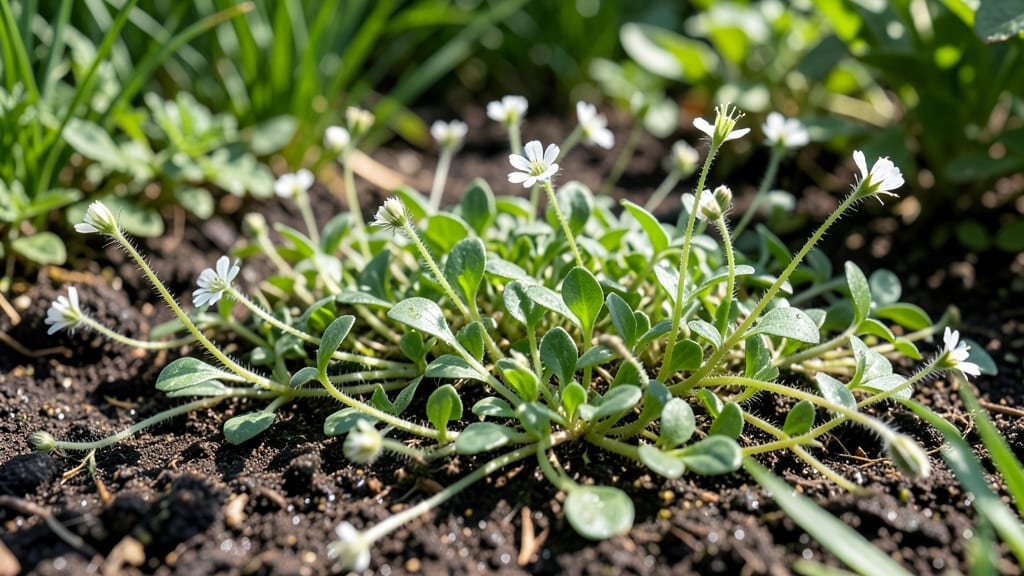
The identification of lawn chickweed starts with spotting its tiny, oval leaves arranged in pairs along delicate stems—it looks like a miniature maple tree but with a wildflower's charm. 🌱 This common "weed" often confuses beginners because its soft, hairy stems and star-shaped white flowers (when in bloom) mimic desirable ground covers. The key difference? Chickweed grows in dense mats that smother grass, while clover has trifoliate leaves and dandelions feature jagged, toothed edges with no stem hairiness.
Here's the thing—chickweed isn't all bad. In small patches, it can actually improve soil structure and attract beneficial insects, but when it spreads aggressively, it outcompetes grass for sunlight and water. The real giveaway? Its rapid growth in cool weather and tendency to form circular patches where grass thins out.
Most homeowners notice it first in early spring or fall, when the lawn looks patchy but nothing else explains why.
If you're dealing with an infestation, manual removal works best in small areas—just pull it before it seeds (those tiny white flowers are sneaky). For larger patches, pre-emergent herbicides applied in early spring can help, but timing is everything.
The good news? Chickweed rarely survives summer heat, so patience often wins the battle. Think of it as nature's way of telling you to give your lawn a little TLC.
Confusion often comes from mistaking chickweed for clover or even young dandelions. The quick test: crush a leaf—chickweed smells slightly sweet and has a velvety texture, while clover has a distinct three-leaf pattern and dandelions have deeply lobed leaves.
Remember, what looks like a weed might just be a wildflower waiting for the right conditions to thrive in your lawn.
How Chickweed Invades Lawns
Lawn chickweed (Stellaria media) thrives in conditions that many homeowners unintentionally create. Understanding the why behind its persistence helps you tackle it effectively. Below, we break down the key factors that turn your lawn into a chickweed buffet.
---
Chickweed loves moist, soft soil—perfect for its shallow roots to spread quickly. Here’s why it happens:
- Excessive Moisture: Chickweed germinates best in damp, poorly draining soil. Overwatering (or heavy rainfall) keeps the soil saturated, giving it the ideal environment to sprout and multiply.
Unlike grasses, chickweed doesn’t need deep roots, so it thrives in surface-level moisture. - Actionable fix: Improve drainage with sand or compost amendments and water deeply but less frequently to encourage grass roots to outcompete chickweed.
- Compacted Turf: Heavy foot traffic, machinery, or clay-heavy soil compresses the lawn, strangling grass roots and leaving gaps for chickweed to sneak in.
Compacted soil also traps moisture, creating a chickweed paradise. - Actionable fix: Aerate your lawn in fall or spring to loosen soil and promote grass growth. Top-dress with sand or organic matter to improve structure.
---
Chickweed is a weed opportunist—it fills in where grass is weak. Common culprits:
- Poor Fertilization: Grass needs nitrogen, phosphorus, and potassium to stay dense. If your lawn is yellowing, patchy, or slow-growing, chickweed sees an open invitation. - Actionable fix: Conduct a soil test and apply a balanced fertilizer (like 16-4-8) in early spring or fall.
Avoid over-fertilizing with nitrogen alone—it can burn grass and leave it vulnerable.
- Disease or Pests: Fungal infections (like brown patch or dollar spot) or insect damage (grubs, chinch bugs) weaken grass, creating bare spots where chickweed takes over. - Actionable fix: Treat diseases with fungicides and pests with grub control in early summer. Reseed bare patches with a fast-germinating grass mix (like perennial ryegrass) to outpace chickweed.
- Shade Stress: Chickweed thrives in partial shade, where many lawn grasses (like Kentucky bluegrass) struggle.
Its prostrate growth habit lets it spread even under trees or fences. - Actionable fix: Choose shade-tolerant grasses (like fine fescue) and mulch heavily around trees to block light to chickweed seeds.
---
Chickweed is a master of persistence—it produces thousands of tiny seeds that lie dormant for years, waiting for the right conditions.
- Natural Seed Dispersal: Chickweed seeds hitchhike on animals, wind, and even lawn equipment.
A single plant can release 15,000+ seeds, ensuring new invasions. - Actionable fix: Remove chickweed before it flowers (pull or mow frequently) to prevent seed spread. Clean mower decks after use to avoid spreading seeds elsewhere.
- Dormant Seed Bank: Chickweed seeds can survive in soil for 5+ years, germinating when conditions improve (e.g., after tilling or heavy rain). - Actionable fix: Solarize soil (cover with clear plastic in summer) to kill dormant seeds. Pre-emergent herbicides (applied in early spring) can block new germination.
--- Chickweed peaks in cool, wet seasons (spring and fall) but can survive mild winters.
- Mild Winters: In regions with freeze-thaw cycles, chickweed often regrows from the same root system after winter dieback. - Actionable fix: Apply pre-emergent herbicide in early spring (before chickweed sprouts) to stop regrowth.
- Spring Rains: Chickweed germinates within days of soil moisture, often outpacing grass seedling growth. - Actionable fix: Overseed in late summer/early fall when chickweed is less aggressive, and grass has time to establish before winter.
--- Sometimes, well-meaning lawn care backfires:
- Over-Mowing: Cutting grass too short (below 2–3 inches) stresses it and lets chickweed dominate. - Actionable fix: Mow high (3–4 inches) to shade out chickweed and promote deep grass roots.
- Lack of Overseeding: Skipping fall overseeding leaves bare spots where chickweed moves in. - Actionable fix: Overseed annually with a dense, competitive grass mix to crowd out weeds.
- Ignoring Early Signs: Chickweed spreads rapidly—waiting until it’s a mat of green leaves means it’s already winning. - Actionable fix: Pull chickweed by hand when young (it’s easier than waiting for it to root deeply).
--- Chickweed doesn’t invade healthy lawns—it exploits weaknesses. By addressing moisture, soil compaction, grass health, and seasonal timing, you can starve it out before it takes over. Act now, and your lawn will thank you! 🌱💪
How to Fix Lawn Weeds Naturally
Got an unwanted chickweed takeover? Don’t panic—this common lawn invader responds well to targeted fixes. Below are practical, step-by-step solutions tailored to the root causes (literally!) of your chickweed problem, plus prevention tips to keep your lawn lush and weed-free.
---
Why it works: Chickweed thrives in thin lawns, so manual removal strengthens your turf’s defenses.
How to do it: 👩🌾 Pull at the right time – Grab weeds before they seed (spring or early summer). Use a weed puller or gloved hands to avoid skin irritation (chickweed sap can cause rashes). 🌱 Dig deep – Chickweed has shallow roots, but tug gently to avoid breaking the stem (pieces regrow!). 🗑️ Dispose properly – Toss pulled weeds in the trash (not compost—they’ll sprout again).
Pro tip: 💡 Go barefoot-friendly – Wait 24 hours after pulling to let the soil settle before reseeding or fertilizing.
---
Why it works: Chickweed spreads via tiny seeds. A pre-emergent herbicide (like corn gluten meal) blocks germination before it starts.
How to apply: ⏰ Timing is key – Apply early spring (before chickweed seeds sprout) or fall (after weeds die back). 📦 Choose organic or synthetic – - Organic: Corn gluten meal (20 lbs per 1,000 sq ft) – doubles as fertilizer. - Synthetic: Pre-emergent herbicides (e.g., pendimethalin) – follow label rates. 💧 Water lightly – Keep soil moist for 7–10 days to activate the treatment.
⚠️ Warning: Pre-emergents can harm grass seeds. Avoid applying if you’re overseeding!
---
Why it works: If chickweed is already sprouting, a selective herbicide targets broadleaf weeds without harming grass.
Best options: 🌿 2,4-D + Dicamba – Works on most chickweed; spray on calm, dry days (avoid wind drift). 🌱 Vinegar + Soap – DIY option for small areas: - Mix 1 gallon vinegar + 1 oz dish soap in a spray bottle. - Apply directly to leaves (avoid grass—it’ll burn!). - Reapply every 3–5 days until weeds die.
Pro tip: 🌡️ Best weather for spraying: 70–85°F and no rain for 24 hours.
---
A healthy lawn crowds out chickweed naturally. Here’s how:
| Problem | Fix | |---------------------------|------------------------------------------------------------------------| | Thin grass | Overseed with dense grass varieties (e.g., tall fescue, Kentucky bluegrass). | | Compacted soil | Aerate in fall + top-dress with compost. | | Poor drainage | Improve soil with sand or organic matter; consider a French drain. | | Low fertility | Test soil pH (6.0–7.0 ideal) and fertilize with slow-release nitrogen. |
🎯 Prevention checklist: ✅ Mow high (3–4 inches) to shade out weeds. ✅ Water deeply but less often (1–1.5 inches per week) to encourage deep roots. ✅ Dethatch if layer is >0.5 inches thick (chickweed loves thatch).
--- Chickweed hates competition. By combining manual removal, herbicides (when needed), and lawn thickening, you’ll create an environment where chickweed can’t survive. Start with one method, monitor progress, and adjust as needed—your lawn will thank you!
Need a quick win? Try the vinegar spray for small patches or corn gluten meal for prevention—both are budget-friendly and effective!
Frequently asked questions
How can I tell if those tiny green patches in my lawn are chickweed?
Look for oval-shaped leaves arranged in pairs along hairy stems—chickweed resembles miniature maple leaves but grows in dense mats. The real giveaway? Its star-shaped white flowers (when in bloom) and preference for cool, moist areas where grass struggles. Crush a leaf—chickweed smells slightly sweet and has a velvety texture.
Is chickweed harmful to my lawn?
In small amounts, it's harmless, but large patches can smother grass by blocking sunlight and water. Chickweed spreads aggressively in thin lawns, creating bare spots that attract more weeds. The key? Remove it before it flowers (those tiny white blooms produce 15,000+ seeds per plant!).
Can I use vinegar to kill chickweed without damaging grass?
Yes, but with caution! Mix 1 gallon vinegar + 1 oz dish soap and spray directly on chickweed leaves—avoid grass to prevent burning. For best results, apply on dry, sunny days (70–85°F) and reapply every 3–5 days. Test a small area first to check grass tolerance.
Why does chickweed always come back after I pull it?
Chickweed seeds can lie dormant in soil for 5+ years, waiting for moisture to germinate. Even small root fragments left behind regrow! To break the cycle, improve drainage, aerate compacted soil, and apply corn gluten meal (organic pre-emergent) in early spring to block new growth.
How do I distinguish chickweed from clover or dandelions?
Chickweed has paired oval leaves (no triplets like clover) and hairy stems—clover leaves are trifoliate and dandelions have jagged, toothed leaves with no stem hairiness. Pro tip: Chickweed grows in circular patches, while dandelions appear as isolated rosettes.