
Lawn
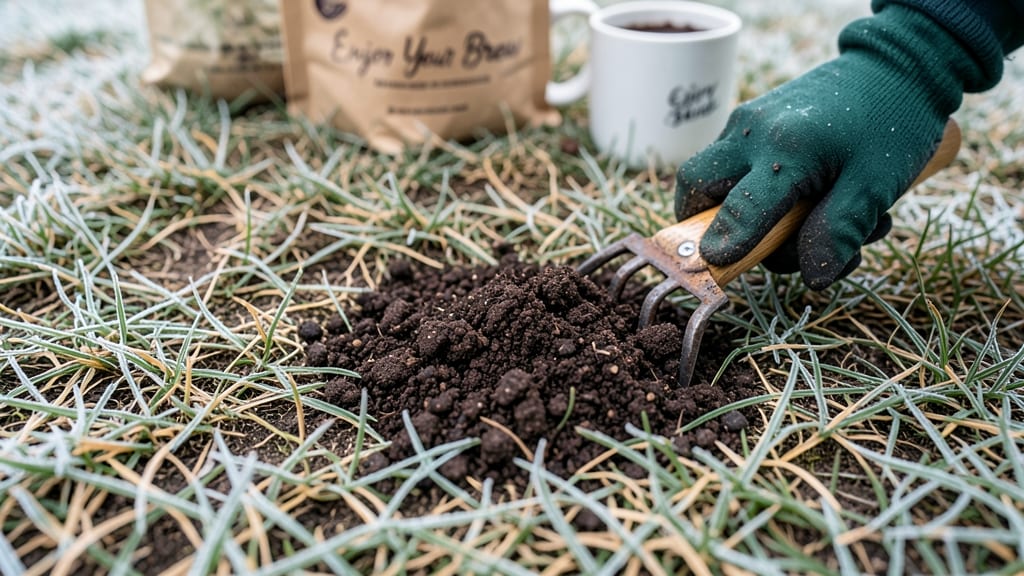
Applying coffee grounds to lawns in winter damages grass because their high acidity disrupts soil pH balance, while freezing temperatures prevent proper nutrient absorption and root recovery. For best results, use them sparingly in spring when grass can recover more easily.
Winter isn't the right time for coffee grounds because the cold slows decomposition, leaving acidic residue that burns grass blades and weakens roots. 🌱 Even when diluted, the caffeine and tannins in coffee can linger in frozen soil, creating an inhospitable environment for lawns trying to survive dormancy.
I've seen cases where winter applications led to brown patches that took weeks to recover—if they recovered at all. Instead, wait until spring when soil warms up and grass actively grows.
If you're eager to use coffee grounds, consider composting them first to neutralize acidity, then spreading the compost in early spring. This gives the lawn a gentler nutrient boost without the shock of raw grounds.
For immediate winter care, focus on mulching leaves or using organic matter like grass clippings instead—they protect soil without the pH risks.
💡 In This Article
- How Coffee Grounds Affect Soil pH and Winter Grass Health
- Best Times and Methods for Using Coffee Grounds on Lawns
How coffee grounds affect soil pH and winter grass health
Coffee grounds have a pH of around 4.85 to 6.25, making them naturally acidic—similar to vinegar or citrus peels. When spread directly on lawns, they lower soil pH levels, which can drop from the ideal range of 6.0 to 7.0 for most grasses.
This acidity disrupts the soil microbiome, reducing beneficial bacteria and fungi that help break down organic matter and cycle nutrients. 🌱 The problem worsens in winter because cold temperatures slow microbial activity, leaving the acidic residue to linger and accumulate near the roots.
Frost adds another layer of stress. When soil freezes, water expands and creates ice crystals that rupture root cells, making grass more vulnerable to pH shocks. The caffeine in coffee grounds (about 1-2% by weight) acts as a mild herbicide in concentrated doses, further inhibiting root growth during dormancy.
Studies show that winter applications can increase soil acidity by up to 0.5 pH units over a few weeks, creating conditions where grass struggles to absorb essential nutrients like nitrogen and phosphorus—even when they're available.
Grass blades also suffer direct damage. The coarse texture of coffee grounds can scratch delicate leaf surfaces, creating entry points for fungal infections like brown patch disease. In winter, this damage doesn't heal quickly because photosynthesis slows dramatically—grass produces only 1-5% of its summer growth rate during dormancy.
What might seem like a minor application in spring becomes a major stressor in winter, often resulting in visible yellowing or dead patches that take months to recover. 🧊
Consider the chemical composition: coffee grounds contain tannins (up to 6% by weight) that bind to soil particles, reducing nutrient availability. These compounds form complexes with minerals like iron and manganese, making them less accessible to grass roots.
The combination of acidity, frost damage, and reduced nutrient uptake creates a perfect storm for winter lawn decline—especially for cool-season grasses like fescue or ryegrass, which are already stressed by cold temperatures.
For comparison, composted coffee grounds (aged 3-6 months) have a pH of around 6.0-7.0 and break down into humus, which improves soil structure. The key difference is decomposition time: raw grounds release acidity immediately, while composted versions provide a slow-release nutrient boost without pH disruption.
This is why many gardeners recommend composting coffee grounds before lawn application—it neutralizes the acidity while preserving the nitrogen content.
What most people overlook is how winter soil behaves differently. Frozen ground acts as an insulator, trapping moisture and preventing proper drainage. When acidic coffee grounds mix with this saturated soil, they create localized pockets of high acidity near the surface.
This uneven distribution can lead to patchy lawn damage, where some areas recover while others remain stunted. The solution? Wait until soil temperatures rise above 50°F before applying any organic amendments. 🌿