
Lawn
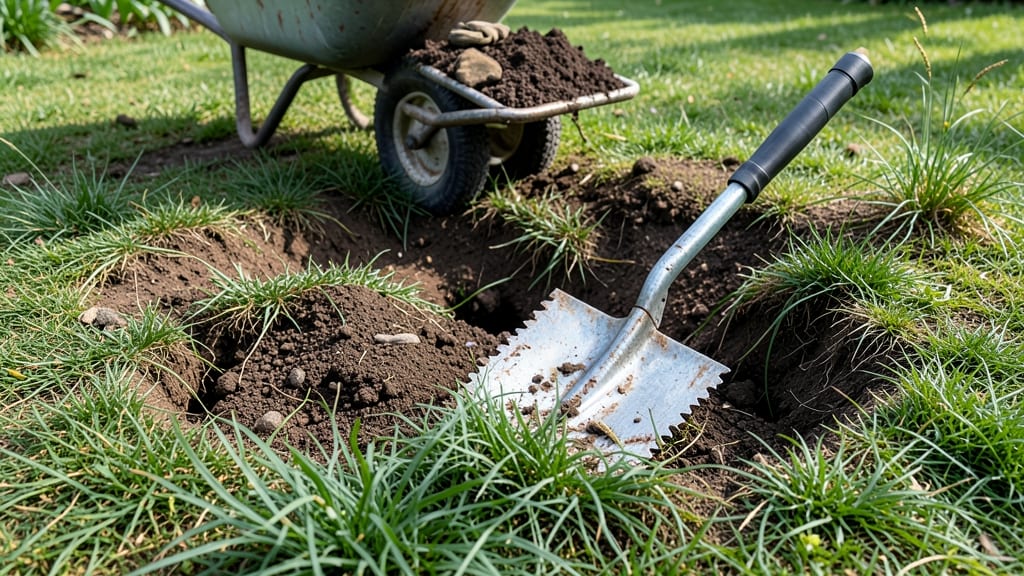
Selecting the best lawn levelling tool depends on your project size and terrain: hand rakes suit small, flat areas perfectly, while vibratory plates excel at smoothing large, uneven surfaces efficiently. Self-propelled models simplify steep slopes or heavy-duty projects.
Your lawn's terrain and project scale directly impact which tool will work best. 🌱 For instance, hand tools like rakes are ideal for patching small dips or leveling flower beds, where precision matters more than speed.
Vibratory plates, on the other hand, are designed for large areas by compacting soil evenly—perfect for preparing ground before seeding or installing new sod.
The self-propelled models add power and maneuverability, making them the top choice for professionals or DIYers tackling steep grades or heavy clay soil that requires extra force. Each tool brings unique advantages depending on whether you're working with delicate slopes or heavy-duty terrain challenges.
For example, a hand rake might cost under $20 but requires more elbow grease, while a vibratory plate can run $200-$500 but handles acres in hours.
The right choice isn't just about power—it's about matching the tool to your specific yard's needs, whether that means fine-tuning a small garden or transforming an entire landscape.
💡 In This Article
- How Different Lawn Levelling Tools Work
- Best Lawn Levelling Tools by Project Type
How different lawn levelling tools work
The mechanics behind lawn levelling tools vary dramatically based on their design. Hand rakes rely on manual force and adjustable tines to scrape and redistribute soil, working best on small, flat surfaces where precision matters.
Their tines typically angle at 30-45 degrees, allowing you to lift and level soil without disturbing the root zone too deeply. This makes them ideal for patching small dips or smoothing flower beds where you need control over every inch. 🌱
Vibratory plates, on the other hand, use centrifugal force to compact soil at a molecular level. These machines generate 3,000-5,000 vibrations per minute, creating a rhythmic pounding that settles soil particles into a dense, stable layer.
The vibration frequency and plate weight (ranging from 60-200 lbs) determine how effectively they can handle different soil types—clay soil, being dense, requires heavier plates (150+ lbs) to break up compaction, while sandy soil needs lighter plates (60-100 lbs) to avoid over-compacting.
The blade angle on these plates is usually adjustable between 15-30 degrees, letting you fine-tune the slope for drainage.
Self-propelled levellers combine the power of vibration with motorized movement, typically using 12-18 horsepower engines to pull heavy plates across terrain. These tools are designed for steep slopes or large commercial projects, where manual effort would be impractical.
The self-propelled feature eliminates the need to push or pull the machine, reducing fatigue and improving accuracy on uneven ground. The key advantage here is the ability to maintain consistent pressure across the entire surface, which is critical for preventing future settling or erosion. 💪
Soil type plays a surprisingly large role in tool effectiveness. Clay soil, for example, holds moisture and compacts easily, making vibratory plates with high torque (200+ ft-lbs) essential. Sandy soil, being loose, requires lighter plates to avoid creating a hardpan.
The right tool doesn't just level—it prepares the soil for optimal drainage and root growth, which is why professionals often test soil compaction before choosing equipment.
For instance, a simple thumb penetration test (pushing your thumb into the soil) can reveal whether you need a heavy-duty plate or a lighter model.
Another critical factor is the blade's material and design. High-quality levelling tools use tempered steel blades that resist bending, while budget options may warp under pressure. The blade's edge profile—whether it's serrated or smooth—also affects how it cuts through grass or thatch.
Serrated edges are better for breaking up tough organic matter, while smooth edges glide over established lawns with minimal disturbance. This attention to detail is what separates a tool that just levels from one that truly transforms your landscape. 🔧
Consider this real-world example: A 1,000 sq ft backyard with a slight slope might require a 100 lb vibratory plate running at 4,000 vibrations per minute to compact the soil evenly.
The same plate used on a 5,000 sq ft commercial lot would need to be paired with a self-propelled motor to maintain efficiency. The difference in soil preparation can mean the difference between a lawn that stays level for years and one that develops new dips within months.