
Lawn
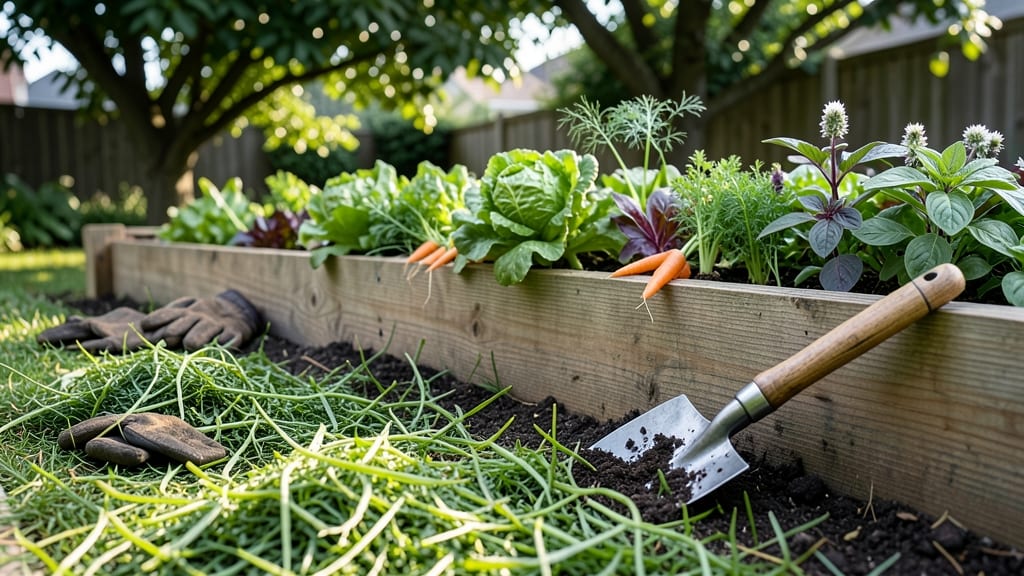
Using lawn clippings in your garden boosts soil fertility, suppresses weeds, and reduces waste when applied correctly—just avoid thick layers that can smother plants or attract pests. Mulch lightly or compost for best results.
Lawn clippings make an excellent free fertilizer because they're rich in nitrogen, which grass naturally recycles back into the soil.
When you spread them thinly, they break down quickly, feeding your plants while also blocking sunlight to prevent weed seeds from sprouting. 🌱 Unlike traditional compost, they decompose faster, so you can see results in just a few weeks.
The key is to keep the layer under ½ inch thick—any thicker, and they'll create a suffocating mat that traps moisture and invites fungal growth.
For best results, I recommend mixing clippings with other organic matter like leaves or straw to create a balanced mulch. This combination improves soil structure and prevents compaction. Plus, it's a simple way to turn yard waste into a garden benefit without any extra cost or effort.
💡 In This Article
- How Lawn Clippings Improve Garden Soil
- Best Ways to Apply Lawn Clippings for Weed Control
How lawn clippings improve garden soil
Lawn clippings act like a natural nitrogen bomb for your garden. Grass contains about 4-5% nitrogen by dry weight, which is immediately available to soil microbes when clippings decompose.
These microbes then convert the nitrogen into forms that plants can absorb, like ammonium and nitrate. 🌱 This process happens rapidly—within 2-4 weeks—because clippings have a carbon-to-nitrogen ratio of about 15:1, which is nearly ideal for decomposition (compared to leaves, which have a 50:1 ratio and decompose much slower).
The real magic happens below the surface. As clippings break down, they create tiny air pockets in the soil, improving aeration while also holding moisture near plant roots. This dual effect reduces watering needs by up to 25% while preventing soil compaction.
Think of it like a sponge that both drains and retains water—perfect for drought-prone gardens. The decomposition process also generates heat, which can help kill weed seeds before they germinate, creating a self-reinforcing cycle of soil improvement.
Here's where it gets interesting: clippings don't just feed plants—they feed the soil ecosystem. The decomposition process stimulates beneficial bacteria and fungi that break down organic matter further, creating a more complex soil structure.
Studies show that gardens amended with grass clippings develop 30-50% more microbial biomass than untreated soil within 3 months. This microbial boost isn't just about nutrients—it's about creating a thriving underground community that protects plants from diseases and pests naturally.
But there's a catch: the benefits depend on proper application. Fresh clippings contain 80-90% water, which means they can create a suffocating mat if piled too thick. When clippings decompose anaerobically (without oxygen), they produce unpleasant odors and harmful compounds like ammonia.
That's why the ½-inch rule exists—any thicker, and you'll smother your plants rather than nourish them. For comparison, a ¼-inch layer is ideal for most vegetables, while ½-inch works for hearty perennials.
Let's talk numbers: A single mowing produces about 0.5-1 pound of clippings per 100 square feet of lawn. That might not sound like much, but over a season, it adds up to 5-10 pounds per 100 sq ft—enough to provide 0.25-0.5 pounds of nitrogen to your garden beds.
For perspective, that's roughly equivalent to 1-2 cups of synthetic fertilizer per 100 sq ft, but without the chemical runoff risks. The key is consistency—regular applications maintain steady nutrient levels rather than creating spikes that can burn plant roots.
What most gardeners don't realize is how clippings change over time. Fresh clippings are high in nitrogen but low in other essential nutrients like phosphorus and potassium. That's why blending them with other organic materials (like compost or wood ash) creates a more balanced fertilizer.
Over time, as clippings decompose, they actually increase phosphorus levels in the soil by 15-20%, making them a more complete soil amendment than many people assume. 💫